

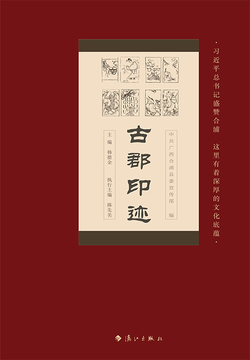
Imprints of an Ancient Commandery
Tags
Summary
Hepu means the place where rivers converge. Hepu County has long been known as "the ancient county of southern pearls and a famous coastal region," and is "the hometown of Chinese southern pearls." It is under the administration of Beihai City, Guangxi Zhuang Autonomous Region, and is located at the southern tip of Guangxi on the northeastern shore of the Beibu Gulf. It borders Lianjiang City in Guangdong Province and Bobai County in Guangxi to the east, Qinzhou City to the west, and faces the Beibu Gulf to the south. It covers a total area of 2,762 square kilometers, governs 14 towns and 1 township, and has its county seat in Lianzhou Town. At the end of 2017, its total population was 1.07 million.
In March 1988, Hepu County was approved by the State Council as a coastal open county. Hepu has a long history of more than 2,100 years. In the sixth year of the Yuanding reign of Emperor Wu of Han (111 BCE), Emperor Wu established Hepu Commandery, which governed present-day Hepu, Pubei, Beihai, Lingshan, Qinzhou, Bobai, Lianjiang, Rongxian, and Beiliu in their entirety, as well as parts of Yongning and Hengxian. It is one of the few county-level or higher administrative divisions in China that has never changed its name since its establishment.
Hepu has a profound cultural heritage. When inspecting the Hepu Han Dynasty Culture Museum, General Secretary Xi Jinping pointed out: "This place has a profound cultural heritage." Historical imprints keep hometown memories alive, and the dream of rejuvenation inspires people to strive forward. In order to thoroughly implement the spirit of General Secretary Xi Jinping's important speech during his inspection of Hepu, "let cultural relics speak, let history speak, and let culture speak," enable Hepu people to understand their hometown, enable outsiders to remember Hepu, carry forward and promote Hepu's history and culture, and tell Hepu's stories well.
Editor's review
The core value of this book lies in its "locality." It does not adopt a grand framework of historical exposition, but focuses on the single locale of Hepu, vividly recreating the cultural pulse of this land from ancient times to the present through specific sites, artifacts, figures, and events. The book's introductions to archaeological discoveries such as the Hepu Han Dynasty tomb cluster, the Dalang Ancient City site, and the Caoxie Village site are accompanied by detailed materials and images, providing readers with solid material evidence for understanding early trade, cultural exchange, and everyday life along the Maritime Silk Road. This approach of anchoring grand historical narratives in specific geographical spaces makes history tangible and perceptible.
As a work led by the county Party committee's publicity department, its content is notably authoritative and rigorously researched. It effectively integrates official archives, academic research (especially archaeological findings), and local knowledge, avoiding superficial scenic introductions and instead exploring in depth Hepu's unique role in exchanges and mutual learning between Chinese civilization and the civilizations of Southeast Asia, South Asia, and beyond. For readers interested in Lingnan culture, the history of the Maritime Silk Road, frontier and ethnic history, or the regional culture of Guangxi, this is an invaluable reference. Reading this book is like conducting an in-depth cultural field study, offering cognitive depth and historical richness beyond that of an ordinary travel guide.
Who it's for
A good fit for
- Readers with research interests in the history of the Maritime Silk Road, especially the archaeology and culture of its Lingnan section
- Culture enthusiasts interested in Guangxi, especially the regional culture and historical changes of the Hepu area
- Professionals engaged in local history, cultural heritage protection, or related fields
- Deep readers who enjoy exploring grand historical trajectories through specific local case studies
Not a good fit for
- Readers seeking light entertainment or fictional narrative works
- Ordinary tourists interested only in a superficial understanding of Hepu's contemporary tourist attractions
Reading tips
- It is recommended to read alongside a map, locating the ancient city sites and ports mentioned in the book at any time to build a sense of space
- It can be used as a starting point for further reading on Han Dynasty archaeology and general histories of the Maritime Silk Road, building a broader cognitive framework
- The book involves a large number of archaeological and historical terms; taking occasional notes while reading can help in understanding the specialized discussions
About the publisher
Lijiang Publishing House focuses on Chinese and foreign literature, humanities and social sciences, cultural life, and parent-child education, and is particularly known for translating and introducing foreign literature; its "Nobel Prize in Literature Laureates Series" has had a lasting influence on readers. Judging from the 193 books in the collection, the press publishes modern prose classics such as Lu Xun's Dawn Blossoms Plucked at Dusk, ancient poetry and Eastern philosophy texts including Qu Yuan's The Songs of Chu and the works of Xunzi, educational works such as De Amicis's Cuore, and philosophy titles such as The Origin and Goal of History. Its authors include well-known Chinese and foreign writers and scholars such as Lu Xun, Qu Yuan, Xunzi, Hu Dalei, and Xia Mianzun. Overall, the press balances the organization of classic texts with the introduction of foreign works, forming a publishing profile that gives equal weight to literature, philosophy, and education.
Contents
- 版权信息
- 编委会
- 前言
- 第一辑 大汉名郡,丝路始港
- 汉代的合浦郡、合浦港和合浦关
- 合浦汉墓群
- 合浦廉政历史文化在海上丝绸之路发展进程中的地位与作用
- 宋代留给合浦的一段记忆
- 古郡乡愁
- 一方水土
- 从汉朝走过
- 廉州的古称
- 廉州府学杂记
- 点赞合浦
- 第二辑 珠还合浦,长川再媚
- 南珠春秋
- 南珠——强力的磁场
- 孟尝与珠还合浦
- 珠还合浦之传世价值
- 让南珠文化永放光焰
- 四篇《珠还合浦赋》赏析
- 还珠声声长
- 还珠情缘
- 第三辑 崇廉尚廉,名宦遗踪
- 廉吏遗踪
- 费贻纪名廉山
- 马援南征交趾
- 苏东坡在合浦
- 范与海角亭
- 张岳“不持一珠”
- 徐柏“一肩来去”
- 康基田治水建东坡亭
- 海门书院山长鲍俊
- 一代名人陈铭枢
- 第四辑 江山胜迹,人文风流
- 来合浦郡吧
- 合浦三赋
- “廉阳八景”与“廉州八景”
- 西门江
- 老巷旧人家
- 惠爱桥——我国本土发明的桁架桥
- 永安守御千户所城与大士阁
- 第五辑 文物流芳,民俗荟萃
- 让文物说话
- 古汉墓,与文化积淀攸关的凭吊
- 汉代合浦人吃什么
- 改写历史的波斯陶壶
- 国内仅存的罗马玻璃碗
- 千年古郡 赏石流芳
- 市廛丹砂石康陶
- 古郡逸事
- 一枝别样的牡丹花
- 妙语连珠奇韵传神的廉州山歌
- 寻找“老杨公”
- 合浦木偶戏
- 我的客家老围屋
- 歌唱合浦
- 后记
FAQ
Is this book official promotional material? How academic is it?
Can readers without a history background understand it?
What historical periods does this book mainly cover?
Related on WeRead
Comments
Find this book
This site is an index: you start “Search all sources” in your browser, and the entries it lists all point to third-party sites; please judge their availability yourself.
About the author
The Publicity Department of the CPC Hepu County Committee in Guangxi is a local Party publicity body that co-authors and compiles materials on local history and culture under a collective byline. Grounded in Hepu's heritage as an ancient commandery town and an important port on the ancient Maritime Silk Road, its writing focuses on popular readers' books about local historical sites, cultural heritage and regional history. The library holds one work under this name, Traces of the Ancient Commandery (Gujun Yinyi), classified as a history title, which introduces the historical remains and cultural imprints of ancient Hepu to general readers. Public information is limited: the department's founding date, internal structure and editorial staff are not known, and the available details rest mainly on its bylined work and the usual functions of local publicity departments.
Han Dejin is a Chinese author about whom little public information is available; all that can be confirmed is his nationality and one representative work, Traces of the Ancient Commandery (Gujun Yinyi). The book is classified as a history title, and its name and category suggest that it deals with the historical remains, cultural imprints and local memory of an ancient commandery, written for a general readership. In the absence of biographical details, readers may focus on the work itself: using "traces" as a thread, Han relates the evolution of ancient administrative divisions to surviving objects and sites, showing an approach that combines the review of historical sources with on-site visits. Writing of this kind is usually plain in language and clear in structure, aiming to give readers an overall understanding of local history rather than specialized textual research. On the available evidence, Han Dejin's profile as a writer rests mainly on this single book, which is not enough to describe his overall style; further public materials are needed regarding his life, education and other works.
