

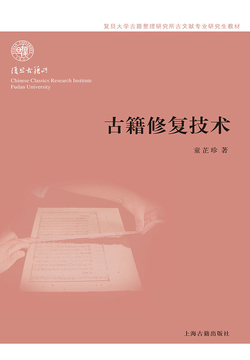
Restoration Techniques for Ancient Books
Tags
Summary
Editor's review
Who it's for
A good fit for
- Professionals engaged in ancient book restoration and cultural relic conservation
- Document managers in libraries, museums, and archives
- Students and researchers in history, philology, cultural relic restoration, and related fields
- Enthusiasts with a strong interest in traditional crafts and cultural heritage preservation
Not a good fit for
- General readers seeking light reading or fiction
- Beginners hoping to quickly master simple manual restoration techniques (the book focuses on systematic professional methods)
Reading tips
- It is recommended to first read Chapter 1, "Basic Concepts of Ancient Book Restoration," to understand restoration ethics and technical principles before moving on to the practical chapters
- While reading, refer to the illustrations in the book, especially the before-and-after restoration comparison cases
- For descriptions of key techniques (such as paste concentration control and paper dyeing for repairs), it is advisable to read repeatedly and take notes
About the publisher
Shanghai Classics Publishing House is a professional publisher centered on the collation of ancient texts and academic research works. Its publishing areas cover historical readings, classical poetry, folk literature, literary appreciation, canonical works, and Eastern philosophy. Its books include Chen Yinke's A Brief Discussion of the Origins of the Sui and Tang Institutions, Xin Qiji's Chronological Annotated Edition of Jiaxuan's Ci (Simplified Edition), Tang Xianzu's The Peony Pavilion, Liu Xie's The Literary Mind and the Carving of Dragons, as well as New Annotations to Three Hundred Tang Poems (Collector's Edition), Annotated Edition of Han Changli's Collected Works (Simplified Edition, 3 volumes), and Youyang Zazu. Its authors include Chen Yinke, Xin Qiji, Tang Xianzu, Liu Xie, Deng Guangming, Hengtang Tuishi, Han Yu, and Ma Qichang. In terms of publishing characteristics, the house emphasizes collation, annotation, and compilation of ancient texts alongside academic research works, and continues to issue simplified and collector's editions that balance scholarship and accessibility. Public information about the publisher's fuller publishing profile is limited.
Contents
- 版权信息
- 序
- 第一讲 古籍修复概况
- 第一节 古籍与古籍修复
- 第二节 古籍的不同形制与装修特点
- 第二讲 古籍修复所需设备、工具与材料
- 第一节 修复所需设备与工具
- 第二节 修复所需材料
- 第三讲 修复材料的加工
- 第一节 浆糊制作
- 第二节 绫、绢及锦绫托裱
- 第三节 材料染制方法
- 第四讲 修复的各种技法
- 第一节 修补技法
- 第二节 托裱技法
- 第三节 揭裱技法
- 第四节 去污技法
- 第五讲 线装与毛装的装修技法
- 第一节 线 装
- 第二节 金镶玉式线装
- 第三节 毛 装
- 第六讲 蝴蝶装的装修技法
- 第一节 蝴蝶装
- 第二节 线装式蝴蝶装
- 第七讲 包背装的装修技法
- 第一节 软面包背装
- 第二节 硬面包背装
- 第八讲 册页的装修技法
- 第一节 折 装
- 第二节 尺牍类册页
- 第三节 书法类册页
- 第四节 拓片类册页
- 第九讲 轴装和片式的装修技法
- 第一节 卷子本
- 第二节 手 卷
- 第三节 立 轴
- 第四节 横 披
- 第五节 片式的装修
- 第十讲 存放古籍的各类函套制作技法
- 第一节 四合套制作
- 第二节 六合套制作
- 第三节 锦盒制作
- 后记
FAQ
Is this book suitable for readers with no foundation at all?
Does the book include the application of modern technology in ancient book restoration?
Do the cases in the book cover different types of ancient books?
Related on WeRead



Comments
Find this book
This site is an index: you start “Search all sources” in your browser, and the entries it lists all point to third-party sites; please judge their availability yourself.
About the author
Tong Zhizhen is an author about whom limited public information is available. The only work recorded in the database under this name is The Techniques of Restoring Ancient Books. Judging from its title, the book is likely a specialized technical volume in the field of ancient book conservation and restoration, probably covering types of damage to paper documents, restoration materials, operating procedures, and craft standards. Its intended readers may include students in related fields, library staff, and professionals engaged in the preservation of ancient books. Book restoration is a highly practical craft that requires knowledge of paper, binding, and editions as well as careful manual skill, so such books tend to combine technical explanation with operational guidance. Because no clear records of the author's life, education, or career are available, her writing style and actual influence cannot be fully assessed. The subject matter nonetheless shows an interest in the specialized field of preserving and continuing traditional cultural materials. Existing classification information places the work in the exam category, possibly indicating a textbook or training-book orientation. Overall, with very limited material, it can only be confirmed that Tong Zhizhen writes on the techniques of restoring ancient books; further details await more public information.
