

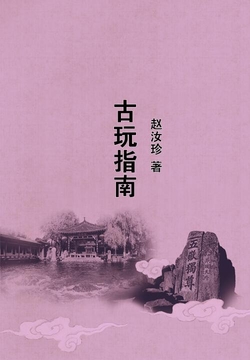
A Guide to Antiques
Tags
Summary
Editor's review
Who it's for
A good fit for
- Beginners interested in antique collecting who want to build basic knowledge
- Readers who enjoy traditional cultural artifacts and wish to gain general knowledge
- People in antique-related industries who need to refer to old classification concepts
- Lovers of literature and history who want to understand early writing on antique appreciation
Not a good fit for
- Practical buyers seeking modern authentication techniques and market conditions
- Collectors and investors looking for the latest auction data and investment advice
- Readers who only want fine illustrated catalogs and visual appreciation
Reading tips
- Read the general classification overview first to build an overall framework of artifact categories, then move on to specific entries.
- Treat the authentication experience in the book as historical material and read it in comparison with modern professional opinions.
- Note unfamiliar vessel shapes and terminology as you read, and deepen your impression with museum objects or illustrated catalogs.
- Do not use this book to directly judge authenticity or make bids; for important transactions, be sure to consult modern professionals.
About the publisher
Beijing Huiju Wenyuan Cultural Development Co., Ltd. is a cultural institution focused on publishing traditional Chinese classics. Public information about the company is limited, and its publishing profile is mainly reflected in the 83 books in the database. Judging from its representative titles, the company attends to classics across the traditional Four Categories of Chinese literature. The Lotus Sutra relates to Buddhist literature; Comprehensive Institutions, A Record of Reading in the Prefectural Studio, and The Meaning of Textual Criticism are works of history and bibliography; New Songs from the Jade Terrace is a literary anthology; Agricultural Administration in Its Entirety concerns agricultural policy and practice; and Annotations to the Gongyang Commentary on the Spring and Autumn Annals and Discourse on the Song Dynasty reflect the directions of classical scholarship and historical commentary. Its authors include Du You, Chao Gongwu, Xu Ling, Xu Guangqi, He Xiu, Zhang Xuecheng, and Wang Fuzhi, as well as anonymous works. Its common categories center on classic works, social sciences, Eastern philosophy, literary appreciation, and philosophical reading, indicating a publishing orientation characterized by the organization of traditional scholarly primary texts and the promotion of traditional cultural reading.
Contents
- 版权信息
- 瓷器述要
- 瓷器之作伪
- 瓷器之鉴别
FAQ
Can this book be used directly to authenticate antiques?
Is it difficult to read with no collecting background at all?
Is the content outdated?
Is it suitable as a gift for antique lovers?
Related on WeRead

Comments
Find this book
This site is an index: you start “Search all sources” in your browser, and the entries it lists all point to third-party sites; please judge their availability yourself.
About the author
Zhao Ruzhen is an author whose biographical details are scarce; currently available public information is limited, and no reliable records of his birth and death dates, native place, or educational background have been found. Within the library's holdings, he is associated with the book Guwan Zhinan (A Guide to Antiques), which is the main work currently traceable to him. The book deals with the appreciation and collection of antiques, covering the identification of objects, the origins of various categories, and traditional literati tastes; it combines reference value with practical guidance and is often grouped under Eastern philosophy. In terms of style, the author emphasizes clear, well-organized classification, using plain language to sort out antique categories and key points of connoisseurship, offering general readers an entry point into the field of traditional collecting. Although direct records about Zhao Ruzhen himself are few, Guwan Zhinan has continued to exert influence in popularizing knowledge of antiques and serves as a reference for later readers seeking to understand traditional connoisseurship and collecting culture.
