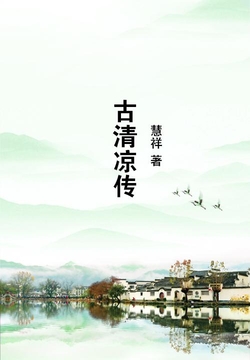
Record of Ancient Qingliang cover

Record of Ancient Qingliang

Rating 3.9
Word count
14K words
Chapters
9

Tags

Summary

Ah! The famous mountain of the Purple Mansion, where the Seven Buddhas dwell in truth; the holy realm of Qingliang, where ten thousand bodhisattvas conceal their traces. It spans past and present, and is fully recorded in maps and texts. Fragrant and wondrous flowers and numinous herbs; gleaming secluded rocks and cold springs. Auspicious vapors breathe forth in the forest; propitious clouds stretch across the ridges. By night the dark crags shine bright as lamps and candles ever burning; at dawn the jade-green caves resound with the deep boom of drums and bells. Old men wander free in the valleys; youths play amid mist and rosy clouds. Radiant are the adorned towers and pavilions; towering are the lofty and splendid halls. Sometimes eminent monks come from afar to visit.

Editor's review

A Record of Ancient Qingliang is an early geographical record devoted to the Buddhist sacred sites and Manjusri faith of Mount Wutai (Qingliang Mountain), compiled by Huixiang in the Tang dynasty. This new edition presents it in clean, simply set type; the main text alternates parallel prose and free prose in an archaic, elegant tone, preserving the medieval imaginative writing about the holy realm of Qingliang while also embodying an early form of geographical gazetteer of a famous Buddhist mountain. Passages on the famous mountain of the Purple Mansion, the Seven Buddhas dwelling in truth, and ten thousand bodhisattvas concealing their traces combine religious narrative with geographical gazetteer, unfolding like a journey along a mountain path, with auspicious vapors, propitious clouds, dark crags, and jade-green caves appearing in turn. For those studying Buddhist geography, mountain worship, medieval Buddhist literature, and the cultural history of Mount Wutai, this is a rare primary text. General readers interested in the culture of famous Buddhist mountains may also keep it as bedside reading, retracing the holy realm of Qingliang through ancient eyes and sensing that deep and solemn mountain-forest atmosphere.

Who it's for

A good fit for

  • Buddhist culture researchers and enthusiasts concerned with mountain worship and Manjusri faith
  • Researchers of medieval literature and texts needing early gazetteer-type sources
  • Cultural travelers interested in the history and geography of Mount Wutai
  • General readers who enjoy archaic parallel prose and casual reading of religious texts

Not a good fit for

  • Beginning readers seeking popular stories or modern vernacular interpretation
  • Readers lacking patience for Buddhist terminology and classical Chinese expression

Reading tips

  1. Read the main text once through to feel the rhythm of alternating parallel and free prose; do not seek word-by-word meaning.
  2. Read alongside a map of Mount Wutai or related geographical materials to locate the sacred sites described.
  3. Look up Buddhist terms and place names in reference works as needed; no need to memorize—focus on sensing the prose's spirit.
  4. May be read against later gazetteers of Mount Wutai to observe the continuity and change in the tradition of writing the sacred mountain.

Contents

  1. 版权信息
  2. 古清凉传序
  3. 古清凉传卷上
  4. 立名标化一
  5. 封域里数二
  6. 古今胜迹三
  7. 古清凉传卷下
  8. 游礼感通四
  9. 支流杂述五

FAQ

Is this book in vernacular or classical Chinese?
The main text is in classical Chinese with a marked combination of parallel and free prose, archaic and concise in language. This new edition does not provide sentence-by-sentence vernacular translation; it suits readers with some grounding in classical Chinese or willing to read slowly and savor. Those with weaker classical Chinese may use reference works and related scholarship for assistance.
What can general readers gain from this book?
They can learn how Tang-era people imagined and wrote about the holy realm of Qingliang on Mount Wutai, and feel the unique charm of geography and faith interwoven in the culture of famous Buddhist mountains. Even without research purposes, it can be read as an archaic mountain-forest miscellany, savoring the auspicious vapors, propitious clouds, secluded rocks, and cold springs in the ancient writer's brush.
Is Qingliang Mountain mentioned in the book today's Mount Wutai?
Qingliang Mountain is one of the old names of Mount Wutai, so called for its cool climate. The famous mountain of the Purple Mansion and the places where the Seven Buddhas dwell in truth all point to the sacred Buddhist mountain geography centered on Mount Wutai. Readers may read alongside present-day maps and temple distribution of Mount Wutai.

Related on WeRead

Comments

Find this book

This site is an index: you start “Search all sources” in your browser, and the entries it lists all point to third-party sites; please judge their availability yourself.

About the author

慧祥 Author

Hui Xiang, whose life details are now unknown, is the author of the Chinese Buddhist text Gu Qingliang Zhuan (A Record of Mount Qingliang). Public information about him is limited. The work is an early specialized record that systematically describes the Buddhist geography of Mount Wutai (Mount Qingliang) and the cult of Manjushri, and it is of considerable value for the history of Buddhist sacred sites and mountain monasteries. In genre it combines geographical gazetteer, monastery record, and miracle tales: it describes the mountain's topography, the distribution of monasteries, and the activities of monks, while also collecting legends and response stories related to Manjushri faith. Its style is plain and concise, blending early Buddhist biography with miscellaneous records of the marvelous. Later generations regarded it as an important source for understanding Buddhism at Mount Wutai before the Tang dynasty, and it is often cited in studies of Buddhist history and local culture; in Chinese book classification it is usually placed under literary appreciation or Buddhist classics. Because reliable records about Hui Xiang himself are extremely scarce, his native place, dates, and career cannot be verified, and readers should focus on the documentary value and writing features of Gu Qingliang Zhuan rather than speculate excessively about his life.

Top rated in the same category