

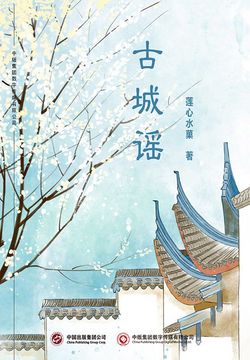
Ballad of the Ancient City
Tags
Summary
Editor's review
As an editor, I believe the value of such works often lies not in grand narratives or popular tropes, but in the unique cultural perspective they may contain, their delicate emotional portrayals, or their deep exploration of a particular time and place. It may be a narrative work with essayistic or poetic qualities that requires quiet, attentive reading. For readers, reading "Ballad of the Ancient City" is more like a cultural stroll into an unknown realm; its appeal lies in discovering how the author transforms a personal understanding of an ancient city, history, or some cultural symbol into moving prose. Its reading value may be reflected in savoring details, absorbing the atmosphere, and adapting to a non-mainstream narrative rhythm. If readers expect fast-paced plotting or genre templates, they may feel out of place; conversely, if they can immerse themselves in the unique context the author creates, they may gain a distinctive reading experience.
Who it's for
A good fit for
- Readers with a strong interest in ancient cities and historical and cultural themes
- Literature lovers who enjoy a leisurely pace and emphasis on atmosphere and textual beauty
- Readers willing to explore relatively niche works by lesser-known authors that may contain a unique style
- Readers seeking cultural contemplation or emotional wandering through reading
Not a good fit for
- Readers who pursue strong plotting, fast pacing, and clear story conflicts
- Readers looking for mass-market bestsellers or classic literature
Reading tips
- It is recommended to begin reading in a quiet environment so as to better enter the leisurely or nostalgic atmosphere the work may create.
- Try to treat the reading process as a 'cultural journey,' focusing on the author's descriptions of scenes, details, and emotions rather than rushing to follow the plot.
- After reading, if interested, you may look up materials related to the ancient city or cultural background mentioned in the book for further understanding, which may deepen your appreciation of the work.
About the publisher
China Publishing Group Digital Media Co., Ltd. takes digital publishing as its main business, with titles spanning traditional medical classics and classical literature. Its catalogue includes medical works such as Treatise on Cold Damage, Essential Prescriptions from the Golden Cabinet, and The Pulse Classic, involving writings by Zhang Ji, Wang Shuhe, Lin Yi, and Zhang Jiebin. In literature, it offers Wu Jingzi's The Scholars and Xiao Hong's Tales of Hulan River, as well as foreign literary translations such as Fu Lei's rendering of Voltaire's Candide. Its publishing focus thus falls roughly into medicine, social fiction, foreign literature, and fine fiction, reflecting a balance between collated ancient texts and general reading. As public information is limited, this summary is based only on the books in the catalogue and draws no further inferences.
Contents
- 版权信息
- 前言
- 序章 昭明夕照
- 第一章 滨海古堡
- 第二章 料峭夜风
- 第三章 不速之客
- 第四章 扑朔迷离
- 第五章 霉运临头
- 第六章 街头冲突
- 第七章 祈福之宴
- 第八章 真假倭寇
- 第九章 天狗食月
- 第十章 兄妹重逢
- 第十一章 半夜乌龙
- 第十二章 偷鸡的贼
- 第十三章 罪恶之手
- 第十四章 月下诡影
- 第十五章 火熏古樟
- 第十六章 意外之喜
- 第十七章 埋下隐患
- 第十八章 中秋曳石
- 第十九章 城堡抗倭
- 第二十章 尘埃落定
- 尾声
FAQ
Is this book a novel or a collection of essays?
Has the author Lianxin Shuiguo written other works?
Is this book suitable as light, casual reading?
Related on WeRead

Comments
Find this book
This site is an index: you start “Search all sources” in your browser, and the entries it lists all point to third-party sites; please judge their availability yourself.
About the author
Public information about the author writing under the name Lianxin Shuiguo is currently limited: no reliable records are available regarding nationality, dates of birth and death, or true identity. Only one work by this author is held in the collection, Gucheng Yao (Ballad of the Old City). In terms of common classification, Gucheng Yao falls under the category of otherworld-continent fiction, a genre that typically uses an invented world as its stage and unfolds its narrative through geography, peoples, and historical settings, with emphasis on world-building and on the choices characters make under unfamiliar rules. On the basis of the available information, Lianxin Shuiguo's creative profile remains incomplete, and it is difficult to judge the full range of their writing style or personal background; all that can be confirmed is that this one work was published under this pen name. The title Gucheng Yao carries connotations of remembrance and local chronicle, forming a contrast with the invented otherworld-continent setting and offering readers a clue for entering the author's narrative world. A fuller account of this author's creative trajectory would require the appearance of further works or materials.
