

Ancient Ethnic History
Tags
Summary
Editor's review
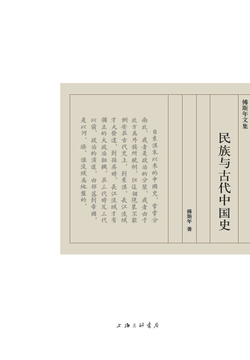
In structure, the book is not confined to a single ethnic group; it seeks to sketch the migrations and evolution of numerous peoples across the Chinese landmass from prehistory to the Qin and Han periods, and their interactions with Central Plains civilization. It discusses the distribution, cultural features, and historical fortunes of ancient ethnic groupings such as the Dongyi, Xirong, Nanman, and Beidi, and is foundational for understanding the historical formation of the "pluralistic unity of the Chinese nation."
The book's style is rigorous and plain, emphasizing the arrangement and synthesis of historical sources; it is a solid introductory academic work. It helps readers build a basic spatial and temporal framework for ancient Chinese ethnic relations and clarify what many historical terms specifically refer to. Readers should note, however, that the study of ancient ethnic history is itself a dynamic field, and some views may be open to discussion as archaeology and scholarship advance. The book's value lies in offering a relatively complete and clear body of knowledge—a reliable signpost into this broad and complex field. For non-specialist readers, it may offer a deeper understanding of Chinese history that goes beyond traditional dynastic narratives.
Who it's for
A good fit for
- History enthusiasts interested in the origins and early formation of the Chinese nation.
- Students of history, ethnology, anthropology, and related fields, as supplementary reading.
- Readers who wish to understand ancient China's frontier history and interactions among ethnic groups.
- Readers who enjoy systematically organized knowledge and building a macro-historical framework.
Not a good fit for
- Popular history readers seeking light, story-driven, novel-like reading.
- Specialist researchers expecting the latest cutting-edge academic debates (the book emphasizes foundational synthesis).
Reading tips
- Reading alongside The Historical Atlas of China, edited by Tan Qixiang, is recommended to better understand ethnic distribution and migration within geographical space.
- Pay attention to how relations between different ethnic groupings and Central Plains dynasties evolved, and reflect on the processes of cultural fusion and political integration.
- Because many ancient ethnic names and geographical terms are involved, taking notes or drawing simple relationship charts can aid understanding.
About the publisher
Henan University Press operates in the fields of educational publishing and academic publishing, with books covering classical literature, social novels, world classics, folk literature, and foreign literature. Representative works in the catalog include the Chinese classical novels Dream of the Red Chamber, Journey to the West, Romance of the Three Kingdoms, and Water Margin, as well as Chinese and foreign literary classics such as Xiao Hong's The Field of Life and Death, Ernest Hemingway's The Old Man and the Sea, and Jules Verne's Twenty Thousand Leagues Under the Sea. Its author resources include classical writers such as Cao Xueqin, Gao E, Wu Cheng'en, Luo Guanzhong, and Shi Nai'an, along with modern and contemporary authors and translators such as Xiao Hong, Ernest Hemingway, and Zhang Chiheng. Drawing on its university background, the press emphasizes the collation and promotion of classic texts and has built up a certain selection of literary titles. Public information on its specific publishing features and series plans is limited.
Contents
- 编写说明
- 一、古代民族1
- 一、古代民族2
- 一、古代民族3
- 二、古代民族人物1
- 二、古代民族人物2
- 三、边疆与边疆民族
- 后记
FAQ
How academically difficult is this book? Is it suitable for general readers?
Up to what historical period does the book's content extend?
How does this book differ from works such as Wang Mingke's The Edge of the Hua?
Related on WeRead
Comments
Find this book
This site is an index: you start “Search all sources” in your browser, and the entries it lists all point to third-party sites; please judge their availability yourself.
About the author
Li Munan is a Chinese author with a considerable body of work, though public information about him is limited, and details such as his nationality, birth and death years, and personal background are not clearly recorded. Judging from the 262 titles held in the collection, his writing spans several fields, including popular science, inspirational growth, parenting, and fashion. Representative works include Don't Underestimate This Knowledge, Learn Like a Scientist, Bizarre Plants, How Scientists Learn, Think Like a Scientist, Stories of the Growth of Chinese Education Masters, Classic Education Stories from China and Abroad, and The Greatest Technological Inventions. These titles suggest that he excels at turning scientific knowledge, learning methods, and educational stories into accessible reading for young readers and parents concerned with their children's development. Overall, his works focus on popularizing knowledge and inspiring personal growth, with plain language and themes close to everyday reading needs, forming a practical style within science and education books.
