

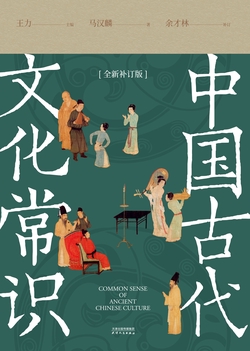
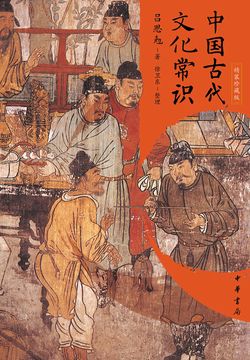
Common Knowledge of Ancient Culture
Tags
Summary
Editor's review
Who it's for
A good fit for
- Readers of literature and history with a strong interest in traditional Chinese culture who wish to build a systematic knowledge base.
- University or graduate students majoring in ancient Chinese, history, literature, and related fields.
- Professionals in writing, editing, museums, education, and other fields who need a solid grounding in traditional culture.
- Readers who already have some foundation in reading classical Chinese and wish to deepen their understanding of the cultural connotations behind texts.
Not a good fit for
- Readers seeking only light, fast-paced reading experiences such as entertaining stories about historical anecdotes.
- Readers who are uncomfortable with highly structured, knowledge-focused textual formats.
Reading tips
- A combination of 'thematic reading' and 'reference consultation' is recommended; there is no need to read it straight through.
- It is best to keep a notebook at hand while reading, connecting and supplementing the content with one's existing knowledge to form a personal knowledge network.
- It can be read alongside specific works of ancient literature (such as the Book of Songs, Records of the Grand Historian, Tang and Song poetry, etc.) to verify and apply the book's knowledge in practice and gain deeper understanding.
About the publisher
Zhonghua Book Company is a publisher known for collating ancient texts and academic publishing, with its output centered on Eastern philosophy, culture, classic works, art, and historical reading. Its library contains 532 titles, including Chen Shou's Records of the Three Kingdoms, Guo Qingfan's Collected Commentaries on Zhuangzi, the four-volume Chinese Literature: Four Great Classical Novels, and the two-volume Table of Seal and Clerical Script Forms from Qin, Han, Wei, and Jin. These titles span historical classics, commentaries on the philosophers, classical novels, and philological reference works. Representative authors include Chen Shou, Guo Qingfan, Wu Cheng'en, Shi Nai'an, Cao Xueqin, Luo Guanzhong, Xu Wenwu, and the Hanyu Dazidian character-form group, reflecting a focus on primary sources and scholarly editors. Its publishing character lies in combining authoritative editions and annotated texts with both accessible classics and specialized research. Public information on its fuller catalog is limited; this note describes only the directions evident in the library's holdings.
Contents
- 版权信息
- 作者简介
- 第一章 天文
- 七政
- 四象二十八宿
- 三垣
- 十二次
- 分野
- 第二章 历法
- 日、月、年、置闰
- 二十四节气
- 干支纪年
- 干支纪时
- 月建
- 星岁纪年
- 三正
- 节日
- 第三章 乐律
- 五音六律
- 乐调
- 律中
- 第四章 地理
- 第五章 职官
- 中央官制
- 地方官制
- 品阶勋爵
- 第六章 科举
- 察举、策问
- 明经、进士
- 清代科举
- 第七章 姓名
- 姓与氏
- 名与字
- 谥号
- 年号
- 避讳
- 第八章 礼俗
- 阶级、阶层
- 冠礼
- 婚姻
- 丧葬
- 第九章 宗法
- 族、昭、穆
- 大宗、小宗
- 亲属
- 丧服
- 第十章 宫室
- 宫室、台观
- 建筑材料和建筑技术
- 第十一章 车马
- 第十二章 饮食
- 粮食作物
- 肉食
- 饮品
- 第十三章 衣饰
- 头衣
- 服饰
- 鞋袜
- 第十四章 什物
- 席、床、几、案
- 日用工具
- 饮食器具
- 附录:插图目录
FAQ
How does this book differ from a general 'History of Ancient Chinese Culture'?
There are many editions of this book. Which one should I choose?
Will this book be too difficult for complete beginners?
Related on WeRead


Comments
Find this book
This site is an index: you start “Search all sources” in your browser, and the entries it lists all point to third-party sites; please judge their availability yourself.
About the author
Wang Li (1900–1986), courtesy name Liaoyi, was a native of Bobai, Guangxi, and one of the founders of modern Chinese linguistics as well as a professor at Peking University. He devoted his life to the teaching and study of Chinese, making outstanding contributions to phonology, grammar, lexicology, the history of the Chinese language, prosody, and script reform. His works include A Modern Chinese Grammar, A Draft History of the Chinese Language, and A History of Chinese Linguistics, and he was editor-in-chief of Ancient Chinese. His writings combine scholarly depth with readability. More than thirty of his titles are held in this collection, covering textbooks on ancient Chinese, the history of Chinese grammar, and common knowledge of ancient Chinese culture. They are often found in categories such as literary appreciation, culture, language and writing, and examinations, and are suitable for language learners and readers interested in literature and history.
