

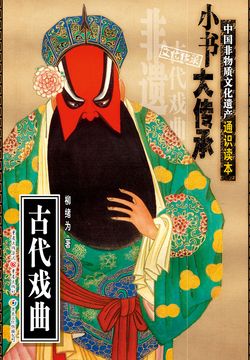
Ancient Chinese Opera
Tags
Summary
Editor's review
The core value of the book lies in its unique interpretive perspective. It does not stop at isolated appreciation of classic texts such as The Romance of the Western Chamber and The Peony Pavilion, but places drama within the broader context of social and cultural history, exploring its interactions with court ritual, urban life, literati gatherings, and even philosophical currents. Readers can clearly see how drama gradually evolved from sacrificial music and dance and the jesting of court entertainers into a mature comprehensive art integrating literature, music, dance, and fine art. The analysis of key stages such as Song-Yuan Southern plays, Yuan zaju, and Ming-Qing chuanqi is especially incisive, tracing institutional changes while revealing how the spirit of the age shaped artistic forms.
What is particularly valuable is that the author maintains clarity and readability in professional discussion, citing classics without obscurity and expressing clear views without losing prudence. For readers who wish to go beyond plot summaries and truly understand the inner logic and historical fate of drama as a traditional art, this book provides reliable guidance and an illuminating framework for thought. It is not merely a handbook of knowledge but a key that opens the door to the world of classical Chinese aesthetics.
Who it's for
A good fit for
- Deep readers with a strong interest in classical Chinese literature and traditional culture
- Students and researchers in university departments of Chinese, history, and art
- Drama enthusiasts who wish to understand theatrical history systematically rather than appreciate only individual plays
- People engaged in cultural creation or education who need to draw on the nourishment of traditional art
Not a good fit for
- Readers seeking only light entertainment stories or the original texts of plays
- Lovers of visually oriented books who expect large numbers of pictures and stage photographs
Reading tips
- Can be read in chronological order by dynasty to build a clear timeline of theatrical development
- May be combined with listening to classic excerpts such as the Kunqu opera Interrupted Dream and the Peking opera Farewell My Concubine to connect theory with practice
- For specific periods or playwrights of interest, consult the references in the book for further reading
About the publisher
Chongqing Publishing House is a comprehensive publisher known for its titles in the humanities, social sciences, literature and arts, with about 940 books in its catalogue. Its publishing areas cover world history, science fiction, foreign literature, architecture and philosophy. Representative titles include Xiang Da's A History of Communications Between China and the West, Liang Sicheng's Rules of Qing-Style Construction, Liu Cixin's The Three-Body Problem II: The Dark Forest and III: Death's End, Ann Rand's The Fountainhead (25th Anniversary Edition), and Brandon Sanderson's Stormlight Archive series. Its authors include Xiang Da, Liu Cixin, Liang Sicheng and Ann Rand. The press has developed distinctive strengths in historical source editing, the introduction and creation of science fiction, the translation of foreign literature, and architecture and philosophy titles, balancing scholarly value with general readership. As public information is limited, this profile outlines its publishing directions based only on the books in the catalogue.
Contents
- 版权信息
- 中国古代戏曲的起源
- 一、远古的萌芽
- 二、从优孟到参军
- 中国古代戏曲的形成
- 一、庙会与勾栏瓦舍
- 二、宋杂剧与金院本
- 中国古代戏曲的繁荣
- 一、南戏——清香的山茶
- 二、元杂剧——耐霜的金菊
- 三、南戏与元杂剧的舞台艺术
- 中国古代戏曲的辉煌
- 一、从南戏到昆曲
- 二、汤显祖与“临川四梦”
- 三、沈璟与《义侠记》
- 四、周朝俊与孟称舜
- 五、苏州作家群
- 六、南洪北孔 传奇双璧
- 七、方成培与《雷峰塔》
- 八、明清戏曲的舞台艺术
- 九、中国古代戏曲的理论研究
- 中国古代戏曲的新生
- 一、花部戏曲的萌发
- 二、花部戏曲的绽放
- 三、花部戏曲的舞台艺术
- 戏曲艺术的召唤
- 推荐书目
FAQ
What is the book's Douban rating?
Does the book include specific play scripts?
Is this book suitable for readers with no background in drama at all?
Related on WeRead


Comments
Find this book
This site is an index: you start “Search all sources” in your browser, and the entries it lists all point to third-party sites; please judge their availability yourself.
About the author
Liu Xuwei is an author about whom little is publicly known: his birth and death dates, place of origin, and educational background cannot be confirmed. Only one work by him is currently traceable, titled Ancient Drama, which is classified under folk literature. This suggests that his writing and editorial work centered on traditional Chinese drama, with an emphasis on dramatic texts and related folk materials circulating among the people rather than on specialized study of literati plays. Given the very small number of surviving works, it is difficult to summarize his complete writing style or scholarly orientation, and his lasting influence in the field cannot be judged. Readers wishing to learn about him can only return to Ancient Drama itself and discern his approach to folk literary materials from its selection, arrangement, and narration. Overall, Liu Xuwei remains a sparsely documented author with few works, whose significance awaits further documentation.
