

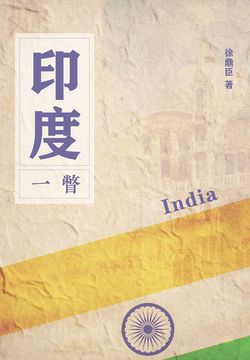
A Glimpse of India
Tags
Summary
Editor's review
Who it's for
A good fit for
- General readers interested in Indian religious culture
- Readers seeking short cultural pieces to fill spare moments
- Those who enjoy Republican-era travel-essay style and old-edition charm
- Readers who wish to understand different countries through comparative reading
Not a good fit for
- Readers seeking contemporary Indian political and economic data
- Researchers looking for systematic academic discussion
- Readers with no interest in religious subjects
Reading tips
- Read the whole book first, then return to the opening and note how the author threads the wandering ascetic through the text
- Consult a map for the towns and temples mentioned to build a geographical impression
- Read alongside A Glimpse of America and compare the differences in approach and perspective
- After reading, briefly note one or two scenes that left the strongest impression to aid retention
About the publisher
The Commercial Press is a publisher known for classic works and academic publishing, with titles spanning Eastern philosophy, foreign literature, world history, social culture, and applied psychology. Its list includes classical commentaries such as Zhu Xi's Collected Commentaries on the Analects and Wang Bi's Commentary on the Zhouyi, as well as modern annotated translations like Zhuangzi with Modern Notes and Translation. In foreign literature it offers War and Peace and Crime and Punishment, while in world history it carries Braudel's The Mediterranean and the Mediterranean World in the Age of Philip II. Applied psychology is represented by Irvin D. Yalom's Existential Psychotherapy, and ethical texts include a Greek-Chinese-English edition of the Nicomachean Ethics. Its authors and translators include Zhu Xi, Wang Bi, Yalom, Braudel, and translators such as Huang Zheng, Zhang Yiling, Shen Dongyu, and Tang Jialong, balancing the editing of original texts with academic translation.
Contents
- 版权信息
- 第一章 印度的门户
- 第二章 拉奇普特人的住所
- 第三章 般遮布区域
- 第四章 喜马拉雅山中
- 第五章 恒河流域的大平原
- 第六章 蒙古王的管辖境
- 第七章 变乱的城镇
- 第八章 印度人的圣城
- 第九章 印度的首都
- 第十章 德干平原
- 第十一章 土侯的秘宫
- 第十二章 行脚僧、游方僧
- 第十三章 商场
- 第十四章 森林
- 第十五章 乡村
FAQ
Is this book suitable as a reference before traveling abroad?
Can I understand it without a background in religion?
Why is the book called a "Glimpse"?
Related on WeRead
Comments
Find this book
This site is an index: you start “Search all sources” in your browser, and the entries it lists all point to third-party sites; please judge their availability yourself.
About the author
Xu Dingchen is an author about whom little public information is available; his biography, nationality, and dates of birth and death are not clearly recorded. According to the information currently available, he is associated with works on world history and is represented by Glimpses of India. This work offers an overview-style introduction to India and falls within the field of world history, making it suitable for readers who wish to gain a quick understanding of India's history and society. The word "glimpses" in the title suggests that the writing emphasizes broad outlines and selected key points rather than an elaborate, detailed historical narrative; such an approach is usually concise and clearly structured, and is well suited to introductory reading. Since this is the only work by Xu Dingchen in the collection, discussion of him and his writing remains limited, and an assessment of his style and influence must await the disclosure of further materials.
