

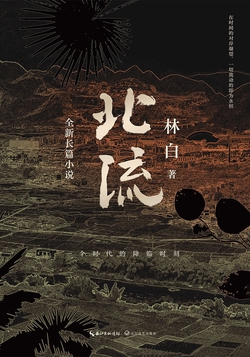
Northward Flow
Tags
Summary
Editor's review
Who it's for
A good fit for
- Readers interested in southern regional literature and dialect writing
- Literary enthusiasts drawn to family history and local chronicles from a female perspective
- Readers who enjoy richly regional novels such as Blossoms and The Right Bank of the Argun
- Thinkers who want to understand how contemporary literature reconstructs the relationship between personal memory and history
Not a good fit for
- Readers expecting strong plot and fast-paced traditional narrative
- Readers who find the experimental textual structure and dialect intervention difficult
Reading tips
- Begin with the appendix section "Language Membrane" to understand the author's thinking on the relationship between dialect and Mandarin
- Read alongside a map of the Lingnan region to feel the overlap of geographical space and memory space in the text
- On a second reading, focus on the intertextual relationship between the "commentary" and the main text to appreciate the structural depth
About the publisher
Founded in Wuhan in 1955, Yangtze River Literature and Art Publishing House is a literary publisher under Hubei Changjiang Publishing and Media Group. Public information is limited, so the following focuses on the publishing directions reflected in the books in our database. The press publishes modern and contemporary Chinese literature, classical literary studies, translated foreign literature and educational works. Its catalog includes Chen Yinke's Studies on the Origins of Sui and Tang Institutions and On Tang Political History and The Unofficial Biography of Liu Rushi, Lao She's Camel Xiangzi and Four Generations Under One Roof, and Selected Essays of Lu Xun, as well as translations such as Yasunari Kawabata's Snow Country and educational writings by Sukhomlinsky. Its publishing character lies in balancing literary classics with scholarly works, with attention to textual editing and the accumulation of major authors' works; its author resources span leading modern writers, historians and foreign authors.
Contents
- 版权信息
- 序篇 植物志
- 注卷 六日半
- 章一 赶路的一日
- 章二 之前的半日
- 章三 这一日
- 章四 下一日
- 章五 又一日
- 章六 仍一日
- 章七 再一日
- 疏卷 在香港
- (A)异地。母语。米缸。
- (B)重叠。参照性。一种连绵。
- 疏卷 火车笔记/滇中
- 一 书
- 二 滇中,钟
- 注卷 县与城
- 姨婆与世界革命
- 美,而短
- 香港的舅舅
- 夜晚的赖诗人
- 疏卷 火车笔记(二)
- 一 蛙
- 二 粪
- 注卷 小五世饶的生活与时代
- 章一 树上(1952—1965)
- 章二 信(1979—1985)
- 章三 在路上(1965—2007)
- 章四 二十一个
- 疏卷 滇中
- 滇中 艾
- 滇中 帖
- 滇中 诵
- 注卷 姐弟
- 章一 往时
- 章二 梁远照
- 章三 乱麻
- 章四 青苔
- 疏卷 火车笔记(三)
- 一 食
- 二 贵阳
- 三 番石榴
- 散章 葱,绿荣
- 注卷 六感
- 重叠的时间
- 疏卷 滇中
- 滇中 茶
- 滇中 香气
- 注卷 县与城
- 一《梭罗河》
- 二 陈地理
- 三 麻雀
- 四 花果山的龌孩
- 散章 梯
- 注卷 泽鲜
- 后章 语膜/2066
- 时笺 倾偈
- 章一
- 章二
- 章三
- 注卷 备忘短册
- 异辞 姨婆的嘟囔,或《米粽歌》
- 尾章 宇宙谁在暗暗笑
- 《李跃豆词典》补遗
- 别册 织字
- 引:蜘蛛为何在洗澡时出现
- 织
- 前章 香港
- 卷一 为了米豆的正义
- 卷二 远照的屋厅
- 卷三 食饭闲聊录
- 卷四 树上的日子
- 后章 姨婆的异辞
- 题献
- 支册 李跃豆词典
FAQ
Does the "commentary" structure of Bei Liu affect reading continuity?
Will not knowing Cantonese affect comprehension?
How does this work relate to Lin Bai's earlier works?
Related on WeRead

Comments
Find this book
This site is an index: you start “Search all sources” in your browser, and the entries it lists all point to third-party sites; please judge their availability yourself.
About the author
Lin Bai is an author writing in Chinese. Publicly available information about this author is limited: the database contains no confirmed details about the name in English, nationality, or dates of birth and death. One work is known under this name, Beiliu (North Flow), which is commonly classified as a social novel. That classification suggests Lin Bai's writing likely turns its attention to people and events in real society, using narrative to present how individuals find themselves and make choices within specific social circumstances. Because the existing material covers only this single work, it is not yet possible to form a complete picture of the author's overall body of work, nor to judge whether the writing style has changed over a longer period. Based on what is currently visible, Beiliu is the most direct entry point for understanding Lin Bai's writing, allowing readers to sense the author's choice of subject matter and approach to narrative. More biographical details and literary activities await further public information.
