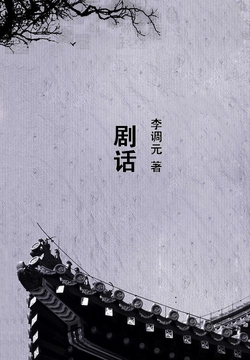
Talks on Drama cover

Talks on Drama

Rating 3.7
Word count
17K words
Chapters
4

Tags

Summary

Traditional Chinese thought and culture have a long history and are highly original, inventive and literary. Early forms of thought are highly distinctive: religious theology, medical classics, ancient military texts, Confucianism, Daoism, Buddhism and the Hundred Schools, feng shui and metaphysics, the Twenty-Four Histories, and local customs and topography are all vast and profound in content. This series, "Essential Classics of Chinese Traditional Culture: Original Texts," preserves the original appearance of the books and focuses on preserving and transmitting traditional Chinese thought and culture. By reading the literary essence left by ancient sages, readers cultivate their temperament and are subtly influenced by the classics of Chinese learning.

Editor's review

Juhua is a work by the Qing scholar Li Diaoyuan concerned with discourse on drama. It is presented here in the "Essential Classics of Chinese Traditional Culture: Original Texts" series, preserving the original appearance of the book and focusing on authenticity and transmission. Its value lies not in offering a systematic textbook history of drama, but in presenting the intellectual interests and modes of discourse of ancient literati as they watched and commented on drama: discussing repertoire, describing performance, recording observations, often in informal notes with a distinct personal perspective and period flavor. For readers familiar with classical drama, the materials in this book can be read alongside similar works such as Jushuo, revealing the different emphases of Qing dramatic theory; for ordinary readers, it is more like a side door through which to understand the place of traditional drama in literati life through ancient eyes. Reading need not aim at completion in one sitting; it suits reference-oriented, desk-side casual reading, browsed at random, with further investigation pursued when a repertoire item or topic interests you. Because the original format is not a modern academic monograph, some entries require background knowledge for full understanding; it is recommended to use it with annotated editions or reference works on drama history.

Who it's for

A good fit for

  • Readers of classical literature interested in Qing dynasty drama notes and dramatic theory
  • Enthusiasts who wish to understand traditional drama culture from the original texts
  • Researchers who need leads to dramatic historical materials for desk reference
  • Readers who enjoy essay-style notes and casual browsing

Not a good fit for

  • Readers expecting a systematic drama history textbook or modern scholarly edition
  • Beginners with no foundation in classical Chinese who need sentence-by-sentence vernacular translation
  • Readers who only want complete plots and stories and lack patience for note-style formats

Reading tips

  1. First read the table of contents and preface to understand the original format and scope, then start with entries of interest.
  2. Keep a pen handy to mark repertoire items, names, and terms, and look up related background after reading.
  3. Read alongside his Jushuo to compare the two Qing scholars' different angles on drama.
  4. No need to read in order; read several entries at a time as reference-oriented casual reading, which is easier to sustain.

Contents

  1. 版权信息
  2. 序
  3. 剧话卷上
  4. 剧话卷下

FAQ

Is this book suitable for readers without a foundation in classical Chinese?
Not very suitable for complete beginners. The book preserves the original appearance and is written in classical Chinese note style, lacking sentence-by-sentence vernacular translation. If you are interested in drama but struggle with classical Chinese, it is recommended to first choose an edited edition with detailed annotations and translations, or read this book with reference works on drama history.
What is the difference between Juhua and Jushuo? Do I need to buy both?
Both are Qing dynasty note-style works concerned with drama, by Li Diaoyuan and Jiao Xun respectively, with different emphases and recording methods. Whether to buy both depends on your reading purpose: for general browsing, either one suffices; for comparative research on Qing dramatic theory, reading them together reveals differences more clearly, but buying both simultaneously is not essential.
Can this book serve as an introductory book on drama history?
It is not suitable as an introductory textbook. It preserves the original note format, with scattered entries and no systematic chronological narrative of drama's development. As an introduction, it is recommended to first read standard drama history works to build a framework, then use this book as supplementary material and a reference for the ancient perspective.

Related on WeRead

Comments

Find this book

This site is an index: you start “Search all sources” in your browser, and the entries it lists all point to third-party sites; please judge their availability yourself.

About the author

Li Diaoyuan Author · China · 1734–1803

Li Diaoyuan (1734–1803), courtesy name Gangtang and art name Yucun, was a native of Luojiang, Mianzhou, Sichuan (present-day Deyang). A Qing-dynasty literary scholar, poet, drama theorist and bibliophile, he passed the imperial examination as a jinshi in 1763 and held posts including a position in the Ministry of Personnel and education commissioner of Guangdong, before being dismissed and returning home to devote himself to writing. His works include Yucun Quhua, Yucun Shihua and Tongshan Shiji. He also compiled the large series Hanhai and built the Wanujuan Library, housing some 100,000 volumes, contributing significantly to the preservation of texts and Sichuan culture. His Nanyue Biji records the landscape, customs and natural history of Lingnan in concise, wide-ranging notes, making it a valuable source for understanding Qing-era Guangdong.

More by the same author

Top rated in the same category