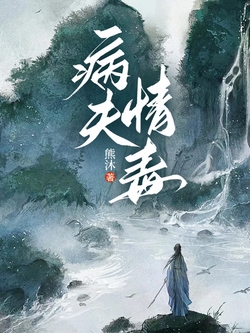
The Wandering Sword cover

The Wandering Sword

Rating 2.8
Word count
40K words
Chapters
12

Tags

Summary

Liu Piaobo was once an expert of Ironclad Fort. Entangled in romantic troubles and framed by others, he withdrew from the jianghu in disgrace and lived in seclusion in the countryside. However, Ironclad Fort was raided by the Flying Cavalry Gang and destroyed: his master was crippled, his third senior brother died in battle, and his senior brother's wife went missing. Hua Janyu finds Liu Piaobo and earnestly begs him to leave seclusion and take revenge. Recalling the past, Liu Piaobo decides to re-enter the jianghu. In the process, he joins hands with brothers such as Cheng Canglang and Sleepy Bo to fight the Flying Cavalry Gang together. They fight fierce battles at the Flying Cavalry Gang's headquarters and break through layers of obstacles. But at this point Liu Piaobo discovers that a greater conspiracy seems to lie behind the Flying Cavalry Gang, and many clues point to a startling truth. Can he uncover the conspiracy? And can he succeed in his revenge?

Editor's review

Jin Feng's Sword Drifting tells of a man wrongfully driven from the jianghu and how he draws his sword again. Liu Piaobo is framed amid romantic entanglements and lives in seclusion in the countryside, hoping to settle accounts with the past. But when Ironclad Fort is raided by the Flying Cavalry Gang, his master is crippled, his third senior brother dies in battle, and his senior brother's wife goes missing. Hua Janyu asks him to leave seclusion, and the story thus shifts into two threads: revenge and investigating a conspiracy. The book's readability lies in the fact that it does not turn revenge into a nonstop slaughter: the joining of brothers such as Cheng Canglang and Sleepy Bo gives the action both coordination and disagreement, while the advance of the fierce battle at the headquarters keeps dropping hints that "there is more behind the Flying Cavalry Gang," leading readers to ask about the truth beyond victory and defeat. Liu Piaobo's hesitation and the cost of re-entering the jianghu are written with a substantial touch, making the book suitable for readers who enjoy traditional chivalry, brotherhood, and layer-by-layer revelation. The narrative pace leans toward buildup in the early and middle sections and concentrated eruption in the later sections, making it suitable for continuous reading and also for following clues chapter by chapter.

Who it's for

A good fit for

  • Wuxia readers who enjoy traditional revenge and brotherhood
  • Readers who prefer growth arcs in which the protagonist is wrongfully forced into seclusion and then returns
  • Those interested in action scenes such as gang raids and fierce battles at headquarters
  • Plot-driven readers who want suspense to converge and clues to point toward the truth

Not a good fit for

  • Readers who only want lighthearted, humorous jianghu stories
  • Readers unsuited to early and middle buildup and who prefer a climax from the opening
  • Readers sensitive to romantic entanglements as the cause

Reading tips

  1. First sort out the origin of the grudge between Ironclad Fort and the Flying Cavalry Gang; the fierce battle at the headquarters will then make motivations clearer.
  2. Pay attention to the differences in attitude among Hua Janyu, Cheng Canglang, and Sleepy Bo; the brotherhood thread is a key focus of the book.
  3. When reading hints of the conspiracy behind the Flying Cavalry Gang, look back at details of the senior brother's wife's disappearance earlier in the text.
  4. Read chapter by chapter; when the truth is revealed in a concentrated way later, it will be easier not to be interrupted by the volume of information.

Contents

  1. 版权信息
  2. 楔子
  3. 第一章 心如死水 剑快似风
  4. 第二章 铁衣飞骑 势不两立
  5. 第三章 人约子时 知名不具
  6. 第四章 人证物证 有口难辨
  7. 第五章 红颜相助 逃出生天
  8. 第六章 风尘三侠 放荡不羁
  9. 第七章 同仇敌忾 直杀总坛
  10. 第八章 天罗地网 难困二侠
  11. 第九章 露出破绽 揭开真相
  12. 第十章 机关算尽 反赔己命

FAQ

Do I need to read a previous book first?
No. The reasons for Liu Piaobo's seclusion, the raid on Ironclad Fort, and Hua Janyu's invitation are all explained in this book, and the main character relationships unfold with the plot. Reading it directly will not make the core conflict incomprehensible for lack of a previous book.
Is the protagonist an invincible strongman who has it easy all the way?
No. Liu Piaobo once withdrew from the jianghu in disgrace because of romantic entanglements and being framed. After re-entering the jianghu, he must also rely on the cooperation of brothers such as Cheng Canglang and Sleepy Bo, and the fierce battle at the headquarters advances only after breaking through layers of obstacles. His hesitation and the cost are part of the character portrayal.
Does the story end with revenge completed, or does it leave suspense?
The materials show that after the fierce battle, Liu Piaobo discovers that a greater conspiracy seems to hide behind the Flying Cavalry Gang, and many clues point to a startling truth. In other words, while the revenge line advances, the truth line is still unfolding, and readers will read to the end with the question "What is the conspiracy?"

Related on WeRead

Comments

Find this book

This site is an index: you start “Search all sources” in your browser, and the entries it lists all point to third-party sites; please judge their availability yourself.

About the author

金锋 Author

Jin Feng is an author about whom limited public information is available. His real name, nationality, and dates of birth and death have not been clearly recorded. Judging from the two works held in the collection, his writing spans two rather different fields: political research and martial arts fiction. In the political field, he is the author of Research on the Transformation of Government Functions in China from the Perspective of National Governance Modernization, which addresses the practical issue of transforming government functions and reflects an academic research orientation. In the literary field, he has written Sword Drifting, a martial arts novel. The coexistence of these two kinds of works suggests that the author is capable of both theoretical analysis and fictional narrative. Because more verifiable biographical material is lacking, a full picture of his writing and style cannot yet be determined, and readers may form their own impression through these two types of works.

More by the same author

Top rated in the same category