

Embroidery
Tags
Summary
Editor's review
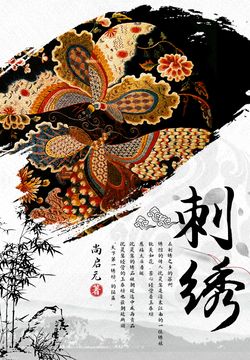
In terms of structure, the book uses region as its organizing framework, systematically surveying the technical characteristics and stylistic evolution of the four great famous embroideries—Su, Xiang, Yue, and Shu—along with numerous local traditions, with detailed material and clear organization. Particularly valuable is the inclusion of a large number of rare primary-source images, including exceptional historical masterpieces and contemporary innovative works; the images are of high quality and accompanied by professional captions, offering considerable value for appreciation and reference. In her narrative, the author focuses not only on the "inheritance" of techniques but also on exploring pathways for their "activation" in contemporary society, offering many constructive reflections on how traditional craft can be integrated with modern design and the aesthetics of daily life.
For readers, this book is like a key—one that opens the door to a world of exquisite craftsmanship and also leads toward deeper cultural inquiry. It can serve as a desk reference for professional learners seeking systematic knowledge, and is equally suitable for general readers passionate about traditional Chinese aesthetics and craft culture, who will feel in its pages the wisdom and warmth of an Eastern art that "uses thread as ink and needle as brush."
Who it's for
A good fit for
- Enthusiasts with a strong interest in traditional Chinese crafts, especially embroidery culture
- Students and professionals in art, design, costume, and related fields seeking inspiration and technical reference
- Those engaged in research, protection, or promotion of intangible cultural heritage
- Readers who wish to deepen their understanding of regional culture and folk art and incorporate it into modern aesthetics of daily life
Not a good fit for
- Complete beginners expecting a simple, step-by-step introductory embroidery tutorial
- Readers seeking only to browse beautiful images quickly, with little patience for in-depth text
Reading tips
- Begin by looking through all the images to build an intuitive sense of the various embroidery styles, then select regions or chapters of interest for close reading
- While reading, look up images or videos of related actual works based on the specific patterns or stitches mentioned in the book to deepen understanding
- Treat this book as a starting point and further explore the author's other works or the related literature cited in the book to build a more complete knowledge system
About the publisher
Chongqing Publishing House is a comprehensive publisher known for its titles in the humanities, social sciences, literature and arts, with about 940 books in its catalogue. Its publishing areas cover world history, science fiction, foreign literature, architecture and philosophy. Representative titles include Xiang Da's A History of Communications Between China and the West, Liang Sicheng's Rules of Qing-Style Construction, Liu Cixin's The Three-Body Problem II: The Dark Forest and III: Death's End, Ann Rand's The Fountainhead (25th Anniversary Edition), and Brandon Sanderson's Stormlight Archive series. Its authors include Xiang Da, Liu Cixin, Liang Sicheng and Ann Rand. The press has developed distinctive strengths in historical source editing, the introduction and creation of science fiction, the translation of foreign literature, and architecture and philosophy titles, balancing scholarly value with general readership. As public information is limited, this profile outlines its publishing directions based only on the books in the catalogue.
Contents
- 版权信息
- 民间刺绣概述
- 民间刺绣的历史沿革
- 民间刺绣主要种类与分布
- 一 民间刺绣种类分布表
- 二 中国刺绣各地域绣种分布示意图
- 三 典型绣种举例——中国四大名绣
- 民间刺绣工艺与应用
- 一 刺绣介绍
- 二 针法技艺发展
- 三 刺绣工艺与应用
- 民间刺绣作品赏析
- 一 服饰用品
- 二 配饰用品
- 三 家居用品
- 民间刺绣的保护和传承
- 一 民间刺绣的历史与现状
- 二 民间刺绣的保护和传承
FAQ
Is this book an embroidery technique tutorial?
How clear and high-quality are the images in the book?
Can readers with no embroidery background understand this book?
Related on WeRead



Comments
Find this book
This site is an index: you start “Search all sources” in your browser, and the entries it lists all point to third-party sites; please judge their availability yourself.
About the author
Liao Chunmei: publicly available information is limited. At present, it is known only that one of her works is held in the Chinese book database, with the representative work being Embroidery, commonly classified under culture. Based on the available information, her writing centers on traditional handicrafts, using embroidery as a specific craft to enter the subject, and thus belongs to cultural writing. Since the database provides no more than the title and category, her nationality, dates of birth and death, educational background, and writing career cannot be confirmed, nor is it appropriate to speculate extensively about her creative life. What can be established is that her name is associated with cultural writing on the theme of embroidery; such works generally address readers interested in traditional crafts and folk culture and serve to introduce the craft and spread cultural knowledge. Given the materials currently available, any account of her life and overall body of work must stop here, and readers who wish to understand her writing style and specific content still need to read her work directly.
