

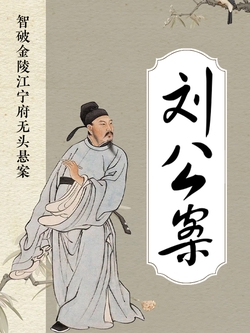
The Cases of Lord Liu
Tags
Summary
Editor's review
Who it's for
A good fit for
- General readers interested in court-case novels and Qing popular literature
- Readers who enjoy strong plots, short paragraphs, and storyteller-style narrative
- Literature enthusiasts studying folk storytelling art and the image of the upright official
- Readers who need to read a story collection in fragments of time
Not a good fit for
- Readers expecting rigorous reasoning and modern detective-fiction structure
- Readers who prefer finely crafted pure literary language and complex psychological description
- First-time readers unfamiliar with ancient vernacular and the chapter-title format
Reading tips
- Read by chapter in separate sessions; each chapter stands alone, so there is no need to finish in one sitting.
- Note the administrative-governance structure and folk stance in the cases; this is more rewarding than pursuing a single outcome.
- When encountering colloquial expressions or old forms of address, read straight through first; there is no need to verify every word.
- Read alongside court-case works such as Bao Gong An to observe similarities and differences in the image of the upright official.
About the publisher
Huaxia Publishing House is a comprehensive publisher known for its output in social sciences, traditional culture and rehabilitation medicine, and it is particularly noted for its editions of classical literature and historical texts. The eight titles in our catalogue reflect two directions: classical novels and historical romances such as Lin Lan Xiang, Romance of the Western and Eastern Jin, The Complete Legend of Feilong, Romance of Northern History and Green Peony, many by Ming and Qing authors including Suiyuan Xiashi, Yang Erzeng, Wu Xuan and Du Gang; and contemporary literary writing, represented by Li Peifu's self-selected novellas and short stories The Boundless Morning. Its common categories cover classic works, classical literature, historical texts, historical fiction and literary appreciation, showing a publishing profile that combines the editing of traditional texts with the promotion of contemporary literature. Owing to limited public information, no further details are provided here.
Contents
- 版权信息
- 目录
- 公版书总序
- 恶扫馋邪定盘星,风节砥砺真翰林——《刘公案》
- 正文
- 第一回 刘罗锅重审李有义
- 第二回 巧改扮私访白翠莲
- 第三回 陈大勇领命探真情
- 第四回 刘罗锅再访白翠莲
- 第五回 刘知府设局镇冤鬼
- 第六回 焦素英愤题绝命诗
- 第七回 赌博场钟凶自投网
- 第八回 上公堂钟凶逞狡辩
- 第九回 白翠莲传唤递冤状
- 第十回 图钱财钟凶害亲人
- 第十一回 恶徐五强抢周月英
- 第十二回 巡抚子倚势行霸道
- 第十三回 察贼情刘墉进徐宅
- 第十四回 陈大勇夜探虎狼窝
- 第十五回 围徐宅困兽犹挣扎
- 第十六回 十里堡官兵胜恶霸
- 第十七回 嫌礼轻总督斥忠良
- 第十八回 审尸案女头与男身
- 第十九回 进酒铺查询双尸案
- 第二十回 贪秀色识别女人头
- 第二十一回 害人命李四中邪祟
- 第二十二回 风云变又起腌尸案
- 第二十三回 昧良心盟兄杀盟弟
- 第二十四回 王二楼贪财误偷尸
- 第二十五回 乱佛规女尼私产子
- 第二十六回 莲花庵色鬼又杀人
- 第二十七回 奸夫淫女僧俱服罪
- 第二十八回 伸正义吴旺告吴仁
- 第二十九回 坟茔地传讯吴举人
- 第三十回 审案情寡妇进公门
- 第三十一回 查究竟叔嫂露破绽
- 第三十二回 吴二夜偷盗窥淫行
- 第三十三回 明案情知府大劈棺
- 第三十四回 命仵作三验吴仁尸
- 第三十五回 害长兄叔嫂暗通奸
- 第三十六回 王客商投宿遇强人
- 第三十七回 杨武举救人战群寇
- 第三十八回 官匪暗勾连共为虐
- 第三十九回 索巨贿逼杀廿四人
- 第四十回 审恶皂青天大动怒
- 第四十一回 刘罗锅计赚赃证银
- 第四十二回 地方劝罪人早招供
- 第四十三回 吐蛇毒恶皂终招供
- 第四十四回 陈大勇私访小柳村
- 第四十五回 承差大勇名震贼窝
- 第四十六回 深夜探虚实进贼宅
- 第四十七回 镇江宁诡施缓兵计
- 第四十八回 李财主贪色生淫欲
- 第四十九回 何氏柜奸怒斥王八
- 第五十回 狗肉王杀何翻移祸
- 第五十一回 赵掌柜避祸反招灾
- 第五十二回 何氏夫孙兴巧告主
- 第五十三回李文华无奈招死罪
- 第五十四回 私访官喜遇李傻子
- 第五十五回 傻李九快口道真情
- 第五十六回 刘知府再审连环案
- 第五十七回 骗人圣母妖言惑众
- 第五十八回 金寡妇弄神贪供品
- 第五十九回 洪阳教妖妇现原形
- 第六十回 豪门赵通欺民强霸
- 第六十一回 衣冠兽强抢亲甥女
- 第六十二回 七村民状告赵豪强
- 第六十三回 暗察访知府被劫持
- 第六十四回 陈大勇快马搬救兵
- 第六十五回 李游击挥兵围赵
- 第六十六回 英雄大勇救援知
- 第六十七回 鲁见明贪赌竟输
- 第六十八回 节烈妇绝命劝夫
- 第六十九回 罚黄贼建祠旌烈
- 第七十回 圣水庙老妇失爱
- 第七十一回 尼姑庵养痈好色
- 第七十二回 青楼女遵命探秽
- 第七十三回 净空僧夜半遇熟
- 第七十四回 贼淫僧行刺刘知
- 第七十五回 擒贼盗罗锅暗遣
- 第七十六回 闯尼姑庵捕役捉
- 第七十七回 凶僧恶满盈落法
- 第七十八回 刘罗锅御旨试清
- 第七十九回 主考官深州查赈
- 第八十回 刘罗锅解衣权质
- 第八十一回 查赈粮钦差受枷
- 第八十二回 奸商杨缺德亏钱
- 第八十三回 刘清官御封大学
- 第八十四回 阅案卷刘公疑情生
- 第八十五回 钱知县贪赃欲杀人
- 第八十六回 黄锁头毒酒灭口供
- 第八十七回 钦差刘墉黑虎惊梦
- 第八十八回 泄奸三官役戴枷锁
- 第八十九回 陈大勇刑侦认凶徒
- 第九十回 秽寺庙和尚行淫乱
- 第九十一回 承差三人夜袭淫庙
- 第九十二回 会英雄凶犯敌三众
- 第九十三回 萧飞贼落网应剐刑
- 第九十四回 段皂头拒聘熊公子
- 第九十五回 仗权势买盗害文经
- 第九十六回 救义兄克展聚同盟
- 第九十七回 鸣不平熊宅杀熊子
- 第九十八回 劫大狱血洗道台府
- 第九十九回 妻女死文经造反定
- 第一百回 进柳林逃犯大聚义
- 第一百一回空枪计虚惊大名府
- 第一百二回 擒刘奉总督即遣兵
- 第一百三回 误中套克展进官衙
- 第一百四回 勇克展开刑反公堂
- 第一百五回 摄众兵克展伤二将
- 第一百六回 陈朱王生擒徐克展
- 如是我闻
- 一、名人对刘墉的评价
- 二、历史上的刘墉
FAQ
Who is the author of Liu Gong An, and when was it written?
How is this book different from modern detective fiction?
Can I read this directly without having read court-case novels before?
Related on WeRead




Comments
Find this book
This site is an index: you start “Search all sources” in your browser, and the entries it lists all point to third-party sites; please judge their availability yourself.
About the author
Anonymous is not a real personal name but a general Chinese designation for authors whose names are unknown, lost, or unsigned. Neither nationality nor dates of birth and death can be verified, and available public information is limited, so the works attributed to this name are the only basis for description. The collection holds 2,078 works under Anonymous, spanning medicine, classics, historical readings, ancient poetry, classical literature, and philosophy. Representative works include The Yellow Emperor's Inner Canon: Lingshu, Mencius, The Book of Documents, Nineteen Old Poems, Complete Song Ci, and The Peacock Flies Southeast. Most of these works took shape through long transmission and editing, emerging either from collective folk creation or from authors whose names were lost over time. In ancient China, the Book of Songs, the Great Learning, and many popular storybooks and plays were signed Anonymous because their authors could not be traced. Anonymous works cross the classics, histories, philosophical writings, medical texts, and poetry; their subjects are broad, and their styles vary from archaic simplicity to clear naturalness, making them important and influential sources for understanding ancient Chinese thought, medicine, and literature.
