

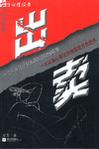
Betrayal
Tags
Summary
Editor's review
Who it's for
A good fit for
- Serious literary readers interested in in-depth social themes and the analysis of human nature
- Readers who appreciate tight plotting, mounting suspense, and a preference for realist narrative style
- Thoughtful readers who hope to observe and understand the complex interpersonal relationships and ethical dilemmas of contemporary society through fiction
- Researchers of Xu Dahui's work or readers drawn to his cold, restrained narrative style
Not a good fit for
- Readers seeking light entertainment and purely escapist reading
- Readers uncomfortable with a direct confrontation with the dark side of human nature and critique of social reality
Reading tips
- It is recommended to read immersively in a relatively uninterrupted stretch of time, to better grasp the trajectory of the characters' fates and the plot's foreshadowing
- While reading, pay attention to detailed description and dialogue, which often contain key narrative clues and psychological motivation
- After reading, reflect in light of your own observations of contemporary society; you may gain insights beyond the text
About the publisher
Huayi Publishing House is a publisher distinguished by traditional culture and humanistic reading, with a list covering Eastern philosophy, essays and miscellaneous writings, inspirational growth and history. Judging from its in-house titles, the press emphasizes the explanation and popularization of classic texts, such as Guo Yongjin's The Heart of the Dao De Jing and Lectures on the Great Learning, the Doctrine of the Mean, and the Chapter on the Great Harmony of the Li Yun, Cai Lixu's Lectures on the Di Zi Gui (A Fulfilling Life, Good Lessons in Moral Education) and How to Build a Happy Life, and Yang Shufen's Moral Education Stories (Little Stories of True Wisdom), combining Confucian and Daoist classics with life education. In literature it offers Yu Qiuyu's The Walker Has No Borders; in history, the multi-volume Speaking of Chinese History series, with Li Xueqin among the contributors, traces the historical course from high antiquity to the Qin and Han dynasties. Its authors are concentrated in the study of traditional culture and humanistic writing, and its publishing style leans toward classic interpretation and accessible expression. Owing to limited public information, other publishing features are not yet known.
FAQ
What is the main plot of this book about?
What are the characteristics of Xu Dahui's writing style?
What is the reading experience of this book like?
Related on WeRead




Comments
Find this book
This site is an index: you start “Search all sources” in your browser, and the entries it lists all point to third-party sites; please judge their availability yourself.
About the author
Xu Dahui, who also writes under the pen names Yanweizi and Zhengyan, was born in September 1956 in Shuangliao, Jilin. He is a member of the China Writers Association and holds a second-level literary creation professional title. He graduated from the Jilin Writers Advanced Study College in 1987 and has served as deputy editor-in-chief of the magazine Guandong Writers and as vice chairman and secretary-general of the Siping Writers Association. He began publishing in 1976 and has written 42 novels, including Undercover, Fleeing, The Rival and Snow Wolf, several of which have been adapted for television. His work spans otherworld fantasy, social fiction, mystery and suspense, and documentary literature. Representative titles include Risking Life, Snow Wolf, Huazi House, Control, Betrayal, Gunpoint, The Last Opium Pipe and Wolf Smoke, with 22 titles held in the collection. His writing tends toward tight plotting and sharp conflict, often moving between suspense and social reality.
