

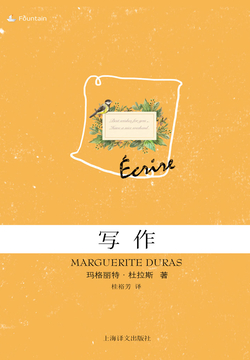
Writing
Tags
Summary
Editor's review
Who it's for
A good fit for
- Readers of Duras who want her late-life account of writing and living
- Those who write and need to understand the relationship between writing and solitude
- Readers who enjoy essays and fragmented texts and do not seek plot
- Readers interested in literary documentary texts and writing for the image
Not a good fit for
- Beginning writers hoping for concrete writing techniques and steps
- Readers who prefer complete narratives, coherent plots, and clear structures
- Readers impatient with stream-of-consciousness or fragmented writing
Reading tips
- Read only one or two pieces at a time and leave time for the short sentences and blanks to settle in the mind; do not chase progress.
- You may watch the documentary shorts of the same names first, then read the corresponding texts, to feel the difference between image and word.
- Keep a pen at hand and mark recurring images such as solitude, alcohol, and lovers as you go; look back over them when you finish.
- When reading the piece Writing, slow down and notice how she uses short sentences and incomplete narration to approach the state of writing.
About the publisher
Shanghai Translation Publishing House is a Chinese publisher oriented mainly toward translation and publishing. Its publications cover foreign literature, world classics and classic works, as well as social culture, folk literature and classical poetry. The database contains 2,618 titles, including Never Let Me Go, Les Misérables (2 volumes), Don Quixote (illustrated collector's edition), The Complete Comedies of Molière (4 volumes), The Complete Novels of Kafka (3 volumes), The Collected Works of Dostoevsky (9-volume set), Reason and Persons, and Oedipus Rex (Translation Classics). Its author resources include foreign writers such as Kazuo Ishiguro, Victor Hugo, Cervantes and Molière, as well as translators such as Zheng Kelu, Sun Jiameng, Li Jianwu and Zhang Kun. The publisher has brands such as "Translation Classics Selections" and "Translation Documentary," and emphasizes translated works in foreign literature and the humanities and social sciences, while also publishing bilingual dictionaries and foreign-language educational books. Public information is limited; the above is based on the book information in the database.
Contents
- 版权信息
- 写作
- 年轻的英国飞行员之死
- 罗马
- 纯洁的数字
- 画展
FAQ
Is this book Duras teaching people how to write?
Can I read this without having read other works by Duras?
What is the relationship among the three parts collected here?
Related on WeRead


Comments
Find this book
This site is an index: you start “Search all sources” in your browser, and the entries it lists all point to third-party sites; please judge their availability yourself.
About the author
Marguerite Duras (1914–1996) was a French novelist, playwright, screenwriter and film director, born Marguerite Donnadieu in Gia Định, French Indochina, and died in Paris in 1996. She first gained recognition with The Sea Wall in 1950 and achieved international fame with her screenplay for Hiroshima mon amour in 1959; in 1984 her novel The Lover won the Prix Goncourt. Her writing often explores colonial upbringing, love and desire, memory and loss, in a spare, musical prose. The collection holds 58 of her works, including novels, plays and essays, commonly classified under foreign literature and classics, and she is regarded as a major figure in the French New Novel and feminist writing.
Public information about Gui Yufang is limited; her nationality, dates of birth and death, and educational background are not clearly recorded. Judging from the holdings in the library, she was a translator of foreign literature active in Chinese-language publishing, with 16 works, commonly classified under foreign literature and world classics. Her translations span French and Russian literature, including Gide's Strait Is the Gate, Duras's Summer Evening, The Dam, and The Collected Works of Duras, as well as works on Russian literature such as Six Lectures on Dostoevsky, along with Writing and Childhood. Overall, her choice of texts leans toward classics and major authors, and her translations have served to introduce foreign literature to Chinese readers, appearing repeatedly in related translation series and collected works.
