

Records of Brothers
Tags
Summary
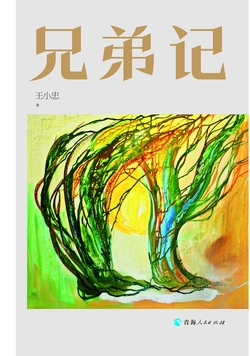
The supplement tells of the father and his brothers. Compared with the first and second parts, it focuses more on brotherly affection, with more traditional and folk culture, more joys and sorrows of distant times, and even the father and his brothers banding together for warmth. This is a common phenomenon in farming and pastoral areas, and seems to be the final refuge of human warmth.
Editor's review
Who it's for
A good fit for
- Readers who follow western rural literature consistently
- Readers who enjoy themes of conflict between traditional ethics and modernity
- Literature lovers who appreciate a restrained yet tension-filled narrative style
- Researchers concerned with social change in ethnic minority regions
Not a good fit for
- Readers expecting fast-paced plots with strong suspense
- Beginners completely unfamiliar with grassland cultural backgrounds
Reading tips
- Readers may first read the author's previous work Notes on the Source of the Yellow River to build geographical context
- Note the symbolic correspondence between seasonal shifts and changes in characters' fates
- On a second reading, pay closer attention to细节 differences among different narrative perspectives
About the publisher
Qinghai People's Publishing House is a comprehensive local publisher based in Xining, with publishing areas covering local histories and gazetteers, ethnic history and culture, literature and art, and textbooks and supplementary teaching materials. Judging from the 124 titles in the database, the press has a presence in foreign literature, social culture, history, literature, medicine, and biography. Representative books include Chinese translations of Tagore's poetry collections Gitanjali, Stray Birds, and The Crescent Moon, as well as works on history, culture, and medicine such as The History of Changes in the Yellow River, An Intellectual History of Traditional Chinese Medicine, The Pillar Testament: The Legacy of Songtsen Gampo, and Essentials of the Kalachakra Calendar. Its authors include Rabindranath Tagore, Wei Huan, Cen Zhongmian, Li Jingwei, Zhang Zhibin, Huang Mingxin, Chen Jiujin, and Shangzhuot Sangre, reflecting a publishing profile that combines the translation of foreign literature with the compilation of local historical and cultural works and traditional medical texts.
Contents
- 版权信息
- 上篇
- 一
- 二
- 三
- 四
- 五
- 六
- 七
- 八
- 九
- 十
- 十一
- 十二
- 十三
- 十四
- 十五
- 十六
- 十七
- 十八
- 十九
- 二十
- 下篇
- 二十一
- 二十二
- 二十三
- 二十四
- 二十五
- 二十六
- 二十七
- 二十八
- 补篇
FAQ
What is the main difference between this book and the author's other works?
Are the grassland descriptions too technical and difficult?
How is the boundary between nonfiction and fiction handled?
Related on WeRead


Comments
Find this book
This site is an index: you start “Search all sources” in your browser, and the entries it lists all point to third-party sites; please judge their availability yourself.
About the author
Wang Xiaozhong is a Chinese-language writer whose works span a fairly wide range of subjects. Public information about him is limited, and details such as his nationality, dates of birth and death, and educational background have not been clearly recorded. Eight of his works are currently known, covering folk literature, social fiction, world history, and classic works. Titles such as Grass Seeds from Different Pastures, The Moon Lake at the Horizon, Children of the Yellow River Source, and The Little Grassland Rider carry a distinct grassland and frontier flavor, often approaching their subjects through the lives of children and ordinary people, while Brotherhood leans toward social fiction. He has also produced world-history works, including the Professor Myers Lectures on World History series and A Global History 3. Overall, his writing crosses both original literature and the popularization of historical knowledge, with a plain style and an interest in rural life, growth, and everyday experience.
