

Metaverse 2086
Tags
Summary
Editor's review
The book's value for readers lies in its strong real-world reflection and intellectual provocation. It does not simply depict a bizarre virtual world but profoundly explores the subversive challenges and paradoxes humanity will face in power structures, economic systems, legal ethics, and individual identity once the boundary between virtual and real is completely blurred. Readers can feel a kind of "near-future pressure," as many plot settings find echoes in today's technology and social dynamics, prompting us to reflect on the hidden worries behind runaway technological advance.
From a narrative perspective, the novel adopts a multi-threaded suspense-adventure structure with a tight pace that enhances readability. However, literary quality and depth of character development may not be its primary pursuit; thought-provoking ideas, concepts, and imaginative scenarios are the core highlights. For readers concerned with technological trends, social change, and futures studies, this is a rare "thought experiment" text capable of inspiring deep reflection. It may not be the most perfect literary work, but it is certainly one of the Chinese fictional works on the metaverse debate with the strongest real-world concern and speculative ambition.
Who it's for
A good fit for
- Readers curious about and reflective on the metaverse, future technology, and social development
- Technology industry professionals, internet practitioners, and observers of digital transformation
- Science fiction fans who enjoy hardcore settings and prefer future visions extrapolated from real technology
- Thinkers interested in sociological and philosophical issues who wish to examine humanity's fate through a science fiction lens
Not a good fit for
- Readers seeking pure literary pleasure and expecting profound character arcs and delicate emotional writing
- Readers completely uninterested in technical detail or future extrapolation who seek only light entertainment
Reading tips
- Approach it as an "intellectual expedition," focusing on the future social models and technological-ethical dilemmas it raises
- Relate it to current technology news and social events while reading to experience its predictive quality
- Do not dwell excessively on the literary quality of individual plot points; focus instead on the inspiration offered by the overall conceptual framework
About the publisher
Sino-Culture Press is known for publishing in history, social sciences and traditional Chinese culture, with a further reach into literary appreciation, classic works and foreign literature. Its library of 489 titles includes such works as The Road to Dongpo: The Evolution of Su Shi's Poetic Style, The Poetry and Life of Du Fu, The History of Qin and Han, and Six Hundred Years of the Forbidden City (collector's edition), while A Preliminary Survey of Ancient Architecture in Shanxi and Fen: Hand-drawn Records of Architectural Remains reflects an interest in documenting architectural heritage. Van Loon's Collected Classics and guided-reading editions of works such as Call to Arms and Notre-Dame de Paris serve general readers and classroom use. Its authors include scholars and popular writers such as Fu Junmai, Chen Linlin, Van Loon, Wang Longlin and Guan Ranrong, and biography is another direction. As public information is limited, this note focuses on the publishing profile shown by the titles in the library.
Contents
- 版权信息
- 第一章 缘起
- 第二章 最强“捉妖师”登场
- 第三章 决战章鱼怪
- 第四章 复仇
- 第五章 游戏杀人事件
- 第六章 脑复制完成
- 第七章 太空城
- 第八章 石符
- 后记
FAQ
How is this book different from other metaverse-concept books or novels?
Can I understand this book without much technical background?
How is the storytelling? Is it pure theoretical exposition?
Related on WeRead


Comments
Find this book
This site is an index: you start “Search all sources” in your browser, and the entries it lists all point to third-party sites; please judge their availability yourself.
About the author
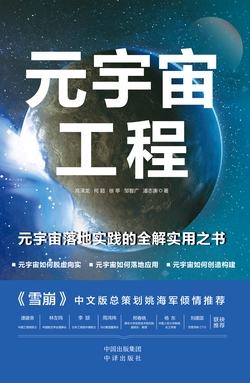
Gao Zelong is a Chinese author whose writing spans a notably wide range of subjects. Publicly available information about him is limited, and no systematic account of his life has yet appeared. Judging from the four works held in the collection, his writing touches on finance and economics, artificial intelligence, and science fiction. Among them, Blockchain in Practice: Defining a New Landscape for Technology, Society, and Industry addresses technical and industry applications, outlining the basic principles of blockchain and its impact on society and industrial structures. Metaverse Engineering likewise centers on emerging technology and takes an engineering and practical perspective. The Rapid-Learning Practical Handbook on DeepSeek for Young Readers, aimed at younger audiences, introduces the use of AI tools through a learn-and-apply approach. Different from these non-fiction works, Metaverse 2086 is a science fiction novel that extends the imagination of the metaverse into a future narrative. Overall, Gao Zelong attends both to popularizing and applying cutting-edge technology and to exploring technological imagination through literature, giving his works an informative yet accessible character.
