

Biography of Yuan Haowen
Tags
Summary
Editor's review
Who it's for
A good fit for
- Researchers and enthusiasts interested in the history of ancient Chinese literature, especially Jin–Yuan literature
- Readers who wish to understand deeply the mentality and choices of literati in times of chaos
- Readers who appreciate Zhu Dongrun's biographical style, which blends historical textual research with literary craft
- Scholars interested in exploring the poetic theory of the Thirty Poems on Poetry and its historical context
Not a good fit for
- Readers seeking light entertainment or fast-food-style life stories
- Readers who lack sufficient patience and interest for more specialized literary-historical discussion and classical Chinese sources
Reading tips
- It is advisable to first gain a general understanding of the historical background of the Jin–Yuan transition, which helps in understanding the dilemmas of Yuan Haowen's era
- The book can be read alongside Yuan Haowen's poems and lyrics (such as Wild Geese Tomb) to feel the interweaving of his literary life and personality
- While reading, pay attention to how Mr. Zhu Dongrun constructs the historical scene through details and appreciate the distinctive narrative charm of his "biographical literature"
About the publisher
Shanghai Classics Publishing House is a professional publisher centered on the collation of ancient texts and academic research works. Its publishing areas cover historical readings, classical poetry, folk literature, literary appreciation, canonical works, and Eastern philosophy. Its books include Chen Yinke's A Brief Discussion of the Origins of the Sui and Tang Institutions, Xin Qiji's Chronological Annotated Edition of Jiaxuan's Ci (Simplified Edition), Tang Xianzu's The Peony Pavilion, Liu Xie's The Literary Mind and the Carving of Dragons, as well as New Annotations to Three Hundred Tang Poems (Collector's Edition), Annotated Edition of Han Changli's Collected Works (Simplified Edition, 3 volumes), and Youyang Zazu. Its authors include Chen Yinke, Xin Qiji, Tang Xianzu, Liu Xie, Deng Guangming, Hengtang Tuishi, Han Yu, and Ma Qichang. In terms of publishing characteristics, the house emphasizes collation, annotation, and compilation of ancient texts alongside academic research works, and continues to issue simplified and collector's editions that balance scholarship and accessibility. Public information about the publisher's fuller publishing profile is limited.
Contents
- 版权信息
- 第一章 元好問的先世及其時代
- 第二章 元好問的青少年時代
- 第三章 入仕的前夕
- 第四章 入仕
- 第五章 在汴京中
- 第六章 三京的失守
- 第七章 汴京陷落以後
- 第八章 和嚴實的關係
- 第九章 取道河南
- 第十章 從鄧州取道東平回家
- 整理後記
FAQ
What are the characteristics of Zhu Dongrun's biography writing?
How does this book help in understanding Yuan Haowen's literary status?
Is the book's narrative difficult to understand?
Related on WeRead
 元好问传
 人物传记:梅尧臣·元好问传(新版)
 元好问传论:中国诗学研究专刊 (精装)
 元好问与中国诗歌传统研究
 《金史》纂修考:二十四史校订研究丛刊
 出入高下穷烟霏——复旦内外的师长
 中国诗歌研究史(金元卷)
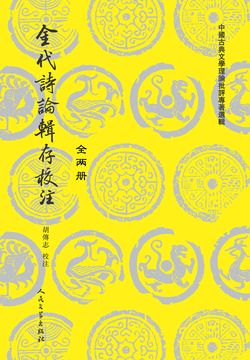 金代诗论辑存校注(全2册)
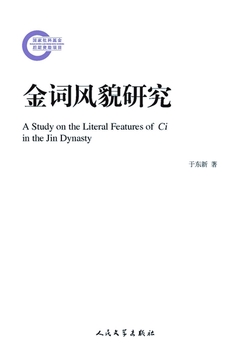 金词风貌研究
Comments
Find this book
This site is an index: you start “Search all sources” in your browser, and the entries it lists all point to third-party sites; please judge their availability yourself.
About the author
Zhu Dongrun (1896–1988), originally named Shizhen, was a native of Taixing, Jiangsu. He was an expert in classical Chinese literature, a literary historian, a biographer, an educator, and a calligrapher. He studied in the early years at South Western College in London, and later taught at Wuhan University, National Central University, and other institutions. From 1952 he served as professor and chair of the Department of Chinese at Fudan University. His Outline of the History of Chinese Literary Criticism is regarded as a foundational work in the field. In biography he wrote The Grand Biography of Zhang Juzheng and The Biography of Lu You, among others, focusing mainly on ancient literati and political figures, with attention to source criticism and the restoration of character, in a restrained yet compelling style. He is considered one of the pioneers of modern Chinese biographical writing. Eleven of his works are collected here, spanning biography, classics, culture, and literary appreciation, including Lu You: Selected Works, Chen Zilong and His Times, and Biographies of Mei Yaochen and Yuan Haowen.
