

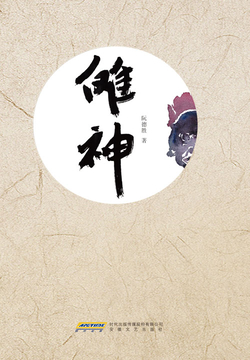
The Nuo God
Tags
Summary
Editor's review
In terms of reading value, the book goes beyond mere local-color narrative. Through the symbol of the "Nuo God," it explores enduring questions of faith, transmission, identity and change. Against the backdrop of urbanization and rural decline, the characters' steadfastness, bewilderment and reinterpretation of tradition have great contemporary relevance. The novel is tightly structured, its timeline spans several generations, and its cast of characters is vividly drawn; it has both a weighty sense of history and delicate emotional portrayal. Its literary quality lies in the successful use of local language and in the highly visual writing of ritual scenes, which immerse the reader in a mysterious and solemn spiritual world.
Overall, this is a work that requires quiet, attentive reading. It does not offer fast-paced gratification; instead, with steady narration it leads the reader on a cultural search for roots and a spiritual journey. For readers concerned with the fate of traditional culture, fond of profound rural literature, or interested in intangible cultural heritage, Nuo God offers rich aesthetic experience and room for thought.
Who it's for
A good fit for
- Readers with a strong interest in China's intangible cultural heritage, especially Nuo opera and folk culture
- Lovers of profound, weighty literary works with a strong sense of place and historical depth
- Those concerned with rural change and the fate and future of traditional culture in modern society
- Readers who appreciate solid, finely drawn character portrayal and family-saga narrative style
Not a good fit for
- Readers seeking strong plot, fast pace and the kind of gratification found in online genre fiction
- Readers impatient with regional culture and folk description, who prefer urban or science-fiction themes
Reading tips
- Before reading, it helps to do a little background reading on the basic concept of "Nuo culture" to enter the novel's context more quickly
- This book is suited to continuous reading in a relatively quiet setting, following the author's pace and feeling the flow of time interwoven with the characters' fates
- Pay attention to descriptions of rituals, masks and sung lyrics; they are key to understanding the work's cultural core and artistic features
About the publisher
Founded in 1984, Anhui Literature and Art Publishing House is a professional literary and art publisher. Its collection of 389 titles spans classic works, essays and miscellaneous writings, Eastern philosophy, folk literature, classical literature and design. Representative books include Lao She's Camel Xiangzi, Laozi's Dao De Jing, Luo Guanzhong's Romance of the Three Kingdoms, and the Shakespeare drama collection featuring Hamlet, King Lear, Macbeth and Othello, with Zhu Shenghao's translations adding luster to the series. Its author resources range from classic Chinese and foreign writers such as Lao She, Laozi, Luo Guanzhong and William Shakespeare to translators and authors including Zhu Shenghao, Li Chensen and Liang Sicheng. The publisher is characterized by its balance of Chinese and foreign literary classics with traditional culture titles, combining scholarly value with popular reading. Public information is limited, and the above is based mainly on the books in the collection.
Contents
- 版权信息
- 正月初七(丁卯年癸丑月戊辰日·人日)
- 正月初八(戊寅年甲寅月庚午日)
- 正月初九(戊子年甲寅月癸酉日)
- 正月初十(戊戌年甲寅月乙亥日)
- 正月十一(戊申年甲寅月己酉日)
- 正月十二(戊午年甲寅月辛亥日)
- 正月十三(戊辰年甲寅月甲寅日)
- 正月十四(戊寅年甲寅月戊子日)
- 正月十五(戊子年甲寅月辛卯日·元宵节)
FAQ
Is this book documentary writing or a fictional novel?
Do I need relevant folk-culture knowledge to read this book?
Is the novel's tone heavy?
Related on WeRead
Comments
Find this book
This site is an index: you start “Search all sources” in your browser, and the entries it lists all point to third-party sites; please judge their availability yourself.
About the author
Ruan Desheng is a Chinese author about whom limited public information is available. Three of his works are included in the collection, with representative titles such as Huānxǐ de Liúguāng (The Joyous Flowing Light), Nuóshén (The Nuo Deity), and Dōngfēng Bò (The East Wind Breaks Through). Judging from the existing categories, his writing is generally classified as social fiction, and his subjects appear to be connected with folk beliefs, local customs, and real-life experience. The title Nuóshén, for instance, suggests an interest in traditional Nuo culture, while the other two titles indicate a concern with social conditions and the spirit of the times. Since his dates of birth and death, nationality, education, and awards are not recorded, it is difficult to sketch a complete biography; only a preliminary view of his work can be offered. Overall, his writing tends to present the texture of society and folk experience through narrative, though the specific features of his language and structure await further material.
