

Living with Ease
Tags
Summary
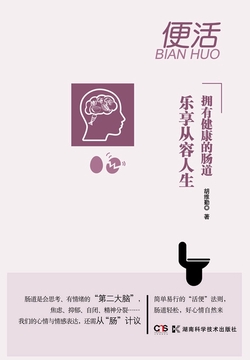
Persistently poor stool doesn't just harm the gut—it directly affects brain function! Scientists have already linked anxiety, depression, autism, schizophrenia, and other conditions to gut microbes. In other words, the gut, as an emotionally perceptive "second brain," also shapes your mind and behavior. Does this eerie relationship send a chill down your spine? Good "poop" is no longer just about gut health—it's a prerequisite for optimizing your state of life. This book gathers knowledge and ideas centered on gut health, offering recommendations on diet, exercise, medication, and daily habits. All you have to do is follow along.
Editor's review
Who it's for
A good fit for
- Readers with long-term constipation or diarrhea who want to improve through lifestyle habits
- Ordinary adults interested in the link between gut health and mood
- Family caregivers who need to teach family members basic bowel-health knowledge
- Health beginners interested in the relationship between diet, exercise, and the gut
Not a good fit for
- People with obvious abnormalities such as blood in the stool or persistent abdominal pain who need prompt medical attention
- Readers seeking colonoscopy interpretation or disease diagnosis
- Readers uncomfortable with bodily-excrement topics who cannot accept such descriptions
Reading tips
- Before reading, observe your bowel movements for several days and go to the relevant chapters with questions.
- Start with diet and drinking-water advice, track changes for two weeks, then consider exercise adjustments.
- Copy the list of warning signs separately; if such signs appear, see a doctor promptly rather than self-checking.
- Read the gut-and-mood section with family to reduce avoidance and shame around bowel topics.
About the publisher
Hunan Science & Technology Press has long focused on science popularization and medical publishing, balancing academic depth with accessibility for general readers. Among the 462 titles in the database are Richard Feynman's classic lectures on QED, the nature of physical laws, and relativity in the "Approaching Feynman" series, as well as general-audience works such as George Gamow's One, Two, Three... Infinity and Sean Carroll's The Big Picture. Its paleontology and dinosaur list includes Gregory S. Paul's Princeton field guides and authors such as Xing Lida. Hermann Weyl's Symmetry further reflects the press's attention to classic works bridging science and the humanities. Overall, the publisher shows a clear author profile and an emphasis on illustrated, well-rounded science publishing across both translated and original titles.
Contents
- 版权信息
- 前言
- PART 1 正视“难言之隐”——探寻便活之秘
- 一 便秘和腹泻,困扰现代人的两大健康问题
- 二 为肠道疾病所苦的现代人
- 三 肠道是会思考、有情绪的“第二大脑”
- 四 大便和肠道菌中的健康警示
- 五 肠龄自我评估,测知你的健康
- PART 2 吃对食物——补益肠道元气
- 一 饮食解密,提升排便力
- 二 把好饮食关,腹泻可自愈
- PART 3 运动保健——实践便活法则
- 一 提升排便力,日常运动不可缺
- 二 清肠涤胃,按摩有奇效
- 三 立竿见影,缓解急症的小技巧
- PART 4 生活细节大作战——乐享便活人生
- 一 “惯”出来的便秘和腹泻问题
- 二 抗击便秘的生活妙招
- 三 调整生活习惯,远离腹泻
- PART 5 摆脱药物依赖——唤醒便活机制
- 一 泻药,舒爽之下的便秘之殇
- 二 止泻药,使用需慎之又慎
FAQ
Can poor bowel habits really affect mood and the brain?
If I follow the book’s advice, will constipation definitely improve?
Is this book suitable for children?
Related on WeRead
 便活
 我的便携式生活
 活着便努力
 一个人可以在家告别人生吗? 即便一个人,在温暖而熟悉的家中,也能幸福生活到最后 日本著名学者上野千鹤子著
 水浒传(金圣叹批评本)(套装上下册)
 水浒传(金圣叹评本)
 金圣叹批评本水浒传
 水浒大全⑥金批水浒传
 金圣叹批评本水浒传
Comments
Find this book
This site is an index: you start “Search all sources” in your browser, and the entries it lists all point to third-party sites; please judge their availability yourself.
About the author
Hu Weiqin was born in Jinhua, Zhejiang, in 1934, and graduated from Shanghai Second Medical University in 1961. A chief physician and professor, he long worked in medical and health care at Zhongnanhai, serving as the personal health physician to leaders including Zhu De and Hua Guofeng. In 1995, the State Council recognized him as a medical scientist with outstanding contributions, and he receives a special government allowance. His 11 published works focus on everyday health preservation and dietary therapy, covering topics such as replenishing qi and blood, whole grains, seed ingredients, the compatibility and contraindications of drugs and foods, health-promoting soups, and leg and heart care. Aimed at general readers, the books are accessible and practical, reflecting his approach of translating clinical and health-care experience into popular health reading.
