

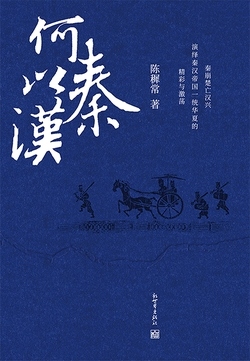
Why Qin and Han
Tags
Summary
Editor's review
Who it's for
A good fit for
- History enthusiasts interested in ancient Chinese history, especially the rise of the Qin and Han empires and the founding of their institutions
- Readers hoping to move beyond fragmented knowledge and build a systematic understanding of Qin and Han history
- Readers of nonfiction who appreciate elegant prose and grand narrative
- Thoughtful readers curious about the evolution of political institutions and changes in social structure
Not a good fit for
- Readers seeking light, entertaining popular history with a strong storytelling focus
- Professional researchers looking for the latest archaeological discoveries or cutting-edge historiographical theory
Reading tips
- Read the book through first to grasp the overall arc of Qin and Han history, then read closely and reflect on chapters of particular interest (such as the Chu-Han Contention or the exclusive elevation of Confucianism)
- Keep a map at hand while reading to build a spatial sense of key battles and territorial changes and to understand geography's influence on the course of history
- Compare the institutions described in the book (such as the commandery-county system or the recommendation system) with those of later periods and even the present for deeper insight
About the publisher
New World Press is a comprehensive publisher whose list spans documentary literature, popular science, military studies, literary appreciation, social sciences and essays. Its titles reflect a broad editorial vision: documentary works such as Unbroken: A World War II Story of Survival, Resilience, and Redemption and A Civil Action; classic translations including On the Origin of Species and On War; and literary works such as Six Records of a Floating Life and Wu Guanzhong's selected essays on beauty and painting. Its authors include Laura Hillenbrand, Charles Darwin, Carl von Clausewitz, Shen Fu and Daniel Everett, showing a balance between translated and original works. Publicly available information on its fuller publishing profile and features is limited.
Contents
- 版权信息
- 第一回 分郡县一统定中华会圯桥三番约孺子
- 第二回 马谷种瓜杀机暗伏仙山求药梦兆何凭
- 第三回 咸阳市公子衔冤大泽乡农民起义
- 第四回 兴张楚陈胜称王入潼关周文耀武
- 第五回 立楚后范增献策识机先宋义论兵
- 第六回 战巨鹿项羽沉舟入咸阳刘邦约法
- 第七回 宴鸿门项庄舞剑拜大将韩信登坛
- 第八回 修栈道巧计度陈仓背绵蔓奇兵拔赵帜
- 第九回 逞舌辩英布归刘中反间范增辞楚
- 第十回 虞美人垓下和歌楚霸王乌江自刎
FAQ
How does this book differ from original works such as the Records of the Grand Historian or the Book of Han?
How difficult is the book? Is it suitable for history beginners?
What aspects does the book focus on?
Related on WeRead

Comments
Find this book
This site is an index: you start “Search all sources” in your browser, and the entries it lists all point to third-party sites; please judge their availability yourself.
About the author
Chen Zichang is an author devoted to writing about early Chinese and Qin-Han history. Public information about him is limited, and his dates of birth and death, nationality, and educational background are not clearly recorded. Three of his works are currently held in the collection: An Romance of Early Chinese History (Tales of Five Thousand Years of China), How China Came to Be, and How the Qin and Han Came to Be, commonly classified under classical literature and history readings. These works show that the author excels at tracing the historical development from remote antiquity to the Qin and Han dynasties through accessible narrative, weaving legends, historical facts, and institutional change into highly readable stories. The word "how" in the titles also reveals a concern with asking about the causes of history. His writing balances popularization with coherence and is suited to general readers who wish to understand the early forms of Chinese civilization in a systematic way.
