

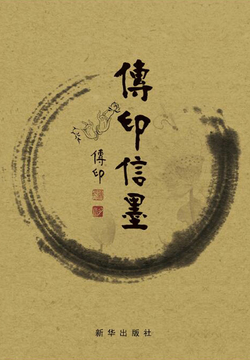
Chuanyin's Letters and Calligraphy
Tags
Summary
Editor's review
Who it's for
A good fit for
- Readers and researchers interested in Buddhist culture and the art of calligraphy
- Collectors and reference users at monasteries, Buddhist academies, and cultural institutions
- Disciples and lay believers of Elder Chuan Yin, and those concerned with his life and thought
- General readers who wish to find tranquility and wisdom in these ink traces for spiritual cultivation
Not a good fit for
- Pure literature enthusiasts seeking plot-driven, story-based reading experiences
- Readers with no basic knowledge of or interest in Buddhist culture and Chinese calligraphy
Reading tips
- It is advisable to first read the preface and afterword to understand the origin of the book's compilation and an overview of Elder Chuan Yin's life, thereby establishing a basic framework of understanding.
- While viewing the works, readers may learn more about the background of each piece's recipient (such as a particular monastery or academy) to better appreciate the deeper meaning and historical context behind the ink traces.
- Treat the book as an object for quiet contemplation; leaf through a page or two in leisure and savor the brushwork and spirit. There is no need to finish it in one sitting—what matters is immersion and reflection.
About the publisher
Xinhua Publishing House is known for books on politics, journalism, biography and the social sciences. Its 519 titles in the catalog cover world history, social culture, history reading, military affairs, language and writing, and applied psychology. Representative books include Winston Churchill's multi-volume A History of the English-Speaking Peoples, John Dewey's Art as Experience, Wayne Booth's The Craft of Research, and The Chicago Guide to Writing About Research, as well as military history such as Defeat into Victory: The Decisive Campaign in Burma and India, 1942–1945. Its authors range from international figures such as Churchill, Dewey and Booth to Chinese writers including Wu Hao, Luo Dingzi, Li Xuehua and Zhao Hong, giving the press a distinctive profile that balances classic translation with practical writing and emphasizes both history and the social sciences.
Contents
- 版权信息
- 1
- 2
- 3
- 4
- 5
FAQ
What does Ink Traces of Chuan Yin's Teachings mainly collect?
What special significance does the publication of this book have?
Can non-Buddhists gain anything from reading this book?
Related on WeRead
Comments
Find this book
This site is an index: you start “Search all sources” in your browser, and the entries it lists all point to third-party sites; please judge their availability yourself.
About the author
Chuanyin is a monastic name relatively known in Chinese Buddhist circles. His publicly available biographical information is limited: his dates of birth and death, native place, and educational background cannot be confirmed at present, and no speculation is offered here. As for this site's holdings, only one work currently appears under the name Chuanyin, titled Chuanyin Xinmo (Chuanyin's Letters and Ink), classified under philosophical readings. Judging from the title, the book likely relates to his letters, calligraphy, or handwritten texts, bearing the character of everyday writing and personal expression rather than systematic theoretical exposition. Such writing often reveals an author's temperament, habits of language, and intellectual concerns more directly than formal treatises, and allows readers to sense his Buddhist cultivation and attitude toward life through fragments. Since the number of works is small and introductory material remains incomplete, readers should treat the book as an initial clue to understanding Chuanyin and his thought rather than a comprehensive summary.
