

Symposium
Tags
Summary
Editor's review
Who it's for
A good fit for
- Readers with an initial interest in the origins of Western philosophy, especially Plato's thought, who wish to read classic texts in depth
- Thinkers concerned with topics such as love, aesthetics, and ethics who seek inspiration from classical wisdom
- Readers who enjoy ancient Greek literature and drama and appreciate writing that embeds profound philosophy in vivid scenes and character dialogue
- University students and scholars studying or researching philosophy, political science, literature, and related fields
Not a good fit for
- Readers seeking light entertainment or fast-food-style love stories
- Beginners completely unfamiliar with classical texts and philosophical speculation who lack the patience for immersive reading
Reading tips
- Read the translator's brief preface or a related introduction first to understand the historical background and relationships among the characters, which will help you enter the setting more quickly.
- As you read, pay attention to each speaker's identity (comic playwright, doctor, politician, etc.) and consider how their views relate to their social roles; this deepens understanding of the text's multiple layers of meaning.
- Savor in particular the section spoken by Socrates (reporting Diotima), which is the philosophical peak of the dialogue. Try comparing it with the earlier speeches to appreciate how Plato gradually constructs and reveals his core ideas through the structure of the dialogue.
About the publisher
The Commercial Press is a publisher known for classic works and academic publishing, with titles spanning Eastern philosophy, foreign literature, world history, social culture, and applied psychology. Its list includes classical commentaries such as Zhu Xi's Collected Commentaries on the Analects and Wang Bi's Commentary on the Zhouyi, as well as modern annotated translations like Zhuangzi with Modern Notes and Translation. In foreign literature it offers War and Peace and Crime and Punishment, while in world history it carries Braudel's The Mediterranean and the Mediterranean World in the Age of Philip II. Applied psychology is represented by Irvin D. Yalom's Existential Psychotherapy, and ethical texts include a Greek-Chinese-English edition of the Nicomachean Ethics. Its authors and translators include Zhu Xi, Wang Bi, Yalom, Braudel, and translators such as Huang Zheng, Zhang Yiling, Shen Dongyu, and Tang Jialong, balancing the editing of original texts with academic translation.
Contents
- 版权信息
- 汉译世界学术名著丛书(分科本)出版说明
- 会饮篇
FAQ
Is the 'love' discussed in the Symposium love in the ordinary sense?
Is this the same Symposium as the one in Selected Dialogues of Plato on Literature and Art?
Do I need a lot of philosophical knowledge to read the Symposium?
Related on WeRead
 会饮篇
 会饮篇(外研社双语读库)
 世界思想宝库钥匙丛书:解析柏拉图《会饮篇》
 性经验史(3卷本)
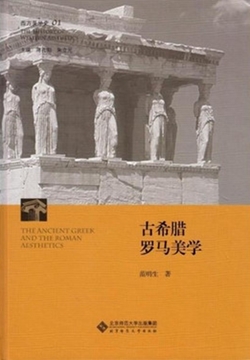 西方美学史(第1卷):古希腊罗马美学
 古代哲学的智慧(译文经典)
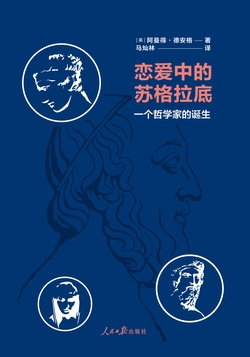 恋爱中的苏格拉底:一个哲学家的诞生
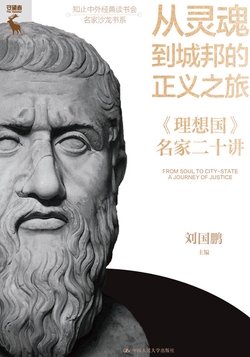 从灵魂到城邦的正义之旅——《理想国》名家二十讲
Comments
Find this book
This site is an index: you start “Search all sources” in your browser, and the entries it lists all point to third-party sites; please judge their availability yourself.
About the author
Plato was an ancient Greek philosopher. Born into an aristocratic Athenian family, he studied under Socrates, later founded the Academy, and taught Aristotle. Public sources on the details of his life are limited, and no exact dates of birth and death are recorded. He wrote mainly in dialogue form, letting figures such as Socrates examine questions through conversation—a form that is both dramatic and speculative. His works center on the theory of Forms, justice, the soul, love, and rhetoric. Representative works include the Republic, Phaedrus, Timaeus, the Apology of Socrates, and Phaedo, several of which appear in Greek-Chinese bilingual or complete Chinese translations. His thought established the fundamental questions and modes of discussion in Western philosophy and has had a profound influence on later philosophy, political theory, and education.
