

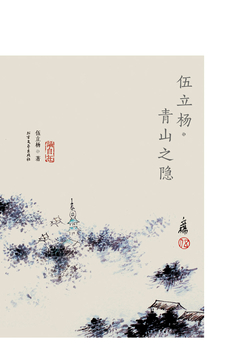
Wu Liyang: Seclusion in the Green Mountains
Tags
Summary
Editor's review
The greatest value of reading this book lies in the spiritual path it offers for "slowing down." In an age of information overload and relentless pace, the book is like a cooling draught, guiding readers to reexamine, through the interaction of "grand history" and "small individuals," what true freedom and inner peace are. The author draws widely, setting the inner journeys of Tao Yuanming, Wang Wei, Su Shi, and other great recluses against the dilemmas of modern society; his reading goes beyond simple nostalgia for the past and carries a warmth and power that speaks to the present. It is not a book that provides answers but one that stimulates thought and soothes anxiety. For readers seeking a deep reading experience and hungering for spiritual nourishment and resonance in words, The Hermit of the Green Mountains is undoubtedly a fine work to savor again and again.
Who it's for
A good fit for
- Readers with a strong interest in traditional Chinese culture and the spirit of reclusion
- Urban readers hoping to find inner calm and spiritual solace in a fast-paced life
- Essay lovers who appreciate graceful prose rich in philosophical thought and historical depth
- Readers who favor Wu Liyang's research on literature and history and his writing style
Not a good fit for
- Readers expecting tightly plotted, highly story-driven entertainment
- Readers completely unfamiliar with traditional culture and unwilling to explore it
Reading tips
- Read in a relatively quiet, undisturbed setting so you can follow the author's thought into the text
- Use the classical poems or historical figures mentioned in the book for further reading to deepen understanding
- Do not aim to finish quickly; it suits a desk book or bedside book, to be opened at leisure and read slowly and attentively
About the publisher
Northern Literature and Art Publishing House focuses on contemporary and modern literary and artistic works, literary theory, and translations of foreign literature, while also covering categories such as history, popular science, Eastern philosophy, and world classics. Its collection includes 737 titles, with representative publications ranging from traditional Chinese classics such as Records of the Grand Historian, The Exploitation of the Works of Nature, and The Analects to foreign literary works including the complete classic plays of Shakespeare, Balzac's Old Goriot and Eugénie Grandet (in celebrated translations by Fu Lei), and The Complete Sherlock Holmes. Its author resources span classical figures such as Sima Qian, Song Yingxing, and Confucius, foreign writers such as Shakespeare and Balzac, and translators such as Zhu Shenghao and Fu Lei. The press combines the transmission of classics with an orientation toward general reading, developing a distinctive profile in both the editing of traditional texts and the translation of foreign literature. Public information is limited, so the above emphasizes the publishing profile reflected in the books held in the collection.
Contents
- 版权信息
- 文浸丹青意悠长
- 自在一 境
- 我的书画缘分
- 书法妙喻之别笺
- 苏轼佚文多妙语
- 文章无味甚于黄瓜
- 写景的忧郁
- 纸上的风景
- 诗与水墨韵味
- 闲暇三昧
- 山水闲话
- 速度的美化
- 系恋生命的趣味
- 画梅杂说
- 生机盎然的草木精神
- 自在二 静
- 风格辨伪
- 风景与悲慨
- 骸骨的迷恋
- 创造
- 解诗大异其趣
- 可怜无数山
- 刻刀下的自由魂
- 鲁迅、钱锺书讥国画之弊
- 记方成先生
- 民国篆刻说略
- 奇美之境
- 自在三 景
- 摆脱心中的围城
- 沉郁的魅力
- 传神与逼真
- 美影小撷
- 大雅云亡
- 大自然的十种声
- 民初译文的衣香鬓影
- 读书的总统
FAQ
What is this book mainly about?
What is the author Wu Liyang's writing style like?
Is this book difficult to read?
Related on WeRead
Comments
Find this book
This site is an index: you start “Search all sources” in your browser, and the entries it lists all point to third-party sites; please judge their availability yourself.
About the author
Wu Liyang is a Chinese author whose works span prose miscellanies and military subjects, though public information about him remains limited. Three of his books are included here: Wu Liyang: Hidden in the Green Mountains, Marks in the Margins of Old Paper, and On Military Affairs. Together they show an interest that reaches across literary and historical essays on one side and military discussion on the other. The title Marks in the Margins of Old Paper suggests a habit of reading and noting from old books, Hidden in the Green Mountains carries the quiet air of personal essay writing, and On Military Affairs turns to military topics, indicating that the author does not confine himself to a single field. On the available evidence, his essays lean toward reading notes and reflections on literature and history, while his military writing proceeds from historical cases and the study of warfare. Since no reliable information about his life, education or career is available, no conjecture is offered here; readers may form a sense of his writing and interests through the three works named above.
