

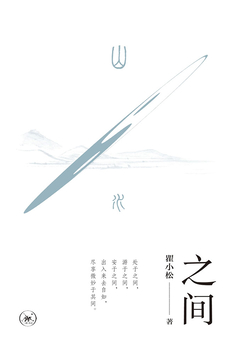
Between
Tags
Summary
Through his selection, annotation, and response to the texts, Qu Xiaosong emphasizes aspects of their literary style and insight that differ from conventional views, and through modes such as "entering the spirit," "responding in harmony," and "getting drunk together," he echoes from afar the poetry, prose, and thought of Tao Qian, Su Shi, and Zhuangzi, presenting the ethereal realm of traditional Chinese culture. In terms of style, the author selects works by several major writers of classical Chinese "musical" literature; the language is refined, highly readable, and distinctly rhythmic.
Editor's review
The book's core value lies in the rare "de-professionalized" path of artistic thinking it offers. Qu Xiaosong does not discuss abstruse compositional techniques; rather, from the plainness of the Book of Songs, the purity of Mozart, the ethereality of Bada Shanren, and even the primal vitality of African drumbeats, he extracts an artistic spirit that transcends specific forms. He repeatedly explores the power of "silence" and "blank space," holding that true art lies not in filling but in evoking inner resonance and creation in the viewer (or listener). For modern people surrounded by information overload and clamorous expression, this view is undoubtedly a cooling reminder.
The book's comparisons and integrations between traditional Chinese culture (especially Daoist and Zen thought) and the spirit of modern Western art are particularly original. Qu Xiaosong does not make simple judgments of superiority or inferiority; rather, he conducts dialogue in the vast zone "between," seeking those eternal artistic cores that speak directly to the heart. His writing is refined and restrained, rich in visual imagery and rhythm; the act of reading itself resembles listening to a finely structured chamber work, requiring the reader to quiet the mind and savor the cadences and gaps between the lines.
Overall, Between is not a book that provides clear answers but a key, or a quiet "between" zone, inviting readers to step temporarily outside fixed frameworks of knowledge and habits of taste and to feel anew the most primordial stirrings of art and life. It is well suited as a companion for a spiritual stroll and seems especially precious in an age of fragmented reading.
Who it's for
A good fit for
- Readers interested in thinking across art forms such as music, painting, and literature
- Those seeking inner calm and spiritual nourishment amid a clamorous life
- Readers curious about the comparison and integration of traditional Chinese culture and Western art philosophy
- Readers who appreciate concise, restrained prose rich in philosophy and poetic quality
Not a good fit for
- Readers seeking systematic art theory or specific guidance on creative technique
- Readers expecting fast-paced, strongly plotted content or clear conclusive answers
Reading tips
- It is suggested to read in a quiet environment, not too much at a time; choose one or two essays and savor them slowly, letting thoughts linger in the "blank space" created by the text.
- While reading, temporarily set aside fixed expectations of the author's identity as a "composer" and regard him as a learned and humble contemplator and interlocutor.
- If some artworks or cultural concepts mentioned in the book are unfamiliar, there is no need to look them up hastily; first feel the atmosphere of the text itself and explore further afterward.
About the publisher
SDX Joint Publishing Company is a publisher known for its humanities and social science titles, covering classics, culture, history, social fiction and politics. Its catalogue of 826 books includes Chinese and foreign literary classics such as The Scholars, Camel Xiangzi and Selected Short Stories of Chekhov, scholarly works such as Studies of Chinese Cave Temples, A Study of the Tuoba History (Revised Edition) and The Nine-Rank System: A Prehistory of the Imperial Examination, and translations such as Red Star Over China and Notes from the House of the Dead. Its authors include renowned Chinese and foreign writers such as Wu Jingzi, Lao She, Su Bai and Chekhov, as well as scholars and translators such as Chen Xiaoming, Wang Benhua, Guo Changbao and Zhu Xiansheng. Its publishing character lies in balancing the popularisation of classics with academic depth, with attention to textual quality and the transmission of knowledge.
Contents
- 版权信息
- 自序
- 上篇 会意陶潜
- 诗选
- 四言
- 五言
- 文选
- 中篇 相和东坡
- 诗选
- 词选
- 文选
- 记游
- 修养
- 祭祀
- 官职
- 释道
- 贼盗
- 卜居
- 亭堂
- 跋 卓契顺禅话
- 下篇 悦读庄周
- 《庄子·内篇》文选
- 第一章 天、地、人
- 第二章 心和形顺,游刃有余
- 第三章 无用大用
- 第四章 古今真人
- 第五章 开窍
- 《庄子·外篇》文选
- 第一章 造化之功
- 第二章 原生态
- 第三章 天地之友
- 第四章 得无所得
- 第五章 天然
- 第六章 平常心是道
- 第七章 天地之心
- 第八章 至乐无乐
- 第九章 心境
- 第十章 道在屎尿
- 《庄子·杂篇》文选
- 后记
FAQ
Does this book require professional musical knowledge from the reader?
Is the content rather abstract and difficult to understand?
How does this book differ from the author's earlier works (such as Music Chats)?
Related on WeRead



Comments
Find this book
This site is an index: you start “Search all sources” in your browser, and the entries it lists all point to third-party sites; please judge their availability yourself.
About the author
Qu Xiaosong is an author about whom limited public information is available. Only one work by this author is currently held in the collection, namely Between (Zhijian), commonly classified under literary appreciation. As information such as dates of birth and death, nationality, education, and professional experience cannot be confirmed, this introduction makes no speculation about the author's life and instead focuses on the writing presented in this work. Judging from the fact that Between is classified as literary appreciation, the writing appears to center on literary works or textual phenomena and carries the character of commentary and close reading, possibly involving interpretation of specific texts, observation of writers' styles, and expression of reading experience. Writing of this kind usually requires both patience in close reading and sharpness of personal judgment, staying close to the original while forming a readable narrative. Based on the available clues, Qu Xiaosong's writing seems inclined to build a channel of understanding between works and readers, guiding reading through an appreciative touch. Owing to limited materials, the author's overall creative trajectory, stylistic development, and influence are difficult to assess fully; only Between can be briefly observed, and further information remains to be supplemented.
