

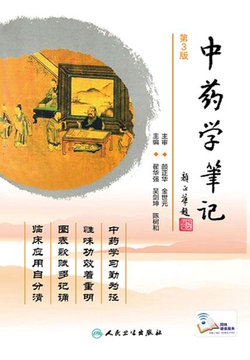
Notes on Chinese Materia Medica (3rd Edition)
Tags
Summary
Editor's review
Compared with the previous two editions, the 3rd edition has been comprehensively revised according to the latest Chinese Pharmacopoeia and disciplinary advances, adding modern research findings on certain medicinals and bringing classical theory into closer alignment with contemporary application. Columns such as "Medication Differentiation" and "Key Points of Clinical Compatibility" reflect the editors' deep clinical grounding and teaching experience, effectively guiding readers from "knowing" to "knowing how to use."
As one of the "Notes" series, the book features clear organizational logic and prominent key points, and is particularly adept at horizontal comparison of similar medicinals, helping readers build a networked knowledge structure rather than memorizing in isolation. For students and junior practitioners eager to understand the essence of Chinese materia medica in depth and seeking efficient learning methods, this book is a rare guide-type reference work. It is more like an experienced mentor explaining learning pathways and thinking methods in a lucid manner.
Who it's for
A good fit for
- Students of all specialties in traditional Chinese medicine colleges and universities, especially those currently studying the Chinese Materia Medica course
- TCM practitioners preparing for the Licensed Physician examination, professional title examinations, and other assessments requiring review of Chinese materia medica content
- TCM enthusiasts with a strong interest in Chinese materia medica who wish to gain a systematic introduction
- Clinical TCM physicians, who may use it as a quick-reference and review resource for clinical prescribing
Not a good fit for
- Professional researchers seeking in-depth pharmacological experimental studies or detailed chemical composition data on individual medicinals
- General readers looking for popular science books on TCM health preservation
Reading tips
- It is recommended to use this book alongside mainstream Chinese Materia Medica textbooks, as a supplement for organizing and reinforcing memory
- When reading, focus on the comparison tables between medicinals and the summaries of compatibility, which are key to building a knowledge system
- The mnemonic rhymes and illustrations in the book can be used, but the theoretical rationale behind them should be understood to avoid rote memorization
About the publisher
Founded in 1953, the People's Medical Publishing House is an important institution in China's medical publishing field, with publishing directions covering medical textbooks, academic monographs, medical journals, and popular science books. Its collection contains 2,503 titles, mainly classified under medicine. Representative works include the Complete Book of Chinese Nutrition Science (2nd Edition, 2 volumes), Guide to Clinical Practice with Medical Records, the Golden Mirror of Medicine (Volume 1), Chinese Medical Imaging: Head and Neck Volume (3rd Edition), and the Essentials of the Golden Cabinet from the Collected Clinical Chinese Medicine Must-Read Series (Collector's Edition), spanning both modern medicine and classical Chinese medical texts. Representative authors include Yang Yuexin, Ge Keyou, Ye Tianshi, Su Li, Wu Qian, Zheng Jinsheng, Wang Zhenchang, and Xian Junfang, covering fields such as nutrition, Chinese medicine, and medical imaging. With a publishing approach that balances textbooks and academic monographs, the press has established the "Renwei" brand.
Contents
- 版权信息
- 编委 (按姓氏笔画排序)
- 序
- 前言
- 总论
- 第一章 中药的起源和中药学的发展
- 第二章 中药的产地、采集与贮藏
- 第三章 中药的炮制
- 第四章 中药的作用与性能
- 第五章 中药的配伍
- 第六章 用药禁忌
- 第七章 用药剂量与用法
- 各论
- 第八章 解表药
- 第一节 发散风寒药
- 第二节 发散风热药
- 第九章 清热药
- 第一节 清热泻火药
- 第二节 清热燥湿药
- 第三节 清热解毒药
- 第四节 清热凉血药
- 第五节 清虚热药
- 第十章 泻下药
- 第一节 攻下药
- 第二节 润下药
- 第三节 峻下逐水药
- 第十一章 祛风湿药
- 第一节 祛风湿散寒药
- 第二节 祛风湿清热药
- 第三节 祛风湿强筋骨药
- 第十二章 化湿药
- 第十三章 利水渗湿药
- 第一节 利水消肿药
- 第二节 利尿通淋药
- 第三节 利湿退黄药
- 第十四章 温里药
- 第十五章 理气药
- 第十六章 消食药
- 第十七章 驱虫药
- 第十八章 止血药
- 第一节 凉血止血药
- 第二节 化瘀止血药
- 第三节 收敛止血药
- 第四节 温经止血药
- 第十九章 活血化瘀药
- 第一节 活血止痛药
- 第二节 活血调经药
- 第三节 活血疗伤药
- 第四节 破血消癥药
- 第二十章 化痰止咳平喘药
- 第一节 温化寒痰药
- 第二节 清化热痰药
- 第三节 止咳平喘药
- 第二十一章 安神药
- 第一节 重镇安神药
- 第二节 养心安神药
- 第二十二章 平肝息风药
- 第一节 平抑肝阳药
- 第二节 息风止痉药
- 第二十三章 开窍药
- 第二十四章 补虚药
- 第一节 补气药
- 第二节 补阳药
- 第三节 补血药
- 第四节 补阴药
- 第二十五章 收涩药
- 第一节 固表止汗药
- 第二节 敛肺涩肠药
- 第三节 涩精止遗药
- 第二十六章 涌吐药
- 第二十七章 杀虫止痒药
- 第二十八章 拔毒生肌药
- 主要参考文献
FAQ
What is the difference between this book and a Chinese Materia Medica textbook?
What are the main updates in the 3rd edition?
Can I understand this book without a foundation in TCM?
Related on WeRead
Comments
Find this book
This site is an index: you start “Search all sources” in your browser, and the entries it lists all point to third-party sites; please judge their availability yourself.
About the author
Zhai Huaqiang is an author who writes steadily in the field of traditional Chinese medicine. Public information about him is limited, and his identity, academic background, and professional positions have not been clearly recorded. Judging from the five works held in the collection, his writing centers on Chinese materia medica and TCM education, balancing craft inheritance with practical operation. His works include a specialized study on the inheritance and development of traditional Chinese medicine fermentation techniques, textbook-style readings for learners such as Notes on Chinese Materia Medica (3rd Edition) and Introduction to Traditional Chinese Medicine (13th Five-Year Plan), as well as practical handbooks such as A Practical Manual of TCM Dispensing and A Practical Manual of Maternal and Child TCM Health Literacy. Overall, his works span the categories of medicine and examination preparation, with an approach that emphasizes knowledge organization, key-point summaries, and operational guidance. They are suitable for TCM students, examination candidates, and grassroots practitioners, reflecting a certain accumulation in compiling TCM textbooks and practical handbooks.
Public information about Wu Jiankun is limited. Judging from the thirteen works included in the collection, his writing centers mainly on traditional Chinese medicine and everyday health preservation. Representative works include Notes on Chinese Materia Medica (3rd Edition), which organizes knowledge of Chinese materia medica in note form for easy review and reference, and An Illustrated Guide to Chinese Herbal Medicines, which presents medicinal herbs through illustrations and serves both identification and popular science. He has also written books such as A Comprehensive Guide to Health Preservation with the Compendium of Materia Medica, Eating Right for Seasonal Health, and several quick-reference guides on herbal soups, vegetables and fruits based on the Compendium of Materia Medica, and contributed to the Zhangxin Classic Series: 1,000 Health-Preserving Medicinal Diets. Another work, Fuhai Elegant Rhymes, touches on cultural themes. Overall, his books emphasize practicality and easy reference, written in plain language for general readers interested in health and herbal knowledge.
Chen Shuhe is a Chinese author about whom limited public information is available. His representative work that can currently be confirmed is Notes on Chinese Materia Medica (3rd Edition), which is commonly classified under medicine. This work suggests that his writing is oriented toward the study and organization of knowledge in Chinese materia medica, presented in the form of notes that help readers grasp key points and clarify the overall structure during coursework or review. Teaching materials of this note-taking kind generally emphasize orderliness and practicality, focusing on summarizing the basic concepts, properties, and applications of medicinal substances rather than offering lengthy theoretical exposition. Based on the available information, it is not possible to confirm his educational background, professional experience, or other publications, so no further inferences about his life should be made. Overall, Chen Shuhe has come to readers' attention through a clearly structured study book on Chinese materia medica, and his contribution lies mainly in providing organized material for introductory study and review, suitable for students in related fields and for self-learners.
Public information about Yan Zhenghua is limited, and details such as his full biography, nationality, and dates of birth and death cannot currently be confirmed. Judging from the three works included in the database, his writing centers mainly on medicine and health: Notes on Chinese Materia Medica (3rd Edition) reflects a systematic review of the fundamentals of Chinese pharmacology; Great Physicians of China: The Extraordinary Within the Ordinary leans toward popular medical writing and the sharing of experience; and Research on the Precision Network Pharmacology of Compound Kushen Against Tumors involves pharmacological research on antitumor Chinese medicine and carries a stronger academic tone. Spanning textbook notes, popular reading, and specialized research, these three books suggest that his writing balances knowledge popularization with professional inquiry and can serve readers at different levels.
