

Chinese Materia Medica
Tags
Summary
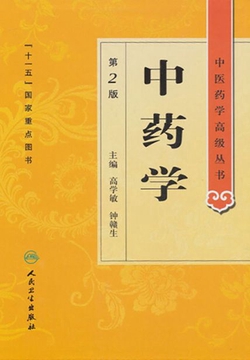
The book is divided into three parts: General Introduction, Specific Discussions, and Appendices. The General Introduction systematically presents the basic theories of Chinese materia medica and the development of new Chinese medicines. The Specific Discussions are organized by therapeutic action and cover more than 500 commonly used Chinese medicines, systematically introducing their medicinal properties, modern research, and clinical applications. The indications, chemical composition, and pharmacology of the drugs are based on the 2010 Chinese Pharmacopoeia, fully reflecting the research level and progress of modern Chinese materia medica.
The book is rich in content, systematic and standardized, innovative and practical, and is a rare advanced reference work on Chinese materia medica.
It can be used as a reference by teachers and students of higher Chinese medicine institutions, researchers, and senior clinicians.
Editor's review
The book is scientifically and rigorously organized. The general introduction systematically expounds the basic theories of Chinese materia medica, including their origin, development, processing, properties, compatibility, and application, laying a solid foundation for in-depth study of the specific discussions. The specific discussions classify medicines by therapeutic action and provide detailed introductions to the properties, actions, applications, dosage, and precautions of more than 400 commonly used Chinese medicines, with detailed content and prominent key points. Particularly noteworthy is that while maintaining the essence of traditional Chinese materia medica theory, the book emphasizes integration with modern pharmacological research, allowing classical wisdom and contemporary science to merge organically.
In terms of reading value, the book is not only suitable as a core textbook for teachers and students of traditional Chinese medicine institutions but also provides an authoritative reader for clinicians, pharmacists, and enthusiasts of traditional Chinese medicine to systematically learn knowledge of Chinese materia medica. The discussion of each medicine respects classical documentary records while incorporating modern clinical experience, embodying the editorial philosophy of 'inheriting without being bound by antiquity, innovating without departing from the source.' In addition, the book's explanations of drug identification and medication contraindications are particularly detailed, offering important guidance for safe clinical medication.
Overall, this Chinese Materia Medica represents the highest standard in current textbook compilation for Chinese materia medica. Its depth and breadth of content are well balanced, and its theoretical explanations are clear and thorough, making it an indispensable classic for systematically mastering knowledge of Chinese materia medica.
Who it's for
A good fit for
- Students and teachers of traditional Chinese medicine programs, for use as a core textbook or teaching reference
- Clinical Chinese medicine practitioners, Chinese pharmacists, and other healthcare professionals seeking to systematically update their knowledge of Chinese materia medica
- Researchers in traditional Chinese medicine who need a comprehensive understanding of basic theories and modern research advances in Chinese materia medica
- Enthusiasts with a strong interest in traditional Chinese medicine culture who wish to systematically learn knowledge of Chinese materia medica
Not a good fit for
- General readers seeking only simple wellness remedies or dietary advice and not needing systematic theoretical knowledge
- Pragmatists who expect to quickly master practical techniques for using Chinese medicines and are unwilling to delve into basic theory
Reading tips
- It is recommended to first read the general introduction closely to build a complete theoretical framework of Chinese materia medica, then progressively study the specific discussions
- Readers may combine this with related textbooks such as Formulas and Prescriptions to understand the significance of drug compatibility in compound formulas
- Pay special attention to the 'precautions for use' section of each medicine, which is crucial for safe clinical medication
About the publisher
Founded in 1953, the People's Medical Publishing House is an important institution in China's medical publishing field, with publishing directions covering medical textbooks, academic monographs, medical journals, and popular science books. Its collection contains 2,503 titles, mainly classified under medicine. Representative works include the Complete Book of Chinese Nutrition Science (2nd Edition, 2 volumes), Guide to Clinical Practice with Medical Records, the Golden Mirror of Medicine (Volume 1), Chinese Medical Imaging: Head and Neck Volume (3rd Edition), and the Essentials of the Golden Cabinet from the Collected Clinical Chinese Medicine Must-Read Series (Collector's Edition), spanning both modern medicine and classical Chinese medical texts. Representative authors include Yang Yuexin, Ge Keyou, Ye Tianshi, Su Li, Wu Qian, Zheng Jinsheng, Wang Zhenchang, and Xian Junfang, covering fields such as nutrition, Chinese medicine, and medical imaging. With a publishing approach that balances textbooks and academic monographs, the press has established the "Renwei" brand.
Contents
- 版权信息
- 中医药学高级丛书中药学(第2版)编写委员会
- 中医药学高级丛书中药学(第1版)编写委员会
- 出版者的话
- 2版前言
- 1版序
- 1版编写说明
- 总论
- 第一章 中药的起源和中药学的发展
- 第二章 中药的命名和分类
- 第三章 中药的产地、采集与贮藏
- 第四章 中药的炮制
- 第五章 中药的性能
- 第六章 中药的配伍
- 第七章 用药禁忌
- 第八章 中药的剂量、剂型与用法
- 第九章 中药的化学成分与疗效的关系
- 第十章 中药新药的研制与开发
- 各论
- 第一章 解表药
- 第二章 清热药
- 第三章 泻下药
- 第四章 祛风湿药
- 第五章 芳香化湿药
- 第六章 利水渗湿药
- 第七章 温里药
- 第八章 理气药
- 第九章 消食药
- 第十章 驱虫药
- 第十一章 止血药
- 第十二章 活血化瘀药
- 第十三章 化痰止咳平喘药
- 第十四章 安神药
- 第十五章 平肝息风药
- 第十六章 开窍药
- 第十七章 补益药
- 第十八章 收涩药
- 第十九章 涌吐药
- 第二十章 解毒杀虫燥湿止痒药
- 第二十一章 拔毒化腐生肌药
- 附录
FAQ
What are the main differences between this book and other Chinese materia medica textbooks on the market?
Can readers without a medical background understand the content of this book?
Does this book include color illustrations or key identification points for Chinese medicines?
Related on WeRead


Comments
Find this book
This site is an index: you start “Search all sources” in your browser, and the entries it lists all point to third-party sites; please judge their availability yourself.
About the author
Gao Xuemin is a Chinese author of books on medicine and health. Public information about the author is limited, but it can be confirmed that the writing centers on traditional Chinese pharmacy and health care with commonly used medicinal substances, and four works are included in the library. Works such as Chinese Materia Medica and A Vernacular Explanation of the Ode on Medicinal Properties (4th Edition) indicate a focus on making the basic theories and traditional verses of Chinese pharmacy accessible to learners, while the Compendium of Materia Medica and 400 Common Chinese Medicines for Health and Wellness show that the writing also covers the organization of classical materia medica knowledge and everyday health care. Overall, Gao Xuemin's works address both medical learners and general readers in plain language, emphasizing practicality and readability, and offer some reference value for the dissemination of Chinese pharmacy knowledge and health education.
Zhong Gansheng is an author in the field of Chinese medical books associated with traditional Chinese pharmacology. Public information about him is limited, and details such as his biography, nationality, and education are not clearly recorded. The library currently holds three of his works: Chinese Pharmacology, Chinese Pharmacology (Undergraduate Edition), and Basic Skills Training in Identification and Differentiation of Chinese Herbal Decoction Pieces (2nd Edition), all classified under medicine. These works focus on the basic theories of Chinese pharmacology, undergraduate teaching, and practical training in identifying herbal decoction pieces, combining systematic textbook content with hands-on skill development. The two pharmacology titles are aimed at teaching in traditional Chinese medicine institutions, while the training guide has been revised and reissued in a second edition, suggesting continued use and adjustment in teaching. Overall, his works lean toward teaching and practical guidance, suitable for students and beginners in traditional Chinese medicine.
