

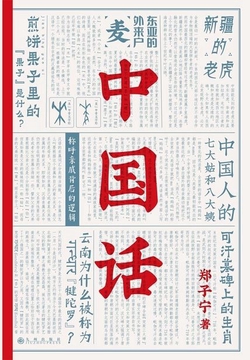
The Chinese Language
Tags
Summary
Editor's review
Zheng Zining's writing combines scholarly rigor with popular-science appeal. He is skilled at wrapping solid research in vivid stories, letting readers gain knowledge through moments of sudden clarity. The book's value lies in offering a new cognitive framework: language is not only a tool of communication but a "living fossil" sedimented with ethnic memory. By listening to the diversity and unity within "Chinese speech," we can more deeply understand what "China" means and how the pattern of diversity in unity took shape on this land. For readers who wish to go beyond the surface and understand China from the underlying logic of its culture, this is a rare gem.
Who it's for
A good fit for
- Non-specialist readers interested in linguistics, Chinese dialects, and the history and culture behind them
- Thinkers who enjoy exploring macro history and social change through micro details
- Explorers who hope to decode the linguistic and cultural codes of different regions during travel or daily life
- Readers seeking interdisciplinary reading experiences and appreciating obscure knowledge told in an engaging way
Not a good fit for
- Readers expecting a systematic linguistics textbook or a dialect-learning tool
- Readers with no interest or patience for historical research and etymological tracing
Reading tips
- It is recommended to pick chapters by interest rather than reading in order, as the chapters are relatively independent
- Readers may consult historical maps of China while reading to intuitively grasp the relationship between linguistic phenomena and geography and history
- When encountering an interesting etymology, try conducting a small survey among friends and family to add interactive fun to reading
About the publisher
Jiuzhou Press is a comprehensive publisher with humanities, social sciences, and classic works as important publishing directions, maintaining a sustained focus on philosophy, history, literature, and social culture. Its catalogue includes works by modern literary masters such as Xiao Hong and Lu Xun, as well as intellectual and art history works by Xu Fuguan, including A History of Chinese Theories of Human Nature: Pre-Qin Volume, A History of Han Thought, and The Spirit of Chinese Art: A Study of Shitao. It also translates and introduces overseas academic works such as Peter H. Wilson's The Thirty Years War: Europe's Tragedy and Peter Suber's The Case of the Speluncean Explorers, and covers cross-cultural exchange themes such as From Dunhuang to Samarkand. Its publishing character lies in balancing the organization of original texts with academic translation, forming relatively stable author and title resources in categories including philosophy, military affairs, theory, and social culture. More complete information about the press's publishing history and plans is limited in publicly available sources; this summary is based only on the titles in the catalogue.
Contents
- 版权信息
- 序一 语言中的历史
- 序二
- 最初的华夏农民
- 稻农的出现
- 从东非到太平洋——种稻者的扩张
- 环绕青藏高原的稻谷
- 回到华南
- 籼米和粳米
- 籼米之路——从东南亚到中国
- 东亚的外来户——麦
- 青藏高原边缘的稷农
- 稷为何物?
- 喜马拉雅山南麓和太平洋上的稷
- 十二生肖与中国数字
- 中原的天干地支
- 印度东北的十二地支
- 中国数字的输出
- 2和7的神秘联系
- 中国话里的其他进制
- “万”之谜
- 回到干支
- 可汗墓碑上的生肖
- 十二生肖抓小偷
- 东南亚的生肖
- 中国人的伴侣动物
- 中国最重要的牲畜
- 汉语的“猪”从何而来?
- 彘之路
- “鸡”的南方起源
- 雒鸣湘西
- 东亚共通的“鹅”
- 老虎与野马
- 楚国的老虎
- 新疆虎湖
- 东进之马
- 西方来客
- 数学天才莱布尼茨的语言学研究
- 中国的大熔炉
- 传承千年的神剑?
- 不氧化的金
- 银铜和钱
- 冶炼技术的诞生
- 从冶铁学生到炼铁老师
- 中国人的七大姑和八大姨
- 自远古传来的“爸妈”
- “爷”是祖父还是父亲
- “爹”从何方来?
- 称呼亲戚背后的逻辑
- “女郎”为娘
- 永不变的“舅舅”
- 论资排辈的重要性
- 中国人用过的衔头
- 中国之外的“伯”
- “后”——最早的尊贵头衔
- “汗”与“可汗”
- 贬值的“单于”
- 文艺和不文艺的中国地名
- 熊在苍山跳
- 离不开“勐”的壮侗人
- 山东的壮语地名
- 中国城市在外语中的称呼
- 敦煌、敦薨与吐鲁番
- 妙香国和郁金地
- 中国的江河
- 甜蜜茶点
- 舶来的甜蜜
- 饮杯chay/te
- “茶”之源
- 饮茶吃果
- 附录
- 本书标音说明
- 推荐书目
FAQ
How does this book differ from East Words, West Words?
Can I understand it without a linguistics background?
Which dialects does this book mainly discuss?
Related on WeRead


Comments
Find this book
This site is an index: you start “Search all sources” in your browser, and the entries it lists all point to third-party sites; please judge their availability yourself.
About the author
Zheng Zining is a Chinese-language author about whom limited public information is available. The library currently holds five of his works, including The Ten Names of China, Zhongguo Hua (Chinese Speech), Dongyan Xiyu: Rediscovering China Through Language, Chinese Surnames, and Nanqiang Beidiao: China in Its Dialects. These works show a sustained interest in language and writing, cultural customs, and folk literature. He tends to begin with everyday words, personal names, and regional dialects, tracing their historical origins and local variations, and uses them to discuss how Chinese culture took shape and changed over time. His writing also brings in a world-history perspective, is accessible in style, and is aimed at general readers interested in language and culture.
