

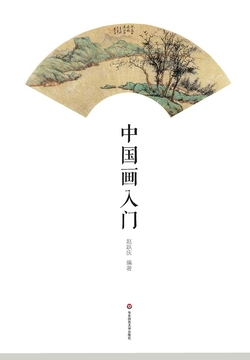
Introduction to Chinese Painting
Tags
Summary
Editor's review
Who it's for
A good fit for
- Complete beginners with a strong interest in traditional Chinese painting who wish to learn systematically
- Self-learners looking for a clearly structured, solidly explained textbook on Chinese painting
- Art teachers or parents who need a reliable introductory reference for teaching or parent-child art education
- Readers interested in the arts who wish to gain a deeper understanding of the basic aesthetic concepts and creative process of Chinese painting
Not a good fit for
- Readers seeking to quickly master a particular style or popular technique
- Professionals with a strong foundation in Chinese painting who wish to pursue advanced theoretical or technical research
Reading tips
- Follow the chapter order and do not skip the basic brushwork sections, as they are the foundation for later creative work
- Prepare a basic set of brushes, ink, paper, and inkstone, and be sure to practice along with the steps; practice is key to understanding
- Expand your appreciation by referring to the classic masterworks mentioned in the book to deepen your intuitive understanding of artistic conception and style
About the publisher
Adhering to the publishing purpose of "broad education," East China Normal University Press extends beyond its three main areas of textbooks, academic works and general-interest books, and its catalogue clearly reflects a vision that bridges Chinese and foreign humanities and social sciences. In foreign literature it offers classics such as Yasunari Kawabata's Snow Country and The Old Capital (translated by Chen Dewen), Jane Austen's Pride and Prejudice, and Rilke's annotated edition of The Notebooks of Malte Laurids Brigge (translated by Chen Zao); in architecture, Chen Congzhou's two-volume Appreciation Dictionary of Chinese Gardens; in social psychology, The Social Animal: 12th Edition; and it also includes philosophy titles, traditional-culture works such as the six-volume Paintings for the Protection of Life, and education books. Its authors include renowned Chinese and foreign writers and skilled translators, showing a publishing profile that balances classic translation, scholarly accumulation and public reading. Public information is limited; the above is based only on the books in the catalogue.
Contents
- 版权信息
- 前言
- 文论篇
- 第一章 东西方绘画样式产生的文化渊源
- 第二章 中国画的艺术特点
- 第三章 中国画的表现方法与手段
- 技法篇
- 第四章 写意与笔墨技法
- 第五章 构图
- 第六章 继承与发展
- 附录
- 主要参考文献
FAQ
Is this book suitable for someone with no painting background at all?
Does the book include color demonstration images?
What level can one reach after studying this book?
Related on WeRead


Comments
Find this book
This site is an index: you start “Search all sources” in your browser, and the entries it lists all point to third-party sites; please judge their availability yourself.
About the author
Zhao Yueqing is an author about whom limited public information is currently available; details such as nationality, dates of birth and death, and educational background remain unclear, and only one of his works is included in the collection. Based on the available information, Zhao Yueqing's representative work is An Introduction to Chinese Painting, which is classified under art and serves as an introductory reader on Chinese painting for beginners. The title itself indicates that the content focuses on basic knowledge and technical guidance in Chinese painting, making it suitable for readers who wish to understand or learn the fundamentals of the art form. Although detailed biographical information about the author is difficult to verify, the positioning of the work suggests that Zhao Yueqing emphasized accessibility and readability in writing, attempting to present the key learning points of Chinese painting in a relatively approachable manner. For beginners, introductory books of this kind often serve to point the way and lower the threshold, helping readers build a basic understanding of Chinese painting and cultivate interest in further study. Due to limited public information, no further definitive introduction can be provided regarding Zhao Yueqing's other works, writing style, or broader influence.
