

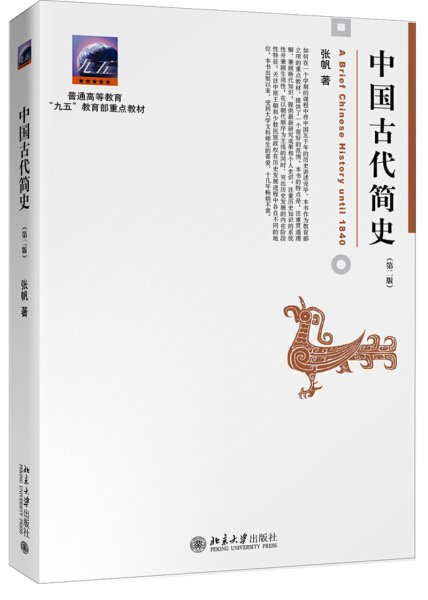
A Brief History of Ancient China
Tags
Summary
Editor's review
Who it's for
A good fit for
- University students or self-learners who need systematic study of ancient Chinese history
- Readers who wish to move beyond particular events and understand the patterns of Chinese historical change from a broad perspective
- Secondary-school history teachers or professionals in related fields seeking a reliable, concise book for lesson preparation and reference
- General readers with some humanistic literacy who wish to deepen their understanding of traditional Chinese culture and social structure
Not a good fit for
- Readers seeking highly story-driven popular books about exotic anecdotes or palace secrets
- Professional historians focusing on extremely deep research on a single period or special topic
Reading tips
- Read the chapters in order to build a clear historical timeline and chain of cause and effect.
- While reading, consult the appended 'Chronology of Major Events' and 'Tables of Dynastic Lineages' for easy cross-reference.
- The 'Discussion Questions' after each chapter are worth pondering carefully; they help deepen understanding of the chapter's core issues.
About the publisher
Peking University Press is a comprehensive university press whose publishing areas cover classical literature, popular science, social culture, world history, Western philosophy, and culture. Its catalogue contains 6,031 titles, with representative books including A Dream of Red Mansions, Relativity: The Special and General Theory (15th Edition) (with Einstein's classic papers on unified field theory and other topics), Elements, Conics, The Aristocratic Families of the Eastern Jin, The Philosophy of Mythology (Volume I), The Philosophy of Mythology (Volume II), and The Origin of Continents and Oceans. Representative authors include Cao Xueqin, Zhou Ruchang, Albert Einstein, Euclid, Apollonius, Tian Yuqing, Schelling, and Xian Gang. The press has developed distinctive strengths in classical Chinese literature and in the translation of Western philosophical classics, while also covering scientific classics and social and cultural studies. As public information is limited, this description is based only on the books in the catalogue and offers no further extrapolation.
Contents
- 版权信息
- 第一章 早期华夏文明的形成
- 一 史前考古发现与古史传说
- 二 早期国家:夏与商
- 三 商朝甲骨文与青铜文化
- 第二章 西周与春秋
- 一 西周的兴亡
- 二 周朝典制
- 三 春秋历史概况
- 第三章 战国时期的社会变动
- 一 政治形势的变化:割据、兼并、统一
- 二 各国变法运动
- 三 士阶层的崛起与百家争鸣
- 第四章 统一的君主专制帝国——秦
- 一 法家思想与秦的立国
- 二 巩固统一的各项措施
- 三 秦的暴政和速亡
- 第五章 西汉前、中期政治:从黄老无为到“霸王道杂之”
- 一 黄老无为思想与西汉前期政治
- 二 汉武帝的功业
- 三 独尊儒术与“霸王道杂之”
- 第六章 王莽改制与东汉兴衰
- 一 王莽改制
- 二 东汉政治述略
- 第七章 政治分裂的魏晋南北朝(上)
- 一 三国鼎立
- 二 西晋的短暂统一
- 三 东晋的偏安之局
- 第八章 政治分裂的魏晋南北朝(下)
- 一 十六国的割据
- 二 北朝概况
- 三 南朝概况
- 第九章 两汉魏晋南北朝时期的经济、社会与文化
- 一 两汉魏晋南北朝时期的经济与社会
- 二 两汉魏晋南北朝时期的文化
- 第十章 隋朝与唐前期的鼎盛局面
- 一 隋朝的兴亡
- 二 从贞观之治到开元盛世
- 三 隋唐制度
- 第十一章 割据倾向的再现:从安史之乱到五代十国
- 一 安史之乱与藩镇割据
- 二 安史乱后的唐朝中央
- 三 五代十国
- 第十二章 北宋变法
- 一 宋初“防弊”之政及其新弊
- 二 王安石变法
- 第十三章 两宋与辽、夏、金、蒙的对峙
- 一 辽、西夏的统治及其与北宋的关系
- 二 南宋与金朝、蒙古的对峙
- 第十四章 金朝与大蒙古国
- 一 金朝历史概况
- 二 大蒙古国
- 第十五章 元朝百年统治
- 一 元朝的建立与统一
- 二 汉化迟滞与元朝的早衰
- 三 元朝的民族关系与对外关系
- 第十六章 隋唐宋元时期的经济、社会与文化
- 一 隋唐宋元时期的经济与社会
- 二 隋唐宋元时期的文化
- 第十七章 朱元璋与明初政治
- 一 明朝的建立及开国制度
- 二 洪武时期的重典统治
- 三 从靖难之役到仁宣之治
- 第十八章 明朝中后期政治述略
- 一 皇位继承与“家天下”的皇权
- 二 内阁与宦官
- 三 士大夫集团与党争
- 第十九章 明朝边疆局势与清朝的兴起
- 一 “南倭北虏”及其他问题
- 二 满族的崛起
- 三 清朝的统一
- 第二十章 康乾盛世及其余波
- 一 君主集权的巅峰
- 二 文治与武功
- 三 盛世的危机
- 第二十一章 明清时期的经济、社会与文化
- 一 明清时期的经济与社会
- 二 明清时期的文化
- 后记
FAQ
How is this book different from classic general histories such as General History of China or An Outline of National History?
What period does this book cover?
Will non-history majors find it difficult to read?
Related on WeRead


Comments
Find this book
This site is an index: you start “Search all sources” in your browser, and the entries it lists all point to third-party sites; please judge their availability yourself.
About the author
Public information about Zhang Fan is limited, and his profile emerges mainly from the twenty-five works held in this catalog. His writing spans several fields: general history titles such as A Brief History of Ancient China and its illustrated and second editions; historical narratives for different readers, including The Era of Mi Yue and a volume on the Yuan dynasty in A Children's Introduction to Chinese History; as well as documentary-style works like Broken Trust: The Collapse of Public Health Systems, social-science topics such as A New History of Humanity, and management books including Hidden Champions. Overall, he comes across as a compiler and writer who bridges academic popularization and general reading, turning specialized knowledge into clear, accessible prose. His history books emphasize structure and readability for beginners, while his other works address contemporary issues with a focus on conveying information rather than personal stylistic display.
