

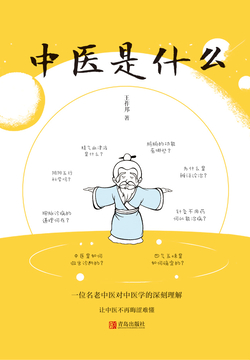
What Is Traditional Chinese Medicine
Tags
Summary
Editor's review
From an editorial perspective, the book's greatest value lies in its positioning as a "return to the source." In today's environment, where information on Chinese medicine and health preservation is rampant and uneven in quality, this book offers a reliable, systematic starting point for understanding. It does not tout secret remedies or exaggerate curative effects; instead it focuses on explaining how Chinese medicine understands the human body, views illness, and conceives of health, helping readers build a scientific, rational set of thinking tools for approaching Chinese medicine. Its comparison of the differences between Chinese and Western medical thinking is especially incisive, helping dispel common misunderstandings and barriers.
As a popular-science book carefully planned by Qingdao Publishing House, it is plain in language, clear in structure, and strong in logic. It suits beginners who are curious about Chinese medicine but do not know where to start, guiding them past the traps of fragmented information to grasp directly the core wisdom of Chinese medicine. In reading it, one gains not only a body of knowledge but a distinctive perspective for understanding life and health.
Who it's for
A good fit for
- Beginners interested in Chinese medicine culture but lacking systematic knowledge
- General readers who wish to build a scientific, rational view of Chinese medicine in order to discern health-preservation information
- People studying Western medicine or related fields who want to understand the framework of Chinese medical thinking and broaden their horizons
- Health-preservation enthusiasts concerned with managing their own and their family's health who seek a supplement from traditional wisdom
Not a good fit for
- Readers seeking quick-acting prescriptions or treatment plans for specific diseases
- Professionals who already possess a deep theoretical foundation in Chinese medicine and need to delve into the depth of a specialty
Reading tips
- Read the chapters in order—first build an overall framework, then go into details; avoid jumping straight to specifics.
- As you read, connect the material with your own life experience and health observations, and reflect on how Chinese medical theory maps onto reality.
- With core concepts such as "qi" and "yin-yang," do not rush to seek an exact correspondence in modern science; first try to understand their internal consistency within the logic of Chinese medicine.
About the publisher
Founded in 1987, Qingdao Publishing House has long focused on education, science and technology, children's books, and lifestyle titles, while steadily publishing classical and foreign literature. Its 827 titles in the catalog reflect a balance between making classics widely accessible and serving young readers. They include the four great classics of Chinese literature—Romance of the Three Kingdoms, Water Margin, Dream of the Red Chamber, and Journey to the West—as well as foreign literary translations such as Sei Shōnagon's The Pillow Book, works associated with Zhou Zuoren, and Victor Hugo's Les Misérables. The press also offers a color-illustrated series of recommended classics for primary and secondary school Chinese curriculum reading, using pictures and text to support student readers. Its common categories cover classical literature, essays and miscellaneous writings, folk literature, and foreign literature, with authors including Luo Guanzhong, Shi Nai'an, Cao Xueqin, Gao E, Wu Cheng'en, Sei Shōnagon, Zhou Zuoren, and Victor Hugo. Public information is limited, so this profile emphasizes the publishing directions shown by the catalog.
Contents
- 版权信息
- 序
- 前言
- 中医基础篇
- 初识中医
- 整体观念——中医之互联网思维
- 阴阳五行——中医学的基石
- 望闻问切——中医诊病的主要方法
- 辨证论治——中医个性化治疗的法宝
- 干支——构建中医的基本元素
- 十二时辰——中医的时间医学
- 二十四节气——中医的气候医学
- 治未病——中医的预防医学
- 脏腑学说——以五脏为中心的中医整体观
- 精气血津液——脏腑生理活动的产物
- 中医诊病篇
- 中医看病看什么
- 中医是如何做出诊断的
- 外感病邪·六淫
- 湿邪的致病特点
- 风为百病之长
- 百病皆生于气
- 亦因亦果话瘀血
- 怪病多由痰作祟
- 胖人多痰,瘦人多火
- 何谓“上火”
- 何为二便正常
- 虚证和实证
- 怕冷就一定是阳虚吗
- 您真的需要“补”吗
- “冬病夏治”与“夏病冬治”
- 中医经络篇
- 神奇而又神秘的经络
- 针灸不用药,何以能治病
- 针灸获取疗效的关键是什么
- 取穴不准,疗效不稳
- 火针——针、灸一体的中医疗法
- 穴位按摩——最古老的医术
- 中药篇
- 中药的四气五味
- 中药的配伍讲究君臣佐使
- 中药炮制是怎么回事
- 中药使用有哪些禁忌
- 中药,是药三分毒吗
- 中医养生篇
- 养生是一个系统工程
- 养生与天年
- 顺天守时、法于阴阳——中医养生的最高准则
- 养神为上——中医养生的重要特色
- 中医“食疗”浅谈
FAQ
Will this book teach me to prescribe medicine for myself?
Are the views in the book too traditional and in conflict with modern medicine?
As a reader with no foundation at all, will I fail to understand it?
Related on WeRead




Comments
Find this book
This site is an index: you start “Search all sources” in your browser, and the entries it lists all point to third-party sites; please judge their availability yourself.
About the author
Wang Zuobang is an author about whom limited public information is available, and what can be confirmed centers mainly on a single work. His representative work is What Is Traditional Chinese Medicine, catalogued under medicine and the only title by him in the collection. Judging from its subject, the book addresses the basic understanding and introductory explanation of traditional Chinese medicine, aimed at readers who wish to learn about its content and ways of thinking, and it has the character of popular science and knowledge organization. Because the author's life, nationality, educational background, and writing career are not clearly recorded, little more can be said about the person and his scholarship; nevertheless, his work offers readers an entry point into the topic of traditional Chinese medicine and thus holds a place in the medicine category.
