

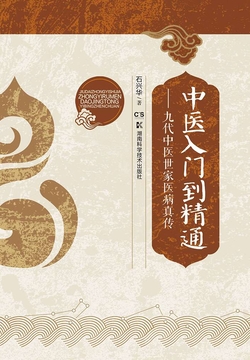
Traditional Chinese Medicine: From the Basics to Mastery
Tags
Summary
Editor's review
Who it's for
A good fit for
- Beginners with a strong interest in Chinese medical culture and theory who wish to study systematically on their own
- General readers seeking traditional wisdom to support modern health management, with an emphasis on wellness and disease prevention
- Students or enthusiasts in related fields who need a clearly organized basic reference on Chinese medicine
- Thoughtful readers who prefer a rational, structured approach and wish to understand the inner logic of Chinese medicine
Not a good fit for
- Those expecting quick, simple recipes or massage techniques and who lack patience for deeper theory
- Patients with acute conditions seeking immediate treatment solutions or a substitute for professional medical advice
Reading tips
- Read the chapters in order, first consolidating the theoretical foundations of yin-yang, the five phases, and the zang-fu organs before moving on to diagnosis and treatment methods
- As you read, reflect on the case studies and try to analyze common bodily signals in daily life using a Chinese-medical way of thinking
- For practical content such as meridians and acupoints, review the illustrations and revisit the material as needed; do not expect to master it all at once
About the publisher
Hunan Science & Technology Press has long focused on science popularization and medical publishing, balancing academic depth with accessibility for general readers. Among the 462 titles in the database are Richard Feynman's classic lectures on QED, the nature of physical laws, and relativity in the "Approaching Feynman" series, as well as general-audience works such as George Gamow's One, Two, Three... Infinity and Sean Carroll's The Big Picture. Its paleontology and dinosaur list includes Gregory S. Paul's Princeton field guides and authors such as Xing Lida. Hermann Weyl's Symmetry further reflects the press's attention to classic works bridging science and the humanities. Overall, the publisher shows a clear author profile and an emphasis on illustrated, well-rounded science publishing across both translated and original titles.
Contents
- 版权信息
- 序
- 前言
- 凡例
- 第一篇 中医理论入门基础学
- 第一章 绪论
- 第二章 中医入门基本学说
- 第三章 藏象学说
- 第四章 经络学说
- 第五章 病因病机学说
- 第六章 疾病防治学说
- 第二篇 中医药方学
- 第七章 临证药性汤散
- 第三篇 中医临床诊疗学
- 第八章 疾病诊察学
- 第九章 疾病辨证学
- 第十章 临床证治学
- 第十一章 疾病治疗
- 第十二章 中医临床验案
- 附录 临床处方中草药用量
FAQ
How is this book different from other introductions to Chinese medicine on the market?
Can I understand it with no background at all?
Will this book teach me to prescribe for and treat myself?
Related on WeRead

Comments
Find this book
This site is an index: you start “Search all sources” in your browser, and the entries it lists all point to third-party sites; please judge their availability yourself.
About the author
Shi Xinghua is an author for whom limited public information is available; details such as biography, nationality, dates of birth and death, and educational background are not clearly recorded. Only one work by this author is known, titled From the Basics to Mastery of Traditional Chinese Medicine, classified under medicine. Judging from the title and category, it is an introductory book on traditional Chinese medicine aimed at beginners, covering fundamental theories, basic concepts, and entry-level methods while bridging toward more advanced content. The writing emphasizes clear organization and accessibility, allowing readers without a background in Chinese medicine to gradually understand this traditional medical system. Although little is known about the author personally, the book offers readers seeking a systematic introduction an accessible entry point and has practical value in popularizing basic knowledge of traditional Chinese medicine.
