

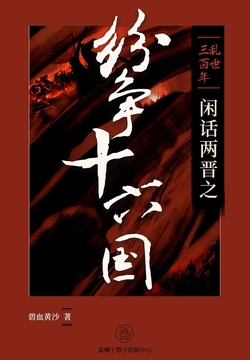
The Chaos of the Two Jin Dynasties
Tags
Summary
Although the culture of the two Jin dynasties moved toward pluralistic development, an era of cultural creation, conflict and fusion, the two Jin were nonetheless a period of rupture in the robust and powerful cultural inheritance of the Qin and Han; the decline of culture caused their new political institutions to fall apart shortly after their establishment, and we cannot but take history as a mirror.
The book contains many detailed and riveting depictions of warfare, as well as analyses of the ways of the world and human nature. By depicting chaos, it inspires us that while we should carry forward the robust and powerful spirit of great eras, we should also value the lessons of chaotic times.
Editor's review
Who it's for
A good fit for
- Readers interested in the history of the Wei, Jin, Southern and Northern Dynasties who wish to understand this chaotic period systematically
- Readers who enjoy popular history works with vivid narrative and in-depth analysis
- Thinkers who hope to draw lessons on management, political struggle or crisis response from history
- Those concerned with cultural issues such as aristocratic clan politics, ethnic integration and Xuanxue qingtan discourse
Not a good fit for
- Readers seeking light, entertaining historical stories and lacking patience for serious historical analysis
- Professional historians expecting highly academic scholarship with extremely rigorous textual criticism
Reading tips
- Consult historical maps while reading to better understand the influence of geography on military and political affairs
- When confused by人物 relationships, sketch a brief family or faction chart to aid understanding
- Read alongside Wei-Jin anecdotal collections such as A New Account of Tales of the World to enhance the feel of the era's atmosphere
About the publisher
Zhengzhou University Press is a comprehensive publisher based in China that takes academic publishing as its main body while giving equal weight to educational and trade publishing. Its catalog of 24 titles covers biography, history, documentary literature, literary appreciation, education, and inspirational growth, reflecting a focus on both educational and general-interest books. Representative works include From Emperor to Citizen by Aisin-Gioro Puyi, the annotated four-volume Eguo Jintuo Cuibian Xubian, Twilight in the Forbidden City by Reginald Johnston, and titles such as The Southern-Sojourning Monarch: Song Gaozong's Hesitation and Choice and Output-Based Learning: The Secret of Efficient Learning, spanning historical biography and study methods. Among its authors are well-known figures such as Puyi, Yue Ke, Johnston, and Xia Mianzun, alongside Xiong Xi, Li Lan, Yin Xiaofeng, and Tao Shangyun, giving the press a character that combines historical writing with educational publishing. Public information is limited, so this description is based only on in-catalog data.
Contents
- 版权信息
- 自序
- 上篇 西晋
- 一 破茧而出的晋王朝
- 二 平吴遗策
- 三 金陵王气黯然收
- 四 声色犬马的时代
- 五 三枚定时炸弹
- 六 外戚、宗室与皇后
- 七 凛冽的风
- 八 动荡的帝国
- 九 落花犹似坠楼人
- 十 一场游戏一场梦
- 十一 清君侧
- 十二 洛阳城的眼泪
- 十三 皇太弟的梦
- 十四 八王之乱的终结
- 十五 从流民到皇帝
- 十六 刘渊兴起:汉化的匈奴人
- 十七 从奴隶到大将军:石勒传奇
- 十八 洛阳的陷落(上)
- 十九 洛阳的陷落(下)
- 二十 蒿棘成林的长安
- 二十一 搅动河北
- 二十二 伏低做小计取幽州
- 二十三 西晋的灭亡
- 下篇 东晋
- 二十四 东南往事
- 二十五 北方裂变:前赵与后赵
- 二十六 祖逖北伐
- 二十七 王敦之乱
- 二十八 偏而不安的朝廷
- 二十九 只有一个赵国
- 三十 石勒之死
- 三十一 嗜血的权杖
- 三十二 慕容鲜卑的兴起
- 三十三 东晋帝国的希望
- 三十四 除了他,没人敢自称魔头
- 三十五 石虎时代的终结
- 三十六 城头变幻大王旗
- 三十七 冉闵与杀胡令
- 三十八 前秦的兴起
- 三十九 冉魏:消失在历史的黑洞中
- 四十 从殷浩北伐到桓温北伐
- 四十一 变态皇帝杀人魔王
- 四十二 苻坚的崛起
- 四十三 燕晋争锋(上)
- 四十四 燕晋争锋(下)
- 四十五 血色中原
- 四十六 只剩一个对手
- 四十七 桓温时代的终结
- 四十八 大决战序幕
- 四十九 淝水之战(上)
- 五十 淝水之战(下)
- 五十一 大厦将倾——前秦的分裂
- 五十二 墙倒众人推
- 五十三 废墟上的小帝国们
- 五十四 无可奈何花落去
- 五十五 混战中的北方
- 五十六 鹿死谁手:魏燕大决战
- 五十七 西北之乱局
- 五十八 司马道子的乱政
- 五十九 海盗之鼻祖孙恩
- 六十 桓玄篡权始末(上)
- 六十一 桓玄篡权始末(下)
- 六十二 收拾旧山河(上)
- 六十三 收拾旧山河(下)
- 六十四 后燕灭亡与大夏兴起
- 六十五 气吞万里如虎:刘裕北伐
- 六十六 南凉、北凉与西秦之缠斗
- 六十七 赫连勃勃占据长安
- 六十八 东晋帝国的谢幕
- 尾声 南北朝序曲
FAQ
How does this book differ from classic scholarly works such as Lü Simian's History of the Two Jins, Southern and Northern Dynasties?
How does the book handle sensitive ethnic issues such as the "Five Barbarians' Upheaval"?
Can readers without a historical background understand it?
Related on WeRead



Comments
Find this book
This site is an index: you start “Search all sources” in your browser, and the entries it lists all point to third-party sites; please judge their availability yourself.
About the author
Zui Ba Junshan is an author in the field of Chinese-language historical writing. Public information about this author is limited: dates of birth and death, nationality, and educational background are not clearly documented. The library currently holds one work by this author, titled Turmoil in the Two Jin Dynasties. Under its common classification, the book falls into historical reading, with its subject focused on the unrest and upheaval of the Two Jin period. The author narrates this historical phase, marked by frequent changes of regime and severe fluctuations in social order, showing attention to the patterns of a troubled era. Because verifiable information is scarce, it remains difficult to fully outline the author's writing career and overall body of work. Based on the available work alone, the writing tends toward popular historical narration aimed at general readers interested in the history of the Wei, Jin, and Northern and Southern Dynasties. The specific features of the author's style, approach to historical sources, and the book's actual reception still await further public information.
