

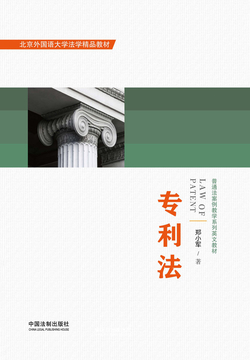
Patent Law
Tags
Summary
The book is written entirely in English and uses edited and abridged U.S. or U.K. court opinions. It is divided into fourteen chapters, covering topics in pre-grant patent prosecution such as introduction, novelty, utility, non-obviousness, patentable subject matter, disclosure, claims, patent examination, and post-grant amendments, as well as post-grant enforcement topics such as infringement, remedies, licensing, international applications, and current developments.
Editor's review
Who it's for
A good fit for
- Law students or researchers, especially those in intellectual property law
- Practitioners such as corporate legal counsel, intellectual property managers, or patent agents
- Policy researchers or media professionals interested in science and technology innovation policy or the intellectual property system
- Lawyers and judicial personnel who need to handle patent-related business or litigation
Not a good fit for
- General readers who only wish to understand basic patent concepts or application procedures
- Casual readers seeking light reading or fiction
Reading tips
- It is recommended to first read the table of contents and introduction to grasp the book's structure and core viewpoints, then choose relevant chapters for close reading according to one's needs
- When reading, consult official guidelines or the latest examination cases published on the website of the China National Intellectual Property Administration to obtain current practical developments
- For key and difficult statutory provisions, refer to the statutory index and case guidance in the appendix for further reading and comparative analysis
About the publisher
China Legal Publishing House is a legal publisher overseen and sponsored by the Ministry of Justice, with the publication of standard texts of national laws and regulations as an important focus; its catalogue already contains 2,972 titles. Its publications cover fields such as criminal law, civil law, contract law, company law, real estate law and the security system, including article-by-article commentaries such as the Interpretation of the Contract Part of the Civil Code of the People's Republic of China, adjudication rules and case compilations oriented toward judicial practice such as Understanding and Applying Adjudication Rules in Contract Disputes and A Compendium of Court Views on Real Estate Cases, as well as legal classics such as On Crimes and Punishments and academic works such as The Theory of Procedural Sanctions. In terms of author resources, the publisher brings together classic legal authors such as Cesare Beccaria, scholars and practitioners such as Liu Junhai, Long Weiqiu and Zhu Shuying, and cooperates with institutions including the National Judges College and the Judicial Case Research Institute of the Supreme People's Court. Its publishing character lies in linking legal texts, scholarly interpretation and judicial application, balancing authoritative norms with practical guidance.
Contents
- 版权信息
- 前言
- Chapter Ⅰ GENERAL INTRODUCTION
- A. Brief Note on American Legal System
- B. Intellectual Property Law and Patents
- C. Justification of Patent System
- D. Applicable Law
- E. Forums and Jurisdiction
- Chapter Ⅱ NOVELTY
- A. Introduction
- B. Public Sale
- C. Use in Public
- D. Printed Publication
- Chapter Ⅲ UTILITY
- A. Introduction
- B. Chemical Compound
- C. Immorality
- Chapter Ⅳ NONOBVIOUSNESS
- A. Introduction
- B. Obviousness Test
- C. Motivation to Combine Prior Arts
- Chapter Ⅴ PATENTABLE SUBJECT MATTER
- A. Introduction
- B. Computer Programs
- C. Business Methods
- D. Laws of Nature
- Chapter Ⅵ DISCLOSURE
- A. Introduction
- B. Enablement
- C. Written Description
- D. Best Mode Requirement
- Chapter Ⅶ CLAIMS
- A. Introduction
- B. Claim Structure
- C. Types of Claim
- D. Claiming Technique
- E. Claim Construction
- Chapter Ⅷ PATENT PROSECUTION
- A. Introduction
- B. Preparing and Filing Patent Applications
- C. Examination
- D. Docketing
- Chapter Ⅸ POST-ISSUANCE CORRECTION
- A. Introduction
- B. Certificate of Correction
- C. Reissue
- D. Reexamination
- Chapter Ⅹ PATENT INFRINGEMENT
- A. Introduction
- B. Literary Meaning of Claim Language
- C. Indirect Infringement
- D. Contributory Infringement & Patent Misuse
- E. Infringing Use
- F. Doctrine of Equivalents and Its Limitations
- Chapter Ⅺ DEFENSE TO PATENT INFRINGEMENT
- A. Introduction
- B. Noninfringement
- C. Invalidity
- D. Unenforceability
- E. Patent Misuse and Antitrust Counterclaims
- F. Other Defenses
- Chapter Ⅻ REMEDIES
- A. Introduction
- B. Compensatory Damages
- C. Injunctions
- D. Punitive Damages and Attorney Fee
- Chapter XIII PATENT LICENSING
- A. Introduction
- B. Litigation and Settlement
- C. Compulsory Licensing
- D. Licensor Repudiation and Assignor Estoppel
- E. Antitrust Violations
- Chapter XIV CURRENT ISSUES AND DEVELOPMENT
- A. Introduction
- B. Patent Trolling
- C. Parallel Import, Grey Market, and Exhaustion Doctrines (D
- D. Unfair Trade Practices (Patent) Investigation at USITC
FAQ
Does this book include the latest amendments to the Patent Law?
Is this book suitable for readers with no legal background at all?
Does the book include actual cases?
Related on WeRead


Comments
Find this book
This site is an index: you start “Search all sources” in your browser, and the entries it lists all point to third-party sites; please judge their availability yourself.
About the author
Zheng Xiaojun is an author included in the Chinese book database, with two works currently listed, both in the field of law. They are English-language case-teaching texts in a common law casebook series, covering patent law and property law respectively. Public information is limited: his nationality, dates of birth and death, education, and professional experience are not recorded, so a complete biographical outline cannot be drawn. Judging from the known works, his editorial focus is on presenting case-teaching materials in English within the common law system for readers who need access to original Anglo-American judicial decisions. Such casebooks typically center on representative cases, emphasizing the extraction of legal rules and the display of reasoning rather than merely listing statutory provisions. The two works belong to the same series, indicating a relatively concentrated selection of subject matter in patent law and property law. Overall, Zheng Xiaojun's authorial profile rests mainly on these two casebooks, and his contribution lies in providing English-language case resources that legal learners in the Chinese-language context can read directly; the specific impact awaits further public information.
