

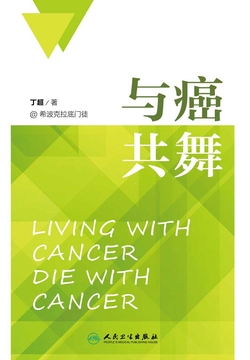
Dancing with Cancer
Tags
Summary
Editor's review
Who it's for
A good fit for
- General readers or family members of patients who want a systematic understanding of modern medical knowledge about cancer
- Non-specialist readers interested in oncology and popular medical science
- Patients currently undergoing or who have undergone cancer treatment, seeking psychological resonance and greater understanding
- Practitioners in medicine, nursing, social work, and related fields who wish to better understand patients' circumstances
Not a good fit for
- Readers seeking extreme alternative therapies or miracle cures
- Medical researchers seeking extremely detailed, specialist diagnostic and treatment information on a specific cancer type
Reading tips
- Read chapter by chapter: first build a basic cognitive framework of cancer, then go deeper into the chapters on specific treatments and psychology
- As you read, reflect in light of your own experience or that of relatives and friends, but note individual differences: the book's knowledge cannot replace a clinician's specific diagnosis and treatment plan
- The sections on managing treatment side effects, doctor-patient communication, and psychological adjustment are suitable for repeated reading and for trying to apply in daily life
About the publisher
Founded in 1953, the People's Medical Publishing House is an important institution in China's medical publishing field, with publishing directions covering medical textbooks, academic monographs, medical journals, and popular science books. Its collection contains 2,503 titles, mainly classified under medicine. Representative works include the Complete Book of Chinese Nutrition Science (2nd Edition, 2 volumes), Guide to Clinical Practice with Medical Records, the Golden Mirror of Medicine (Volume 1), Chinese Medical Imaging: Head and Neck Volume (3rd Edition), and the Essentials of the Golden Cabinet from the Collected Clinical Chinese Medicine Must-Read Series (Collector's Edition), spanning both modern medicine and classical Chinese medical texts. Representative authors include Yang Yuexin, Ge Keyou, Ye Tianshi, Su Li, Wu Qian, Zheng Jinsheng, Wang Zhenchang, and Xian Junfang, covering fields such as nutrition, Chinese medicine, and medical imaging. With a publishing approach that balances textbooks and academic monographs, the press has established the "Renwei" brand.
Contents
- 版权信息
- 序
- 上篇
- 乳腺癌:红颜命薄各有原因
- 一、什么是乳腺癌?——冥顽不灵的“黑胆汁”
- 二、乳腺癌的“高危因素”是什么?
- 三、怎么早发现乳腺癌
- 四、怎么治疗乳腺癌
- 五、为什么有人抗癌而活,有人因癌而死?——安娜·卡列尼娜原则
- 宫颈癌:女人花本可不凋零
- 一、什么是宫颈癌?
- 二、什么是HPV
- 三、宫颈癌能被根治吗?
- 四、梅艳芳为什么没能战胜宫颈癌?
- 卵巢癌:隐匿的女性杀手
- 一、卵巢癌可以被早发现吗?
- 二、怎么治疗卵巢癌?
- 三、卵巢癌复发
- 肺癌:罕见到常见,恶魔的崛起
- 一、吸烟与肺癌
- 二、如何早发现肺癌
- 三、怎样治疗肺癌?
- 结直肠癌:“吃出来”的癌症
- 一、结直肠癌是一种什么样的癌症?
- 二、为什么会患上结直肠癌?
- 三、结直肠癌怎么治疗?
- 下篇
- 性格好、心情好,抗癌效果会更好吗?
- 患上癌症很大程度上因为“运气差”?
- 一、“66%癌症相关基因突变是由于随机差错”等于“66%癌症是因为运气差”?
- 二、新研究回应质疑了吗?
- 三、星球 B 假设是什么?
- 四、癌症预防没价值了?
- 五、癌症“病因不明”可能将成为历史?
- 适量喝酒真的有益健康?
- 蕨菜会致癌吗?
- 一管尿或一管血就能早发现癌症?
- 一、留一管尿就能查出癌症?——验尿术的黑历史
- 二、抽一管血就能查出癌症?
- 三、怎么科学地做癌症筛查?
- 癌症患者不能吃什么?能吃什么?
- 一、癌症患者不需要忌口
- 二、“抗癌食品”是不存在的
- 三、癌症患者需要均衡全面的营养
- 四、预防癌症的“黄金八条”
- 存在抗癌的民间偏方吗?
- 一、夸张疗效等于确凿骗局,别信搜索结果
- 二、注意“重复性”与“公开性”,别信“个案”
- 哪些免疫疗法(生物疗法)可以一用?
- 一、什么是“癌症免疫疗法”?
- 二、什么是免疫系统
- 三、癌症免疫疗法是一种新疗法吗?
- 化疗没有效果吗?
- 毒药也能拿来救命吗?
- 一、不吉利的紫杉
- 二、从紫杉到紫杉醇
- “抗癌白金”是什么?
- 一、意外的馈赠
- 二、从顺铂到卡铂
- 杀人武器也能杀灭癌症吗?
- 后记
- 参考文献
FAQ
Is the medical knowledge in this book outdated?
Is this book suitable as a gift for a relative or friend diagnosed with cancer?
Does the book provide specific dietary or lifestyle advice?
Related on WeRead


Comments
Find this book
This site is an index: you start “Search all sources” in your browser, and the entries it lists all point to third-party sites; please judge their availability yourself.
About the author
Ding Chao is an author about whom publicly available information is currently limited; no reliable records have been found regarding his nationality, dates of birth and death, educational background, or professional experience. According to the library's holdings, Ding Chao has only one work, the medical title Dancing with Cancer. The title indicates that the book centers on cancer and may involve experiences, attitudes, or reflections on living with the disease, and it is commonly classified under medicine. Because biographical information about the author is lacking, it is not possible to determine whether he has a medical background, nor would it be appropriate to infer his stance or sources. On the available evidence, Ding Chao's authorial profile is concentrated in this single work: taking cancer as its starting point, it appears to convey experience or understanding of living with illness to general readers, addressing a reality close to life and health. Its specific style, structure, and reader response await further material before they can be assessed.
