

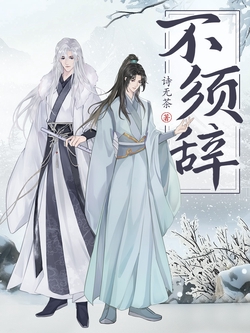
No Need to Decline
Tags
Summary
[Ancient romance + premium fiction + dual male leads + fantasy + alternate world + power couple + HE + younger love interest]
Thirty thousand years ago, Chang Shu picked up a little black dragon, brought it back to his bedchamber, and cared for it tenderly. Once its wounds healed, he meant to send it away.
The little dragon, now able to take human form, teared up, walked over, tugged at his sleeve, showed him the wounds on its hand that had not fully healed, and, aggrieved, cried, "It hurts."
Chang Shu's heart softened, and he let it stay.
Thirty thousand years later, this dragon he had raised with his own hands wrapped him in an embrace and said, word by word, "Chang Shu, become my wedded spouse."
Editor's review
From an editor's perspective, the book's core value lies in its high literary quality and emotional density. The author excels at seamlessly linking the moods of classical poetry with the loneliness of modern people, letting readers touch unfamiliar corners of the soul through familiar images. The chapters appear loosely structured but in fact revolve around the central tension between 'fading' and 'enduring,' exploring how memory shapes the present and the limits and possibilities of language in expressing the inexpressible.
The reading experience is immersive; readers need to slow down and savor the texture of the prose. It offers no plunging plot, but an atmosphere, a state of mind. For readers seeking spiritual resonance and aesthetic pleasure, its writing on parting, waiting, and self-reconciliation often brings the deep stir of 'it speaks to my heart.' Yet this stylized writing also means a certain threshold: it is not the first choice for readers after fast-paced story. Overall, Buxuci is a 'book of moods' worth keeping close at hand and returning to in quiet moments.
Who it's for
A good fit for
- Literary readers who love a style combining classical mood with modern stream of consciousness
- Readers seeking inner calm and enjoying deep reading and self-dialogue
- Readers with high standards for linguistic beauty who appreciate refined, poetic prose
- People in a transitional or reflective phase of life who need words of solace and resonance
Not a good fit for
- Readers expecting strong plot and fast-paced narrative fiction
- Readers impatient with abstract, metaphorical expression who prefer plain storytelling
Reading tips
- Read in segments in a quiet, undisturbed setting, focusing on one or two short chapters at a time
- Don't rush to seek plot progression; try to immerse yourself in the mood and imagery the words create
- Keep a pen handy to mark lines that resonate or note down thoughts that arise while reading
About the publisher
Named after the Yangtze River, Changjiang Publishing House (Wuhan) Co., Ltd. publishes books on science and technology—water conservancy, hydropower, shipping and environmental protection—as well as works on the economy, society, history, culture and education. In literary publishing, it has released Cece Qinghan's Sinan series (including The Divine Mechanism, The Reverse Scale, The Mandate of Heaven and the four-volume set), Tang Que's Nine Provinces: Players in the Play, Bai Fanrushuang's The New Hunter (five volumes), Qingshan Huangzhong's Sealing the Blade (three volumes) and Shi Wucha's Saha. The titles in the library are commonly classified as time-travel and alternate-world fiction, otherworld-continent fiction and wuxia novels. These books show the press's sustained interest in fantasy, wuxia and alternate-world storytelling, bringing together authors such as Cece Qinghan, Tang Que, Bai Fanrushuang, Qingshan Huangzhong, Shi Wucha and Fan Ka. Based on the available library data, its literary publishing leans toward genre novels and serialized series, while further public information is needed to clarify its specific editorial direction and publishing features.
Contents
- 版权信息
- 第一章
- 第二章
- 第三章
- 第四章
- 第五章
- 第六章
- 第七章
- 第八章
- 第九章
- 第十章
- 第十一章
- 第十二章
- 第十三章
- 第十四章
- 第十五章
- 第十六章
- 第十七章
- 第十八章
- 第十九章
- 第二十章
- 第二十一章
- 第二十二章
- 第二十三章
- 第二十四章
- 第二十五章
- 第二十六章
- 第二十七章
- 第二十八章
- 第二十九章
- 第三十章
- 第三十一章
- 第三十二章
- 第三十三章
- 第三十四章
- 第三十五章
- 第三十六章
- 第三十七章
- 第三十八章
- 第三十九章
- 第四十章
- 第四十一章
- 第四十二章
- 第四十三章
- 第四十四章
- 第四十五章
- 第四十六章
- 第四十七章
- 第四十八章
- 第四十九章
- 第五十章
- 第五十一章
- 第五十二章
- 第五十三章
- 第五十四章
- 第五十五章
- 第五十六章
- 第五十七章
- 第五十八章
- 第五十九章
- 第六十章
- 第六十一章
- 第六十二章
- 第六十三章
- 第六十四章
- 第六十五章
- 第六十六章
- 第六十七章
- 第六十八章
- 第六十九章
- 第七十章
- 第七十一章
- 第七十二章
- 第七十三章
- 第七十四章
- 第七十五章
- 第七十六章
- 第七十七章
- 第七十八章
- 第七十九章
- 第八十章
- 第八十一章
- 第八十二章
- 第八十三章
- 第八十四章
- 第八十五章
- 第八十六章
- 第八十七章
- 第八十八章
- 第八十九章
- 第九十章
- 第九十一章
- 第九十二章
- 第九十三章
- 第九十四章 尾声
- 番外一
- 番外二
- 番外三
- 番外四
FAQ
Is this book a novel or an essay collection?
Does reading this book require a foundation in classical literature?
What is the author's writing style like?
Related on WeRead



Comments
Find this book
This site is an index: you start “Search all sources” in your browser, and the entries it lists all point to third-party sites; please judge their availability yourself.
About the author
Shi Wucha is an author about whom little public information is available, with three works currently held in the collection. Judging from the existing titles, the writing spans two categories, otherworld-continent fiction and social fiction, and representative works include Suopo, Buxuci, and Jiugu Xinchang. Because the author's biography, nationality, and English name are not clearly documented, this introduction can only offer a brief account based on the works themselves. In terms of subject matter, Shi Wucha both constructs fantastical settings of otherworld continents and attends to social reality, showing a tendency to move between different genres. Although the number of works is small, titles such as Suopo carry a distinct literary flavor, suggesting a style that emphasizes atmosphere and the development of character relationships. Readers who wish to learn more about this author may turn to the three works mentioned above for further reading and judgment.
