

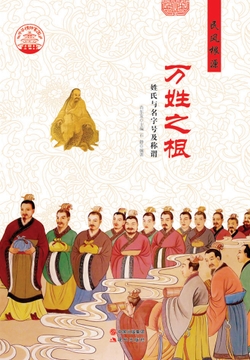
The Roots of All Surnames
Tags
Summary
Editor's review
From an editorial perspective, the book's value lies in balancing scholarly depth with public accessibility. It cites a wealth of historical documents, archaeological findings and genetic research, avoiding the arbitrary conjectures of folk legend, while presenting clear threads and vivid cases so ordinary readers can glimpse the clan systems, regional cultures and even national identity carried by surnames. Its distinctions among "surname," "clan," "prestigious lineage" and "hall name" are especially apt, helping readers understand traditional Chinese social structure.
Reading this book is more like a cultural journey of tracing one's roots. It satisfies personal curiosity about one's own surname's origins and, more importantly, reveals how surnames as symbols of "roots" became a resilient bond sustaining blood ties, local ties and spiritual identity across thousands of years of civilization. For readers who wish to go beyond family stories and understand the cultural psychology of the Chinese people from a broader perspective, this book offers a solid and illuminating text.
Who it's for
A good fit for
- Culture enthusiasts with a strong interest in the origins of Chinese surnames and family history
- Readers who wish to understand traditional Chinese clan structures from sociological and historical perspectives
- Educators working in folklore studies, local culture research, or related fields
- General readers seeking a sense of cultural identity who wish to trace their own cultural lineage through surnames
Not a good fit for
- Those seeking a practical reference book for quickly looking up brief definitions of specific surnames
- Casual readers looking for novelistic narrative or strong storytelling
Reading tips
- May be read alongside family oral histories or local gazetteers, cross-checking the broad framework with micro-level family memories
- Readers may wish to note the connections between surname migration maps and major historical events (such as the southward migration of the gentry or the repopulation of Sichuan from Huguang)
- For surnames of particular interest, readers can extend their reading to specialized histories or regional cultural studies
About the publisher
Founded in 1982, Modern Press is a Chinese publisher that serves general readers across a diverse range of subjects. Judging from its catalog, its publishing focuses on classical poetry, Eastern philosophy, psychological research and application, popular science, and modern poetry, along with history, biography, and children's books. The Book of Songs, the illustrated vernacular edition of the Classic of Mountains and Seas, The Complete Poems of Dai Wangshu, and Buddhism in the Vegetable Roots reflect efforts to make traditional culture and poetry accessible; works by Carl Gustav Jung such as The Development of Personality and Understanding Your Psychological Type, together with titles from the Ivy International Education Alliance, show sustained attention to psychology and educational reading; and Stephen Hawking's works and the illustrated two-volume Brief History of Everything and A Brief History of Time indicate a commitment to popular science. Its authors include figures such as Qu Wanli, Xu Ke, Dai Wangshu, and Jung, and its publishing emphasizes retelling classics and accessible, illustrated presentation. Because public information is limited, this summary is based only on the titles in our catalog.
Contents
- 版权信息
- 文前
- 命脉之根
- 起源于古老自然崇拜的姓
- 有感而孕和图腾感生说
- 以母为姓的母系社会时期
- 从姓中逐渐分化出来的氏
- 为了区别婚姻而产生的氏
- 姓和氏慢慢开始合而为一
- 后世姓氏由来和大发展
- 堂号是姓氏中特有的文化
- 立信有名
- 社会交际的需要而产生名
- 商代人用天干地支来命名
- 历代的名呈现不同特点
- 讲究义理内涵的古人起名
- 逐渐形成制度的命名礼仪
- 民间普遍存在的取名方法
- 讲究意蕴深远的取名文化
- 尊敬所称
- 字的由来与名的相互关系
- 秦汉以后对取字的继承
- 对名和字的各种礼仪要求
- 名和字所特有的避讳制度
- 名和字避讳方法及其影响
- 雅趣称号
- 自由性和可变性的别号
- 产生具有褒贬之意的绰号
- 皇帝专用的庙号和陵号
- 具有悠久历史内涵的年号
- 为尊崇帝后而增加的尊号
- 寥寥几字盖棺定论的谥号
- 血缘关系
- 古人在家庭生活中的称呼
- 彰显家族长幼人伦的称谓
FAQ
What are the main differences between this book and common surname dictionaries or popular readers?
Does the book cover the surnames of ethnic minorities?
Will non-specialist readers find the book difficult?
Related on WeRead


Comments
Find this book
This site is an index: you start “Search all sources” in your browser, and the entries it lists all point to third-party sites; please judge their availability yourself.
About the author
Shi Jing — public information about this author is limited, and no confirmed details regarding nationality, dates of birth and death, or an English name are available. Judging from the fifteen works held in the collection, the writing spans a broad range of fields, including culture, design, folk literature, Eastern philosophy, inspirational personal growth, and theory. Representative titles include The Roots of the Myriad Surnames, Happy and Fulfilled, A Romantic Auspicious Day, Enduring Shrines: Sacred Halls for Legendary Deities and Sages, Folk Legends, and Treasures of Chinese Painting, covering everything from the origins of surnames and shrine sacrificial traditions to wedding and festive customs, Chinese painting, and folk tales. Overall, Shi Jing's writing tends to combine traditional culture with accessible general knowledge in plain, readable language, conveying cultural literacy and everyday delight to ordinary readers. Owing to limited sources, the author's personal history and creative background cannot be described in detail; only the areas of interest reflected in the existing works can be outlined.
