

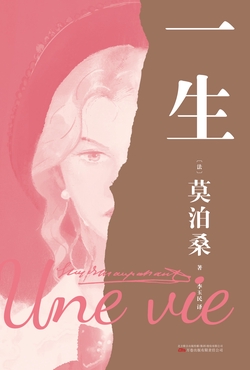
A Lifetime
Tags
Summary
Jeanne, full of hope, believes she is about to enter a lifetime of happiness, never suspecting that the beautiful love she has always dreamed of is the beginning of a lifetime of misfortune. After the wedding the Vicomte quickly drops the courteous mask he wore while courting her and reveals his true nature—base, lecherous, greedy and lustful. He seizes Jeanne's property and carries on an affair with her maid.
Her husband's betrayal causes Jeanne unbearable suffering, and just as she is bent on dying she learns she is pregnant; the child gives her new hope. But happiness is all too brief, and the betrayals that follow—her husband's renewed infidelity and then his death, the deaths of her parents, her only son's running away from home, bankruptcy—shatter her hopes again and again.
Growing old in disillusionment, as her life draws to its end she says: "Life is never as good as one thinks, nor as bad."
Editor's review
In literary terms, *Une Vie* carries on the exquisite psychological description of Maupassant's short stories while showing his mature command of the structure of the novel. With delicate strokes the novel portrays Jeanne's psychological transformation from a carefree girl to an old woman weathered by hardship, every turn made real and palpable. Through meticulous depiction of the daily life of a noble family, Maupassant reveals the beauty and darkness, the hope and disillusionment of human nature, so that readers can deeply feel the complexity and helplessness of life.
This Commercial Press edition uses a classic translation, accurate and fluent, preserving to the greatest extent the language and literary flavor of the original. As part of an authoritative publisher's series of classic literature, the edition is also exemplary in its notes and introduction, suiting readers encountering Maupassant's full-length fiction for the first time and deserving a place in the collections of literary scholars.
*Une Vie* endures as a classic not only for its refined literary technique but because it touches a shared human experience of life—everyone may see something of Jeanne in themselves, and her hopes, disappointments, perseverance and compromises form an emotional resonance that transcends time and place. The novel reminds us that the meaning of life may lie not in pursuing a perfect ending but in how we face the imperfections along the way.
Who it's for
A good fit for
- Readers interested in nineteenth-century French literature
- Literature lovers who wish to understand Maupassant's full-length fiction
- Readers who enjoy delicate psychological description and exploration of human nature
- Students and scholars studying French realist literature
Not a good fit for
- Readers seeking light, entertaining reading
- Readers who prefer fast-paced novels with strong plots
Reading tips
- It is advisable first to learn something of nineteenth-century French society, especially the changing fortunes of the nobility
- Reading it alongside Maupassant's short stories can help one appreciate the different styles of his long and short fiction
- Pay attention to the detailed depiction of the characters' psychological changes; this is the key to understanding the work's depth
About the publisher
The Commercial Press is a publisher known for classic works and academic publishing, with titles spanning Eastern philosophy, foreign literature, world history, social culture, and applied psychology. Its list includes classical commentaries such as Zhu Xi's Collected Commentaries on the Analects and Wang Bi's Commentary on the Zhouyi, as well as modern annotated translations like Zhuangzi with Modern Notes and Translation. In foreign literature it offers War and Peace and Crime and Punishment, while in world history it carries Braudel's The Mediterranean and the Mediterranean World in the Age of Philip II. Applied psychology is represented by Irvin D. Yalom's Existential Psychotherapy, and ethical texts include a Greek-Chinese-English edition of the Nicomachean Ethics. Its authors and translators include Zhu Xi, Wang Bi, Yalom, Braudel, and translators such as Huang Zheng, Zhang Yiling, Shen Dongyu, and Tang Jialong, balancing the editing of original texts with academic translation.
Contents
- 版权信息
- 汉译世界文学名著丛书出版说明
- 译序
- 一
- 二
- 三
- 四
- 五
- 六
- 七
- 八
- 九
- 十
- 十一
- 十二
- 十三
- 十四
FAQ
What are the similarities and differences between *Une Vie* and *Madame Bovary*?
Is this novel suitable for young readers?
What are the features of this Commercial Press edition?
Related on WeRead


Comments
Find this book
This site is an index: you start “Search all sources” in your browser, and the entries it lists all point to third-party sites; please judge their availability yourself.
About the author
Guy de Maupassant (1850–1893) was a French naturalist novelist, hailed as a master of the short story. Born into a declining aristocratic family in Normandy, he studied under Flaubert and rose to fame with Boule de Suif in 1880. His representative works include The Necklace, My Uncle Jules, Bel Ami, and A Life. Over his career he wrote roughly three hundred short stories and six novels. Drawing on everyday French social life, his writing is cool and objective, using concise narrative to reveal the complexity of human nature and the harshness of reality, and he remains widely read in the categories of foreign literature and classic works.
Sheng Chenghua: public information is limited, and no clear record is available regarding his dates of birth and death, nationality, or educational background. What can be confirmed is that nine works under his name are held in this library, commonly classified under foreign literature and world classics. Judging from his representative works, he is mainly associated with foreign literary works such as The Fruits of the Earth, A Life, and The Counterfeiters, involving classics by French-language writers including André Gide and Guy de Maupassant. These works are mostly novels or prose narratives, centered on individual destiny, moral dilemmas, and spiritual exploration, with a style that emphasizes delicate psychological portrayal and narrative pacing. Several titles appear in multiple editions in the library, such as The Fruits of the Earth, A Life, and The Counterfeiters, among which A Life also has an illustrated collector's edition. Through his translation and editorial work, Sheng Chenghua has provided Chinese readers with reference editions of French literary classics, and his contribution lies mainly in the translation and dissemination of foreign literature.
