

West Point
Tags
Summary
Editor's review
Who it's for
A good fit for
- University faculty and students researching the history of American military education and the academy system
- Readers interested in West Point's institutional history and traditional culture
- Military enthusiasts seeking English-language primary sources for supplementary reading
- Readers wishing to understand ideas of discipline and honor through early documents
Not a good fit for
- Readers seeking current West Point admissions, application, and training information
- Casual readers wanting light stories or modern military fiction
- Those who struggle with English reading and are unwilling to use annotations or reference tools
Reading tips
- Begin with the table of contents and preface to grasp the book's structure and the era in which the author wrote.
- Read alongside materials on the evolution of the American military academy system to distinguish historical views from present-day reality.
- Look up unfamiliar names and institutional terms as you go, avoiding misreading caused by the distance in time.
- After each chapter, summarize the author's core arguments in a few sentences, then judge their persuasiveness.
About the publisher
Project Gutenberg is a digital publishing project focused on public-domain ebooks. Its publishing direction centers on classic literary works whose copyright has expired, covering genres such as poetry, drama, fiction, and epic. Representative books include Lyrical Ballads by Wordsworth and Coleridge, Proust's Du côté de chez Swann, Shakespeare's Macbeth and The Complete Works of William Shakespeare, Homer's The Iliad, Dante's La Divina Comèdia: Purgatòri, Cervantes's The History of Don Quixote, Volume 2, and Grahame's The Wind in the Willows. Its author resources consist mainly of classic Western writers such as Wordsworth, Proust, Shakespeare, Homer, Dante, Cervantes, Grahame, and Tolstoy. Its publishing feature is the provision of freely accessible ebooks in EPUB and Kindle formats; it is not a traditional publisher, and publicly available information is limited.
Contents
- 1
- 2
- 3
- 4
- 5
- 6
- 7
- 8
- 9
- 10
- 11
- 12
- 13
- 14
- 15
- 16
- 17
- 18
- 19
- 20
- 21
- 22
- 23
- 24
- 25
- 26
- 27
- 28
- 29
- 30
- 31
- 32
- 33
- 34
- 35
- 36
- 37
- 38
- 39
- 40
- 41
- 42
- 43
- 44
- 45
- 46
- 47
- 48
- 49
- 50
- 51
- 52
- 53
- 54
FAQ
Is this book a modern admissions guide to West Point?
Can someone with average English read this book?
Is this book suitable for writing papers on the military academy system?
Related on WeRead
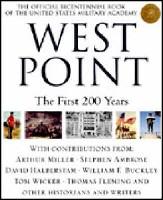 West Point: Two Centuries of Honor and Tradition (精装)
 Henry Ossian Flipper
 Money Answers All Things
 Rhymes a la Mode
 Grant Moves South
 美国历史上的总统:从乔治·华盛顿到乔治·W.布什(上下册)
Comments
Find this book
This site is an index: you start “Search all sources” in your browser, and the entries it lists all point to third-party sites; please judge their availability yourself.
About the author
Robert C. Richardson (full name Robert Charlwood Richardson, 1882–195) is usually referred to in Chinese sources simply as "Richardson." Public information is limited, and details of his life are largely unavailable; all that is currently known is that one work appears under his name, West Point. Judging by the title, the book concerns the United States Military Academy at West Point and may deal with its history, institutions, or campus life. Writing of this kind tends to emphasize factual narrative and institutional description, in plain and practical prose, for readers interested in military education or the traditions of American military academies. Since only this one title is held and no clear record of the author's nationality, identity, or writing background exists, it is difficult to assess his overall style or influence. In the absence of further biographical material, readers may treat West Point as an entry point to the subject while remaining mindful of the gaps in information about the author and consulting the book's contents with due caution.
