

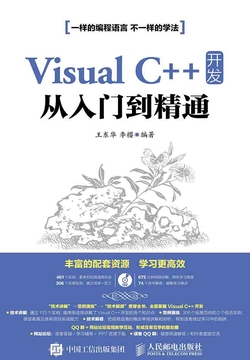
Visual C++ Development from Beginner to Mastery
Tags
Summary
Editor's review
Who it's for
A good fit for
- Students majoring in computer-related fields who wish to systematically learn C++ desktop development on the Windows platform
- Beginners with some C language foundation who want to move to C++ and master the Visual Studio development environment
- Software developers who need to maintain or learn legacy project code based on MFC
- Enthusiasts interested in practicing graphical interfaces, databases, or network programming and who wish to implement them in C++
Not a good fit for
- Readers seeking the latest C++ standard features (such as C++17/20) and cross-platform development (such as Qt)
- Absolute beginners who want to quickly get started in popular fields such as web, mobile, or game development
Reading tips
- It is recommended to read the chapters in order and be sure to personally enter and debug all example code in Visual Studio to understand how it works
- Focus on Part II, "The MFC Framework," and Part III, "Advanced Applications," which are where the core value of this book lies; consult MSDN documentation while reading to deepen understanding
- For the database and network programming chapters, after understanding the book's examples, try rewriting them in more modern ways (such as using new libraries) to connect classic knowledge with current practice
About the publisher
Posts & Telecom Press is known for its strengths in science and technology, computing, and information and communications titles, and has extended its publishing into photography, art, software learning, and inspirational growth, giving it a fairly diverse range. Its catalog includes computing and communications works such as Refactoring and Patterns (Revised Edition) and Huawei Switch Learning Guide (Second Edition), alongside bilingual collector's editions such as The Little Prince (Chinese-English-French illustrated collector's edition), The Great Gatsby, and Three Days to See. Beijing Ten Years: 1980-1990 and Ghost Blade: WLOP Personal Illustration Collection reflect its presence in photography and art. Its authors include Antoine de Saint-Exupéry, Helen Keller, Joshua Kerievsky, Wang Da, Zhang Zhaozeng, and WLOP.
Contents
- 版权信息
- 内容提要
- 前言
- 本书实例
- 第1章 Visual C++ 6.0的最初印象
- 1.1 Visual C++ 6.0概述
- 1.2 Visual C++ 6.0开发环境
- 1.3 利用Visual C++ 6.0编写C++程序
- 1.4 技术解惑
- 第2章 C++的基本语法
- 2.1 面向对象
- 2.2 分析C++的程序结构
- 2.3 必须遵循的编码规范
- 2.4 输入/输出基础
- 2.5 标识符
- 2.6 数据类型
- 2.7 变量
- 2.8 常量
- 2.9 技术解惑
- 第3章 运算符和表达式
- 3.1 运算符
- 3.2 表达式详解
- 3.3 技术解惑
- 第4章 流程控制语句
- 4.1 最简单的语句和语句块
- 4.2 最常见的顺序结构
- 4.3 选择结构
- 4.4 循环结构
- 4.5 跳转语句
- 4.6 技术解惑
- 第5章 其他数据类型
- 5.1 指针
- 5.2 数组
- 5.3 枚举
- 5.4 结构体
- 5.5 联合
- 5.6 自定义的型
- 5.7 技术解惑
- 第6章 函数
- 6.1 函数基础
- 6.2 函数的参数
- 6.3 返回值和返回语句
- 6.4 调用函数
- 6.5 函数递归
- 6.6 指向函数的指针
- 6.7 将函数作为参数
- 6.8 变量的作用域和生存期
- 6.9 技术解惑
- 第7章 类和封装
- 7.1 类
- 7.2 对象
- 7.3 技术解惑
- 第8章 创建MFC应用程序
- 8.1 创建应用程序向导
- 8.2 Class Wizard详解
- 8.3 程序调试
- 8.4 技术解惑
- 第9章 对话框
- 9.1 对话框的概念
- 9.2 使用对话框
- 9.3 公用对话框
- 9.4 消息对话框
- 9.5 技术解惑
- 第10章 控件
- 10.1 标准控件
- 10.2 公共控件
- 10.3 技术解惑
- 第11章 文档和视图
- 11.1 剖析文档与视图结构
- 11.2 设计菜单
- 11.3 鼠标响应处理
- 11.4 工具栏和状态栏设计
- 11.5 对文档进行读写
- 11.6 使用不同的视图
- 11.7 技术解惑
- 第12章 图形图像编程
- 12.1 图形设备接口
- 12.2 绘制图形
- 12.3 文本与字体
- 12.4 位图、图标和光标
- 12.5 读写、显示图像文件
- 12.6 技术解惑
- 第13章 动态链接库
- 13.1 动态链接库基础
- 13.2 动态链接库的创建及调用
- 13.3 技术解惑
- 第14章 使用ActiveX控件
- 14.1 组件与ActiveX控件
- 14.2 创建ActiveX控件
- 14.3 调用ActiveX控件
- 14.4 技术解惑
- 第15章 数据库技术
- 15.1 Windows数据库解决方案
- 15.2 ADO访问技术
- 15.3 ODBC访问技术
- 15.4 技术解惑
- 第16章 多线程
- 16.1 认识多线程
- 16.2 Win32 API多线程编程
- 16.3 多线程编程
- 16.4 技术解惑
- 第17章 网络编程技术
- 17.1 认识Windows Socket
- 17.2 流式套接字
- 17.3 数据报套接字编程
- 17.4 实现局域网内IP多播
- 17.5 利用MFC进行套接字编程
- 17.6 WinInet类
- 17.7 技术解惑
- 第18章 多媒体编程
- 18.1 控制接口
- 18.2 使用MFC控件实现多媒体编程
- 18.3 使用OpenGL实现三维程序
- 18.4 技术解惑
- 第19章 注册表编程其实很简单
- 19.1 Windows 注册表印象
- 19.2 常用的几个函数
- 第20章 仿QQ通信工具
- 20.1 需求分析
- 20.2 服务器端编码
- 20.3 客户端编码
- 20.4 系统调试
- 第21章 专业理财系统
- 21.1 系统分析
- 21.2 系统设计
- 21.3 设计数据结构
- 21.4 前期编码
- 21.5 后期编码
- 21.6 项目调试
FAQ
What programming foundation does this book require of readers?
Is the development environment used in the book outdated now?
What level can I reach after finishing this book?
Related on WeRead

Comments
Find this book
This site is an index: you start “Search all sources” in your browser, and the entries it lists all point to third-party sites; please judge their availability yourself.
About the author
Wang Donghua is a technical book author about whom limited public information is available; the verifiable information currently centers on a single work. His representative work is Visual C++ Development from Beginner to Mastery, a programming and design title aimed at readers who wish to learn Visual C++ development systematically. Judging from the title and category, the book adopts a progressive approach that moves from basic introduction to deeper mastery, emphasizing development practice and a coherent knowledge framework. It suits beginners building a solid foundation as well as readers with some experience who want to fill gaps. Because only this one work is included and no reliable records exist for his birth and death dates, nationality, education, or professional experience, this profile makes no speculation on those points. Based on the available information, Wang Donghua's writing focuses on clearly explaining the learning path for a programming language and development tool, taking a practical orientation to help readers get past the entry threshold; his work reflects a style that stresses fundamentals and step-by-step progress among comparable technical tutorials.
Li Ying is an author about whom verifiable public information is very limited: her nationality, dates of birth and death, educational background, and professional experience are not confirmed in available records, and only one of her works is included in the collection. Based on the available information, her writing focuses on programming and design, and her representative work is Visual C++ Development from Beginner to Mastery. The book is an introductory technical guide aimed at beginners, covering the Visual C++ development environment, language fundamentals, and common programming practices. Its structure emphasizes a step-by-step progression, making it easier for readers with no programming background to gradually acquire the relevant skills. Because little verifiable material about the author herself is available, her identity and the full scope of her work cannot yet be presented completely, and readers currently know her mainly through this book. For readers who wish to study Visual C++ systematically, the book offers a practical starting point.
