

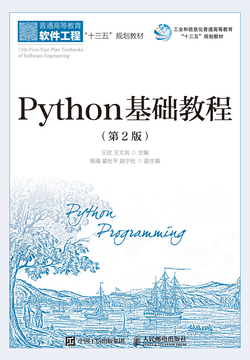
Python Basic Tutorial (2nd Edition)
Tags
Summary
Editor's review
The content is organized according to classic teaching logic: from environment setup, basic syntax, and data structures to functions, modules, and object-oriented programming, proceeding step by step. Compared with some books that pursue 'showing off' or pile up the latest libraries, the 2nd edition, while keeping the basic framework stable, updates some cases and Python 3 features, better matching current production environment requirements. Its highlight is that the explanation of each concept is accompanied by short, complete code examples, allowing readers to verify immediately and get feedback; this 'learn and practice together' model is crucial for building beginners' confidence.
However, it should be pointed out that the book's positioning is very clear — building a solid foundation. It does not cover popular but advanced application areas such as machine learning or Web development, nor does it deeply explore complex topics such as performance optimization or metaprogramming. Readers who hope to quickly build a specific application (such as a crawler or a data analysis script) may find the pace slow. But it is precisely this restraint that makes it a reliable 'foundation' book. Reviews show that readers who carefully complete all exercises in the book generally report smoother subsequent learning of other advanced topics or frameworks. Therefore, the reading value of this book lies in providing an entry path without dazzling gimmicks but able to stand the test of time, suitable for self-learners willing to invest time and hoping to master Python core syntax systematically and solidly.
Who it's for
A good fit for
- Beginners with zero programming background who want to systematically learn their first programming language
- Developers with other language backgrounds who want to quickly understand Python syntax features and differences in thinking
- Teachers and students who need a clearly structured textbook with complete examples for classroom teaching
- Enthusiasts interested in Python but troubled by fragmented information who desire to build a complete knowledge system
Not a good fit for
- Readers seeking quick success and hoping to immediately develop complex projects (such as deep learning or large websites)
- Intermediate and advanced developers who have already mastered Python basics and hope to explore a specialized field in depth (such as algorithm optimization or architecture design)
Reading tips
- It is recommended to study strictly in chapter order, and be sure to type in and run every example code and understand its output
- After each chapter, try using the chapter's knowledge to solve a small problem you have imagined, even if it is just simple calculation or text processing
- Consult the official documentation (Python.org) for the basic functions and modules mentioned in the book, and initially cultivate the habit of consulting primary sources
About the publisher
Posts & Telecom Press is known for its strengths in science and technology, computing, and information and communications titles, and has extended its publishing into photography, art, software learning, and inspirational growth, giving it a fairly diverse range. Its catalog includes computing and communications works such as Refactoring and Patterns (Revised Edition) and Huawei Switch Learning Guide (Second Edition), alongside bilingual collector's editions such as The Little Prince (Chinese-English-French illustrated collector's edition), The Great Gatsby, and Three Days to See. Beijing Ten Years: 1980-1990 and Ghost Blade: WLOP Personal Illustration Collection reflect its presence in photography and art. Its authors include Antoine de Saint-Exupéry, Helen Keller, Joshua Kerievsky, Wang Da, Zhang Zhaozeng, and WLOP.
Contents
- 版权信息
- 内容提要
- 第2版前言
- 第1篇 基础知识
- 第1章 Python概述
- 1.1 初识Python
- 1.2 开始Python编程
- 1.3 Python文本编辑器IDLE
- 习题
- 第2章 Python语言基础
- 2.1 常量和变量
- 2.2 运算符和表达式
- 2.3 常用语句
- 2.4 序列数据结构
- 习题
- 第3章 Python函数
- 3.1 声明和调用函数
- 3.2 参数和返回值
- 3.3 Python内置函数的使用
- 习题
- 第4章 Python面向对象程序设计
- 4.1 面向对象程序设计基础
- 4.2 定义和使用类
- 4.3 类的继承和多态
- 4.4 复制对象
- 习题
- 第5章 Python模块
- 5.1 Python标准库中的常用模块
- 5.2 自定义和使用模块
- 习题
- 第6章 函数式编程
- 6.1 函数式编程概述
- 6.2 Python函数式编程常用的函数
- 6.3 闭包和递归函数
- 6.4 迭代器和生成器
- 习题
- 第2篇 高级编程技术
- 第7章 I/O编程
- 7.1 输入和显示数据
- 7.2 文件操作
- 7.3 目录编程
- 习题
- 第8章 图形界面编程
- 8.1 常用tkinter组件的使用
- 8.2 窗体布局
- 8.3 Tkinter字体
- 8.4 事件处理
- 习题
- 第9章 多任务编程
- 9.1 多进程编程
- 9.2 进程编程
- 9.3 多线程编程
- 习题
- 第10章 网络编程
- 10.1 网络通信模型和TCP/IP协议簇
- 10.2 Socket编程
- 10.3 电子邮件编程
- 习题
- 附录1 实验
- 实验1开始Python编程
- 实验2 Python语言基础
- 实验3 Python函数
- 实验4 Python面向对象程序设计
- 实验5 Python模块
- 实验6 函数式编程
- 实验7 I/O编程
- 实验8 图形界面编程
- 实验9 多任务编程
- 实验10 网络编程
- 附录2 PyCharm的安装与使用
FAQ
Is this book suitable for people who have never touched a computer?
Does this book use Python 2 or Python 3?
What level can I reach after finishing this book?
Related on WeRead
 Python基础教程(第2版)
 Python基础教程(第2版)(图灵出品)
 Python程序设计与算法基础教程(第2版)(微课版)
 Python 3 基础教程(第2版)(慕课版)
 Python数据分析与数据化运营
 轻松学大数据挖掘:算法、场景与数据产品
 PHP动态网站开发项目教程
 Node与Express开发
Comments
Find this book
This site is an index: you start “Search all sources” in your browser, and the entries it lists all point to third-party sites; please judge their availability yourself.
About the author
Public information about Wang Xin is limited, and the author's profile emerges mainly from the more than a dozen works held in the library. The subjects span several fields: science fiction in translation, such as the Theodore Sturgeon collection; popular psychology and health titles, including Just the Right Kind of Help and Your Blood; and professional practical material such as Theory and Practice of Three-Level Occupational Disease Prevention. Opening the Black Box: Decoding Brain Science through 36 Classic Films reflects an effort to popularize neuroscience via cinematic examples, while Internet Plus Management Case Studies and Contingent Families address, respectively, management cases and the structural changes and ethical practices of rural Chinese families. Overall, the works combine knowledge popularization with focused research, commonly falling into categories such as science fiction, social psychology, health, popular science, applied psychology, and management, and are suitable for readers interested in cross-disciplinary general reading.
Wang Wenbing — public information about this author is limited; all that is currently known is that three of his works are included in this database, commonly classified under general computing and programming design. Judging from representative titles such as Hadoop Application Development Fundamentals, Python Basics (2nd Edition), and the Chinese Edition of Dreamweaver CC Basic Training Tutorial (Mobile Learning Edition), his writing centers on introductory computer technology and practical tool operation. These works cover three themes—big data frameworks, programming language fundamentals, and web design software—and are characterized by an orientation toward beginners, approaching basic training and application development in a way that aims to help readers master common development environments and software tools from scratch. Owing to the limited available material, details of his personal and academic background cannot yet be provided and await further supplementation.
Yang Jinyu: publicly available information is currently limited, and all that is known is that the author wrote Python Basic Tutorial (2nd Edition). The book falls under programming and design, and judging from its title and category, it is intended for readers new to the Python language, covering basic syntax and programming practice—a typical introductory technical book. The author organizes the content in tutorial form, aiming to explain the key points of the language clearly and make them easy to follow and practice, suitable for beginners or those with no prior experience to study step by step. Since the library holds only this one work, public information about Yang Jinyu's personal background, professional experience, and overall body of writing is likewise very limited, making further introduction difficult. Readers may therefore focus on the book itself: as a basic tutorial, it provides a fairly systematic knowledge framework and practice guidance for the early stages of learning Python, and can serve as a reference for beginners.
Public information about Zhai Sheping is limited. What can be confirmed is that the author wrote Python Basic Tutorial (2nd Edition), a book in the programming and design category intended for readers who want to learn the Python language systematically. From this work, it is clear that the author's writing focuses on introductory programming and the fundamentals of the language, presenting Python's syntax, usage, and common practices in a tutorial format so that readers can progress step by step. Because no reliable records of the author's biography, professional background, or other works are available, no speculation is offered here. Based on the available material, Zhai Sheping's contribution lies mainly in writing basic programming education materials, offering beginners a relatively complete learning resource for Python.
Zhao Ningshe is an author about whom limited public information is available. The only confirmed work is Python Basic Tutorial (2nd Edition), which falls under programming and design. Judging from the title and category, the book is intended for readers who want to learn Python systematically, and its content likely covers language fundamentals and introductory knowledge, making it suitable as a starting point for programming learners. Because biographical details, professional background, and other works are unavailable, a comprehensive assessment of the author's writing career and overall style is difficult. Nevertheless, this single work reflects the author's engagement with programming instruction and knowledge popularization, and it offers Chinese readers practical learning material for getting started with Python programming.
