

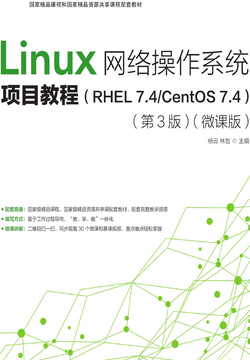
Linux Operating System (3rd Edition)
Tags
Summary
Editor's review
From an editorial perspective, the core value of this book lies in its outstanding balance: it is neither a superficial listing of simple commands nor a daunting analysis of kernel source code, but is firmly grounded in the actual needs of system administrators and beginners. The book starts with Linux history and installation, then gradually progresses to the file system, user management, Shell programming, network service configuration, and even security fundamentals, forming a logically coherent and progressive knowledge system. Particularly commendable is the inclusion of numerous examples and operational steps close to production environments, which greatly help build solid hands-on skills.
Compared with some fast-food-style books that chase the latest trendy technologies, this book focuses more on imparting "unchanging" core concepts and methodologies, which gives its knowledge a longer shelf life and makes it suitable as a cornerstone for long-term learning. Although it may be lacking in coverage of cutting-edge technologies (such as containerization and cloud-native), this precisely highlights its positioning—helping readers first build solid fundamentals of system administration. For readers who wish to gain a systematic and standardized introduction to the Linux field, this book is a reliable map.
Who it's for
A good fit for
- University students in computer-related majors, especially those who need to study operating systems or Linux courses
- Career changers planning to work in system operations, network management, or back-end development who hope to learn Linux systematically from scratch
- Enthusiasts with some computer basics but no systematic exposure to Linux who are eager to build a complete knowledge system
- IT practitioners who need a clearly structured, comprehensive textbook as a daily management reference
Not a good fit for
- Urgent-need readers seeking to quickly master a single skill (e.g., only to deploy a certain application); this book's system is relatively extensive
- Expert-level users who already have senior Linux system administration experience and hope to study kernel mechanisms or the latest architectures in depth
Reading tips
- It is recommended to read in chapter order and be sure to practice on a machine simultaneously; the commands and configuration examples in the book are key to learning
- You may study with a stable CentOS or RHEL environment; most examples in the book are based on this environment, which provides the best cross-reference
- For difficult chapters such as Shell programming, do not insist on mastering them all at once; first understand the basic logic, and continually review and apply them in subsequent management work
About the publisher
Posts & Telecom Press is known for its strengths in science and technology, computing, and information and communications titles, and has extended its publishing into photography, art, software learning, and inspirational growth, giving it a fairly diverse range. Its catalog includes computing and communications works such as Refactoring and Patterns (Revised Edition) and Huawei Switch Learning Guide (Second Edition), alongside bilingual collector's editions such as The Little Prince (Chinese-English-French illustrated collector's edition), The Great Gatsby, and Three Days to See. Beijing Ten Years: 1980-1990 and Ghost Blade: WLOP Personal Illustration Collection reflect its presence in photography and art. Its authors include Antoine de Saint-Exupéry, Helen Keller, Joshua Kerievsky, Wang Da, Zhang Zhaozeng, and WLOP.
Contents
- 版权信息
- 内容提要
- 前言 (第3版)
- 第1章 初识Linux
- 1.1 什么是Linux
- 1.2 Linux崛起
- 1.3 Linux的发行版
- 1.4 Red Hat Enterprise Linux的优势
- 1.5 如何获得Red Hat Enterprise Linux
- 小结
- 习题
- 第2章 安装Linux 操作系统
- 2.1 安装前的准备工作
- 2.2 安装Red Hat Enterprise Linux
- 2.3 登录Red Hat Enterprise Linux
- 2.4 虚拟机安装Red Hat Enterprise Linux
- 2.5 卸载Red Hat Enterprise Linux
- 小结
- 习题
- 第3章 图形界面与命令行
- 3.1 Linux桌面
- 3.2 Linux字符界面
- 3.3 使用Linux的注意事项
- 小结
- 习题
- 上机练习
- 第4章 文件管理与常用命令
- 4.1 Linux文件基础知识
- 4.2 文件与目录基本操作
- 4.3 文件/目录访问权限管理
- 4.4 文件/目录的打包和压缩
- 小结
- 习题
- 上机练习
- 第5章 用户与用户组管理
- 5.1 用户和组文件
- 5.2 使用命令行方式管理用户和组
- 5.3 Red Hat Enterprise Linux用户管理
- 小结
- 习题
- 上机练习
- 第6章 软件包管理RPM和YUM数据库
- 6.1 使用rpm命令管理RPM包
- 6.2 RPM软件包的密钥管理
- 6.3 使用yum命令管理软件包
- 小结
- 习题
- 上机练习
- 第7章 Linux磁盘管理
- 7.1 Linux文件系统XFS
- 7.2 常用磁盘管理命令
- 7.3 磁盘配额管理
- 小结
- 习题
- 上机练习
- 第8章 Linux编程
- 8.1 文本编辑器
- 8.2 Linux编程
- 8.3 Linux编程
- 8.4 Linux编程
- 8.5 Linux编程
- 8.6 通过源代码安装程序
- 小结
- 习题
- 上机练习
- 第9章 进程管理
- 9.1 Linux进程概述
- 9.2 守护进程
- 9.3 启动进程
- 9.4 管理进程
- 9.5 进程文件系统PROC
- 小结
- 习题
- 上机练习
- 第10章 Shell编程
- 10.1 Shell编程基础
- 10.2 Shell变量
- 10.3 Shell运算符
- 10.4 Shell的流程控制
- 10.5 Shell函数
- 10.6 编写交互脚本
- 小结
- 习题
- 第11章 Linux服务器配置
- 11.1 WWW服务器
- 11.2 FTP服务器
- 11.3 Mail服务器
- 11.4 DNS服务器
- 小结
- 习题
- 第12章 网络信息安全
- 12.1 网络信息安全简介
- 12.2 网络中存在的威胁
- 12.3 常见的攻击类型
- 12.4 防火墙技术
- 12.5 入侵检测系统(IDS)
- 小 结
- 第13章 ( Linux+Nginx+MySQL+PHP ) LNMP环境搭建
- 13.1 LNMP的优势
- 13.2 虚拟机下安装Linux
- 13.3 安装配置Nginx
- 13.4 安装配置MySQL
- 13.5 安装配置PHP
- 小结
- 第14章 Linux下Docker虚拟化环境搭建
- 14.1 Docker与虚拟化
- 14.2 Docker的管理
- 14.3 Docker操作
- 小结
FAQ
Is this book suitable for complete beginners with zero background?
What are the main updates in the 3rd edition compared with the old edition?
What level can be reached after studying this book?
Related on WeRead

Comments
Find this book
This site is an index: you start “Search all sources” in your browser, and the entries it lists all point to third-party sites; please judge their availability yourself.
About the author
He Shaohua: public information is limited, and it is currently known only that he has one work, Linux Operating System (3rd Edition), classified under programming and design. The book centers on the Linux operating system and belongs to the teaching and application literature of computer technology, aimed at readers who need to learn basic Linux operations and related knowledge systematically. Judging from the title and its common classification, the writing emphasizes fundamental concepts, practical use, and hands-on sections of the operating system, seeking to present technical content in a clear and orderly way so that readers can understand and get started step by step. Because reliable records of the author's life, professional background, and research direction are unavailable, no speculation is made here; the description is confined to the bibliographic information at hand: the author takes part in organizing and spreading Linux knowledge through a textbook-style approach, offering an entry-level and practice-oriented volume among programming and design readings.
Zang Wei is an author about whom relatively limited public information is available. The only item recorded in the library under this name is Linux Operating Systems (3rd Edition), which falls under the category of programming and design. As the author's nationality, dates of birth and death, education, and professional background are not documented, this introduction can only focus on that work. In terms of subject matter, the book addresses the study and use of the Linux operating system and belongs to the practical, concept-plus-operation style of computer technology writing. That it has been revised through a third edition suggests a degree of continuity among its readers. For learners who wish to gain a systematic grounding in Linux fundamentals and everyday use, a textbook of this kind typically serves both as an introduction and as a reference. Further details about Zang Wei's other writings, research interests, and personal experience await additional public information.
Meng Xueqi is an author about whom limited public information is available. At present, only one work by this author is known, Linux Operating System (3rd Edition), which falls under the category of programming and design. Judging from the title and category, the book is intended for learners of operating systems and Linux technology, and is likely to cover basic Linux use, system administration, and programming practice, making it a computer teaching and application text. Since no reliable records have been found regarding the author's life, nationality, education, or research focus, it would be inappropriate to speculate further about personal experience. Based on the available information, Meng Xueqi appears mainly as a textbook writer whose work organizes the technical subject of Linux into a knowledge system that can be studied step by step, serving classroom or self-study readers, and the book therefore has some value as a teaching reference.
