

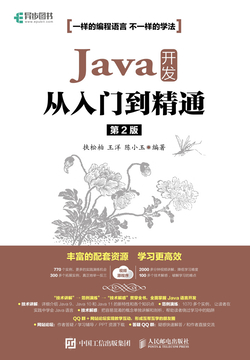
Java Development from Beginner to Mastery
Tags
Summary
Editor's review
In terms of content organization, the book follows a progressive principle: the first part lays a solid foundation in syntax, the middle section explores key technologies and commonly used class libraries in depth, and the end introduces comprehensive project cases that connect the scattered knowledge points. This structure reduces beginners' fear of difficulty and ensures continuity in the learning process. For readers who want to systematically master Java and use it as a career starting point or a tool for technical transition, this book provides a clear and feasible road map. Although there are many Java tutorials on the market, this book demonstrates the expected standard of a beginner-to-mastery textbook in its balance of depth and breadth of knowledge and its integration of theoretical explanation with practice.
Who it's for
A good fit for
- Beginners with no or limited programming background who want to learn Java systematically
- Programmers with experience in other languages who are preparing to move into Java development
- Computer science students who need a textbook for coursework or self-study
- Junior developers who want to consolidate their core Java knowledge and fill gaps
Not a good fit for
- Senior engineers seeking in-depth study of advanced Java topics such as high concurrency, microservices, and cloud-native development
- Readers who want quick access to API details or practical techniques for specific frameworks such as Spring
Reading tips
- Read the chapters in order and practice every code example hands-on; understanding matters more than copying
- When reading chapters on core concepts such as multithreading and collections, draw mind maps to organize the knowledge
- When working on the final project, try designing it yourself without looking at the full code first, then compare your approach with the book's to build engineering thinking
About the publisher
Posts & Telecom Press is known for its strengths in science and technology, computing, and information and communications titles, and has extended its publishing into photography, art, software learning, and inspirational growth, giving it a fairly diverse range. Its catalog includes computing and communications works such as Refactoring and Patterns (Revised Edition) and Huawei Switch Learning Guide (Second Edition), alongside bilingual collector's editions such as The Little Prince (Chinese-English-French illustrated collector's edition), The Great Gatsby, and Three Days to See. Beijing Ten Years: 1980-1990 and Ghost Blade: WLOP Personal Illustration Collection reflect its presence in photography and art. Its authors include Antoine de Saint-Exupéry, Helen Keller, Joshua Kerievsky, Wang Da, Zhang Zhaozeng, and WLOP.
Contents
- 版权信息
- 内容提要
- 前言
- 本书实例目录
- 第1章 Java之印象
- 1.1 初步认识Java
- 1.2 面向对象
- 1.3 技术解惑
- 第2章 第一段Java程序
- 2.1 搭建Java开发平台
- 2.2 编写第一段Java程序
- 2.3 使用IDE工具
- 2.4 Java的运行机制
- 2.5 技术解惑
- 第3章 Java语法
- 3.1 量
- 3.2 数据类型
- 3.3 运算符
- 3.5 字符串
- 3.6 类型转换
- 3.7 技术解惑
- 第4章 条件语句
- 4.1 if语句详解
- 4.2 switch语句详解
- 3.4 标识符和关键字
- 4.3 条件语句演练
- 4.4 技术解惑
- 第5章 循环语句
- 5.1 Java循环语句
- 5.2 跳转语句
- 5.3 技术解惑
- 第6章 特殊数据——数组
- 6.1 简单的一维数组
- 6.2 二维数组
- 6.3 三维数组
- 6.4 操作数组
- 6.5 深入理解数组
- 6.6 技术解惑
- 第7章 Java的面向对象(上)
- 7.1 类
- 7.2 修饰符
- 7.3 方法详解
- 7.4 使用this
- 7.5 使用类和对象
- 7.6 抽象类和抽象方法
- 7.7 软件包
- 7.8 技术解惑
- 第8章 Java的面向对象(中)
- 8.1 类的继承
- 8.2 重写和重载
- 8.3 隐藏和封装
- 8.4 接口
- 8.5 技术解惑
- 第9章 Java的面向对象(下)
- 9.1 构造器详解
- 9.2 多态
- 9.3 引用类型
- 9.4 组合
- 9.5 初始化块
- 9.6 包装类
- 9.7 深入详解final修饰符
- 9.8 内部类
- 9.9 枚举类
- 9.10 技术解惑
- 第10章 集合
- 10.1 Java集合概述
- 10.2 Collection接口和Iterator接口
- 10.3 Set接口
- 10.4 List接口
- 10.5 Map接口
- 10.6 Queue接口
- 10.7 集合工具类Collections
- 10.8 其他集合类
- 10.9 技术解惑
- 第11章 常用的类库
- 11.1 StringBuffer类
- 11.2 Runtime类
- 11.3 程序国际化
- 11.4 System类
- 11.5 Date类
- 11.6 Math类
- 11.7 Random类
- 11.8 NumberFormat类
- 11.9 BigInteger类
- 11.10 BigDecimal类
- 11.11 克隆对象
- 11.12 Arrays类
- 11.13 接口Comparable
- 11.14 Observable类和Observer接口
- 11.15 正则表达式
- 11.16 Timer类和TimerTask类
- 11.17 技术解惑
- 第12章 泛型
- 12.1 泛型基础
- 12.2 泛型详解
- 12.3 类型通配符
- 12.4 泛型方法
- 12.5 泛型接口
- 12.6 泛型继承
- 12.7 运行时类型识别
- 12.8 强制类型转换
- 12.9 擦除
- 12.10 技术解惑
- 第13章 异常处理
- 13.1 什么是异常
- 13.2 异常处理方式
- 13.3 抛出异常
- 13.4 自定义异常
- 13.5 分析Checked异常和Runtime异常的区别
- 13.6 异常处理的陋习
- 13.7 异常处理语句的规则
- 13.8 技术解惑
- 第14章 I/O与文件处理
- 14.1 Java I/O简介
- 14.2 File类
- 14.3 RandomAccessFile类
- 14.4 字节流与字符流
- 14.5 字节转换流
- 14.6 内存操作流
- 14.7 管道流
- 14.8 打印流
- 14.9 System类
- 14.10 BufferedReader类
- 14.11 Scanner类
- 14.12 数据操作流
- 14.13 合并流
- 14.14 压缩流
- 14.15 回退流
- 14.16 字符编码
- 14.17 对象序列化
- 14.18 新增的I/O
- 14.19 技术解惑
- 第15章 AWT的奇幻世界
- 15.1 GUI和AWT
- 15.2 容器
- 15.3 布局管理器
- 15.4 AWT的常用组件
- 15.5 事件处理
- 15.6 AWT的菜单
- 15.7 绘图
- 15.8 位图操作
- 15.9 技术解惑
- 第16章 Swing详解
- 16.1 Swing基础
- 16.2 Swing的组件
- 16.3 拖放处理
- 16.4 实现进度条效果——JProgressBar、ProgressMonitor和BoundedRangeModel
- 16.5 JSlider和BoundedRangeModel
- 16.6 JList和JComboBox
- 16.7 JTree和TreeModel
- 16.8 技术解惑
- 第17章 数据库编程
- 17.1 SQL基础
- 17.2 初识JDBC
- 17.3 常用的几种数据库
- 17.4 执行SQL语句的方式
- 17.5 事务处理
- 17.6 存储过程
- 17.7 技术解惑
- 第18章 网络与通信编程
- 18.1 Java中的网络包
- 18.2 TCP编程
- 18.3 UDP编程
- 18.4 代理服务器
- 18.5 技术解惑
- 第19章 多线程
- 19.1 线程基础
- 19.2 创建线程
- 19.3 线程的生命周期
- 19.4 控制线程
- 19.5 线程传递数据
- 19.6 数据同步
- 19.7 总结多线程编程的常见缺陷及其产生的原因
- 19.8 技术解惑
- 第20章 整合开发企业快信系统
- 20.1 一个项目
- 20.2 系统设计
- 20.3 搭建开发环境
- 20.4 规划系统文件
- 20.5 具体编码
- 20.6 分析Java Mail组件
- 20.7 项目调试
- 光盘链接
FAQ
How can I obtain the companion code and resources for this book?
Is this book suitable for preparing for Java-related interviews?
What level can I reach after finishing this book?
Related on WeRead
Comments
Find this book
This site is an index: you start “Search all sources” in your browser, and the entries it lists all point to third-party sites; please judge their availability yourself.
About the author
Fu Songbai is an author of programming books about whom limited public information is available. His known representative work is Java Development from Beginner to Mastery. The book falls under the category of programming and design, and its title indicates that it is aimed at beginners learning the Java language, with content that systematically covers basic syntax, setting up a development environment, and practical programming applications, helping readers gradually acquire the fundamental skills of Java development. As an introductory technical book, its value lies in lowering the barrier to learning, providing a clear learning path, and using examples and exercises to help readers build hands-on ability. Because information about the author's background, nationality, education, and professional experience has not been made public, it is difficult to make a more specific judgment about his overall writing style. Based on the available work, Fu Songbai's writing focuses on introductory technical guidance for beginners and is suitable for readers who wish to learn Java programming systematically.
Chen Xiaoyu: publicly available information is limited, and details such as nationality, dates of birth and death, and educational background cannot currently be confirmed. Judging from the five works included in the database, the author's writing focuses on algorithm learning and introductory programming, with common categories being popular science and programming design. Representative works include Fun with Algorithms, Algorithm Training Camp: Massive Illustrations + Competition Problem Practice (Beginner Volume), Algorithm Training Camp: Massive Illustrations + Competition Problem Practice (Advanced Volume), Algorithm Training Camp · Beginner Volume: Full-Color Edition, and Java Development from Beginner to Mastery. These works mostly adopt a format combining illustrations with competition-style problem practice, serving both beginner and advanced readers and reflecting a writing style that emphasizes visual explanation and hands-on training. They are suitable for readers who wish to study algorithms or Java development systematically.
