

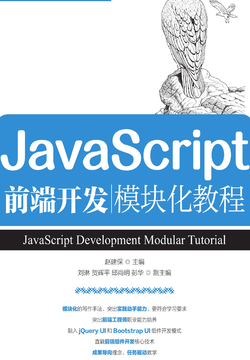
Modular Tutorial on JavaScript Front-End Development
Tags
Summary
Editor's review
Zhao Jianbao has years of experience in front-end development and teaching, and his explanatory style emphasizes logic and practicality. He not only analyzes the design ideas and specification differences behind modularity but also provides a large number of actionable code examples and project cases, helping readers build a clear knowledge system. For developers who have already mastered the JavaScript basics and hope to delve into front-end engineering or who face chaotic code organization, this book is a highly instructive advanced reader. It helps readers understand how modularity improves code maintainability, reusability, and collaboration efficiency, and master the practical skills for integrating modular development into modern front-end workflows.
It should be noted that the book focuses on specialized knowledge of modularity and is not a complete zero-foundation introductory book. Readers need a certain foundation in JavaScript and front-end development to more effectively absorb the advanced content on module encapsulation, dependency management, and bundling optimization. Overall, the book is clearly structured and solid in content, and can serve as an important reference for front-end developers delving into the field of modularity.
Who it's for
A good fit for
- Developers with a JavaScript foundation who want to systematically learn front-end modular development
- Front-end engineers facing messy code organization and maintenance difficulties at work who are looking for engineering solutions
- Technical personnel who want to understand how module handling works in build tools such as Webpack and Rollup
- Learners interested in the front-end engineering ecosystem who want a deeper understanding of the evolution and design philosophy of modular specifications
Not a good fit for
- Complete beginners with no JavaScript background (master the language basics first)
- Pure theory researchers who only need shallow front-end knowledge and are not involved in actual project development
Reading tips
- Read and practice simultaneously; set up and run the book's code examples in a local environment.
- Apply the book's modular approaches to refactor one or two small real-world projects to deepen understanding.
- Focus on the chapters combining ES6 Modules with build tools, as this is the core of today's mainstream development model.
About the publisher
Posts & Telecom Press is known for its strengths in science and technology, computing, and information and communications titles, and has extended its publishing into photography, art, software learning, and inspirational growth, giving it a fairly diverse range. Its catalog includes computing and communications works such as Refactoring and Patterns (Revised Edition) and Huawei Switch Learning Guide (Second Edition), alongside bilingual collector's editions such as The Little Prince (Chinese-English-French illustrated collector's edition), The Great Gatsby, and Three Days to See. Beijing Ten Years: 1980-1990 and Ghost Blade: WLOP Personal Illustration Collection reflect its presence in photography and art. Its authors include Antoine de Saint-Exupéry, Helen Keller, Joshua Kerievsky, Wang Da, Zhang Zhaozeng, and WLOP.
Contents
- 版权信息
- 内容提要
- 前言
- 任务1 搭建JavaScript开发环境
- 1.1 任务导入
- 1.2 成果目标
- 1.3 核心知识
- 1.4 任务实施
- 1.5 强化训练
- 1.6 学习成果评量
- 任务2 斑马线表格制作
- 2.1 任务导入
- 2.2 成果目标
- 2.3 核心知识
- 2.4 任务实施
- 2.5 强化训练
- 2.6 学习成果评量
- 任务3 弹出消息框
- 3.1 任务导入
- 3.2 成果目标
- 3.3 核心知识
- 3.4 任务实施
- 3.5 强化训练
- 3.6 学习成果评量
- 任务4 图片缩放特效
- 4.1 任务导入
- 4.2 成果目标
- 4.3 核心知识
- 4.4 任务实施
- 4.5 强化训练
- 4.6 学习成果评量
- 任务5 网页换肤
- 5.1 任务导入
- 5.2 成果目标
- 5.3 核心知识
- 5.4 任务实施
- 5.5 强化训练
- 5.6 学习成果评量
- 任务6 下拉广告
- 6.1 任务导入
- 6.2 成果目标
- 6.3 核心知识
- 6.4 任务实施
- 6.5 强化训练
- 6.6 学习成果评量
- 任务7 轮播图
- 7.1 任务导入
- 7.2 成果目标
- 7.3 核心知识
- 7.4 任务实施
- 7.5 强化训练
- 7.6 学习成果评量
- 任务8 滚动公告
- 8.1 任务导入
- 8.2 学习成果
- 8.3 核心知识
- 8.4 任务实施
- 8.5 强化训练
- 8.6 学习成果评量
- 任务9 贷款计算器
- 9.1 任务导入
- 9.2 成果目标
- 9.3 核心知识
- 9.4 任务实施
- 9.5 强化训练
- 9.6 学习成果评量
- 任务10 计算器
- 10.1 任务导入
- 10.2 成果目标
- 10.3 核心知识
- 10.4 任务实施
- 10.5 强化训练
- 10.6 学习成果评量
- 任务11 投票
- 11.1 任务导入
- 11.2 成果目标
- 11.3 核心知识
- 11.4 任务实施
- 11.5 强化训练
- 11.6 学习成果评量
- 任务12 折叠面板
- 12.1 任务导入
- 12.2 成果目标
- 12.3 核心知识
- 12.4 任务实施
- 12.5 强化训练
- 12.6 学习成果评量
- 任务13 银行客服电话查询
- 13.1 任务导入
- 13.2 成果目标
- 13.3 核心知识
- 13.4 任务实施
- 13.5 强化训练
- 13.6 学习成果评量
- 任务14 省、市、区联动菜单
- 14.1 任务导入
- 14.2 成果目标
- 14.3 核心知识
- 14.4 任务实施
- 14.5 强化训练
- 14.6 学习成果评量
- 任务15 滚动监听
- 15.1 任务导入
- 15.2 成果目标
- 15.3 核心知识
- 15.4 任务实施
- 15.5 强化训练
- 15.6 学习成果评量
- 任务16 视频播放器
- 16.1 任务导入
- 16.2 成果目标
- 16.3 核心知识
- 16.4 任务实施
- 16.5 强化训练
- 16.6 学习成果评量
- 任务17 刮刮乐
- 17.1 任务导入
- 17.2 成果目标
- 17.3 核心知识
- 17.4 任务实施
- 17.5 强化训练
- 17.6 学习成果评量
- 任务18 微信运动步数统计图
- 18.1 任务导入
- 18.2 成果目标
- 18.3 核心知识
- 18.4 任务实施
- 18.5 强化训练
- 18.6 学习成果评量
- 任务19 相册
- 19.1 任务导入
- 19.2 成果目标
- 19.3 任务实施
- 19.4 强化训练
- 19.5 学习成果评量
- 任务20 选项卡
- 20.1 任务导入
- 20.2 成果目标
- 20.3 核心知识
- 20.4 任务实施
- 20.5 强化训练
- 20.6 学习成果评量
- 任务21 JavaScript抽奖器
- 21.1 任务导入
- 21.2 成果目标
- 21.3 核心知识
- 21.4 任务实施
- 21.5 强化训练
- 21.6 学习成果评量
- 任务22 座位预订程序
- 22.1 任务导入
- 22.2 成果目标
- 22.3 核心知识
- 22.4 任务实施
- 22.5 强化训练
- 22.6 学习成果评量
- 任务23 注册表单验证
- 23.1 任务导入
- 23.2 成果目标
- 23.3 核心知识
- 23.4 任务实施
- 23.5 强化训练
- 23.6 学习成果评量
- 参考文献
FAQ
What prior knowledge does this book require?
Which modular approaches does this book mainly cover?
Does the book cover modern front-end build tools?
Related on WeRead
Comments
Find this book
This site is an index: you start “Search all sources” in your browser, and the entries it lists all point to third-party sites; please judge their availability yourself.
About the author
Zhao Jianbao is an author about whom little public information is available; what can be confirmed centers mainly on a single work. He wrote the book JavaScript Front-End Development Modular Tutorial, which is classified under programming and design and is aimed at learners of front-end development, explaining the ideas and methods of modular development around JavaScript, a core language in this field. Judging by the subject matter, Zhao Jianbao focuses on practical problems in front-end engineering, such as organizing code, dividing functionality, and improving maintainability, rather than offering a general introduction to the language. The word "tutorial" in the title indicates that the book is teaching-oriented, emphasizing step-by-step explanation and actionable content, and is suitable for readers who wish to understand modular development systematically. Because reliable records of his birth and death dates, nationality, and professional experience are unavailable, his personal biography cannot be presented here. Based on the available material, Zhao Jianbao's writing leans toward technical practice and the transmission of knowledge; although his output is small, it addresses a key issue in front-end development and offers readers some value in understanding JavaScript modularity.
